
The Landscape as Refuge and Weapon
William Tell (P. G. Wodehouse Edition)This thread traces how the mountains and lake shape William Tell’s independence, escape, and ability to strike against Gessler.
increasing Bearing strength in each event
 decreasing
Bearing strength in each eventdecreasingA Mountain Home
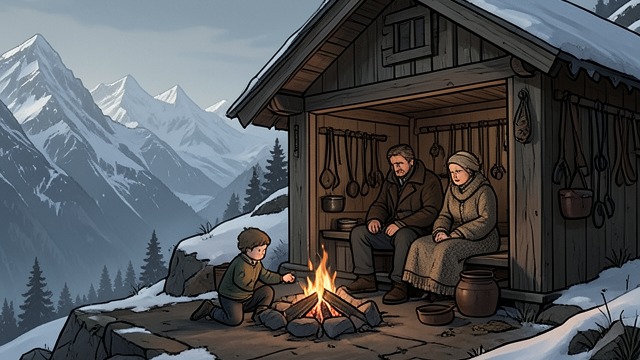
A Mountain Home
Life in difficult country
William Tell lives with his family in a chalet among the mountains.
A practiced inhabitant
His hunting and sure-footedness make rough terrain familiar rather than forbidding.
The landscape is part of his competence and independence.
The Ravine Encounter
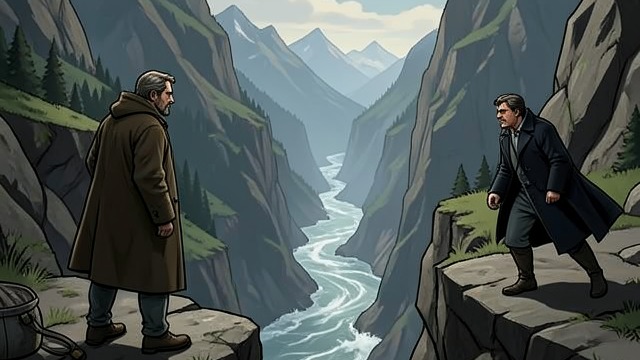
The Ravine Encounter
A narrow passage
William Tell meets Hermann Gessler in Schachenthal, where cliffs and a roaring river leave no easy route past.
Words without fear
Tell insults the Governor and moves on, relying on his confidence in the terrain.
The encounter establishes both Tell’s nerve and Gessler’s enduring resentment.
A Storm Crossing
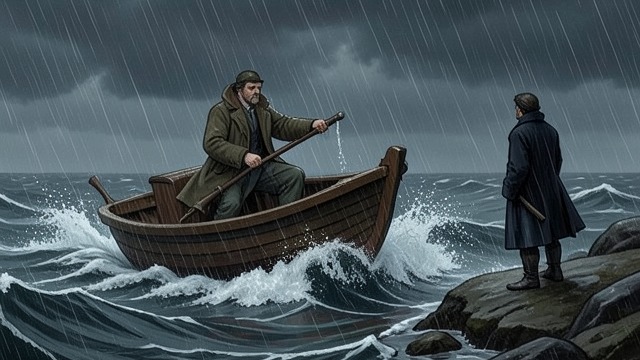
A Storm Crossing
Lake as danger
William Tell rows through a storm to carry Baumgarten to safety.
Skill against the elements
His ability to work in dangerous water defeats both the ferryman’s caution and the soldiers’ pursuit.
The lake becomes a place where Tell’s practical courage serves another person.
Rocks at the Bay
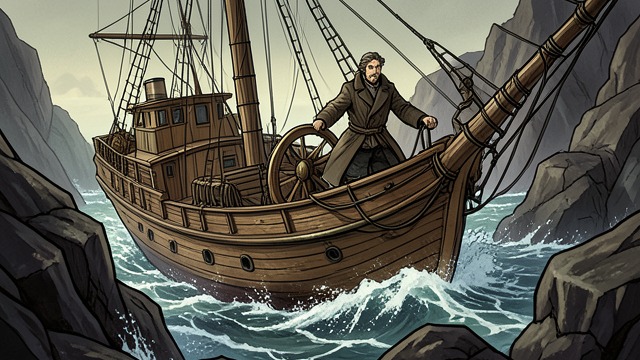
Rocks at the Bay
The route becomes perilous
The ship approaches rocks hidden by spray near the only safe landing bay.
Local knowledge matters
William Tell takes the helm and guides the vessel through a passage the helmsman cannot manage.
The landscape gives his skill immediate value even to his captors.
The Rock of Escape
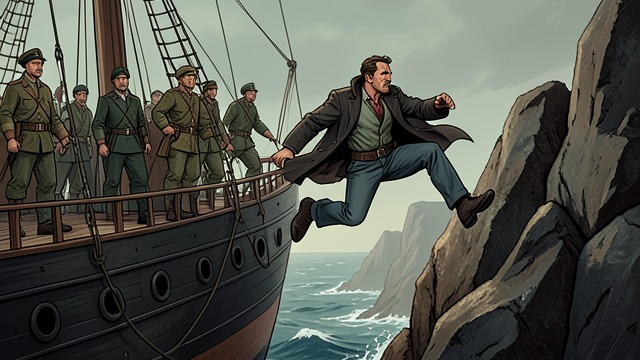
The Rock of Escape
Familiar ground
William Tell recognizes a lofty rock like those he has climbed while hunting.
Terrain enables resistance
He leaps from the ship, reaches safety, and shoots the Governor before the bowmen can respond.
The natural landscape turns confinement into an escape route and a firing position.
Before the first town visit
Before the main events
Before Tell is arrested
During the storm on Gessler’s ship
Just after the ship reaches the bay
