“Union is strength”
William Tell (P. G. Wodehouse Edition)“Union is strength” is the story’s concise argument for collective resistance: against arbitrary rule, solidarity turns a vulnerable population into a community able to act and defend its freedom. The phrase first enters a debate about whether oppression will subside if people remain peaceful; later, the same principle is tested through public defiance and declared as the basis for facing future threats together.
The Phrase and Its Counterclaim
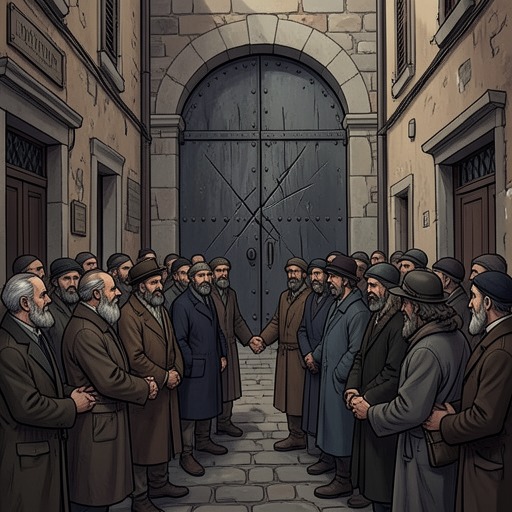
In an exchange about the Governor’s oppression, William Tell argues that a ruler may grow tired of oppressing people who do not revolt. His interlocutor rejects that expectation, insisting that the people might accomplish much if they held fast together: “Union is strength.” Tell answers with a contrary maxim, “The strong is strongest when he stands alone.” The exchange sets two political ideas against each other: self-reliance as a form of strength, and unity as the means by which a community can oppose power greater than any one person’s.
The disagreement is not resolved by simply dismissing individual courage. Rather, the events that follow show the limits of treating resistance as a solitary act. The phrase points toward coordinated action: people must hold together if they are to defend the country when it is driven to self-defence.
Collective Evasion of the Cap Decree
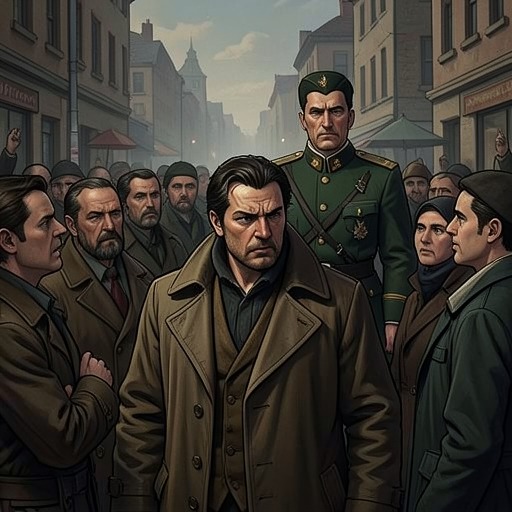
Hermann Gessler’s demand that everyone bow to his cap makes the conflict between authority and public consent concrete. At eleven o’clock, he explains that the cap on a pole in the meadow outside the city gates is to be treated as though it were he himself; anyone crossing the meadow without bowing is to be arrested. His speech pairs the demand for reverence with threats of grotesque punishments, while the crowd’s silence and the eggs and cabbages thrown as he disappears indoors expose the gap between his claims to love and respect and the people’s actual response.
The people answer the decree together, not by obeying it but by avoiding the meadow. They take the long way around, leaving the guards with an empty space to watch. When a group does cross, the priest stands before the pole and the sacristan rings the bell; the people kneel to pray, not to honor the cap. Their workaround is collective and practical: it denies Gessler the submission he demands without giving his soldiers the occasion to enforce the rule. The scene gives the phrase an everyday political dimension, showing solidarity as shared ingenuity as well as open revolt.
From Oath to Public Action
After the apple has been shot from Walter’s head, Arnold of Melchthal asks Werner Stauffacher whether the people can allow the tyrant’s act to pass before their eyes. He urges them to rise and kill Gessler, invoking the oath to rebel. Stauffacher agrees that he would welcome the tyrant’s death but points to the immediate imbalance: the people are unarmed, while the soldiers are armed. Their hesitation makes the principle of unity more than a stirring slogan. Collective resistance requires facing the danger of acting together, not merely sharing outrage.
Later, when others call for the cap pole to be destroyed or burned, William Tell stops them. He proposes keeping it as a memorial of newly won liberty and as the marker of the place where the revolution ended. The object first used to compel an individual gesture of submission is thereby given a different public meaning. Preserving it turns a symbol of domination into a reminder of shared resistance.
A Principle Tested by the Future
Arnold of Melchthal questions whether the revolution can truly be considered finished: the Emperor of Austria may seek revenge after Gessler’s death and the destruction of the fortresses. Tell does not deny the danger. He says the Emperor will come, but argues that the people have driven out the enemy already in their land and can face an enemy arriving from elsewhere. Switzerland’s few mountain passes offer places where an approaching force can be stopped, and the people’s unity is named as their great strength: “we are united.”
The phrase thus moves from argument to action and finally to a prospect of future defence. Its force lies not in promising that danger has disappeared, but in identifying how a vulnerable community may meet it: by standing together. The preserved pole fixes that claim in a place, while Tell’s answer extends it beyond the victory already won.