Arnold of Sewa
William Tell (P. G. Wodehouse Edition)Arnold of Sewa is a would-be spokesman and tactician whose confidence in his own advice repeatedly outpaces its results. He believes that tact could have changed the outcome of negotiations with Hermann Gessler, promotes himself for important civic roles, and later recommends guile during a fight. The contrast between his polished explanations and his burnt finger, bruised side, and retreat to bed makes him a comic counterpoint to the townspeople’s increasingly urgent resistance.
Identity and Public Role
Arnold of Sewa appears among the citizens debating how to respond to oppressive rule. He is not selected as one of the three spokesmen sent to Hermann Gessler, an omission he takes personally: he thinks that, had he been chosen, the trouble that followed would not have occurred. His account of events therefore begins with a conviction that he possesses a better method than the representatives who were actually appointed.
That method is tact. Arnold of Sewa presents it as the essential skill in dealing with authority, repeatedly naming it as the quality the others lacked. His confidence is not based on having successfully persuaded Hermann Gessler; rather, he imagines how he would have conducted the conversation and treats that imagined success as a persuasive alternative to the real failure. This distinction between a proposed method and a demonstrated one shapes his role throughout the episodes.
The Governor’s Mission and the Language of Tact
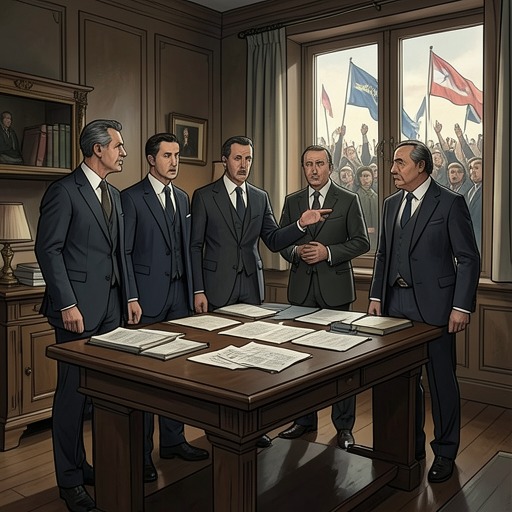
After Walter Furst reports that the conversation with Hermann Gessler ended with the citizens still required to pay their taxes, a stunned silence falls over the crowd. Arnold of Sewa breaks it by accusing the three spokesmen of having failed their task. He insists that they rushed into the governor’s presence and demanded abolition of the taxes, but Walter Furst interrupts to correct each claim: they did not rush, and they did not shout. Arnold of Sewa objects to being interrupted, then continues with his criticism.
His alternative is a carefully staged approach. He says he would enter firmly but not defiantly, begin with a pleasant remark about the weather, and move from conversation about dinner to the cost of food and the unnecessary burden of food taxes. In his account, the discussion would then settle the issue pleasantly. He qualifies his self-promotion by saying he is not claiming the citizens ought to have chosen him, but the elaborate hypothetical nonetheless presents him as the more capable representative. His imagined progression from weather to dinner to taxation also makes his idea of tact concrete: political persuasion, as he describes it, depends on easing into a difficult demand through ordinary conversation.
Arnold of Sewa’s friends urge the crowd to let him try where the other spokesmen failed. The visitors’ bell at the palace is rung for a second time, and he enters while the crowd’s hopes rise again. Five minutes later he returns sucking the first finger of his left hand. He admits that the plan cannot work because Hermann Gessler has convinced him. Arnold of Melchthal says he knew it would happen; Arnold of Sewa, dancing with the pain of his burnt finger, snaps that he might have been warned. The episode turns his professed confidence into a brief physical joke: the man who blamed the others for failing to manage the governor leaves with a painful mark of his own encounter.
Repeated Self-Appointment
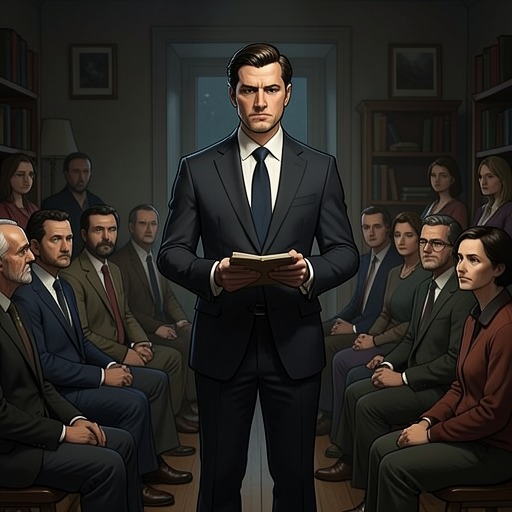
When the citizens later meet at the Glass and Glacier to choose three spokesmen who will explain their wishes to William Tell, Arnold of Sewa again proposes himself. He says he does not wish to boast, but thinks he should be one of the three. Werner Stauffacher suggests choosing the same representatives who had approached Hermann Gessler. Arnold of Sewa objects that they had not succeeded with the governor, while Arnold of Melchthal reminds him that he had failed too. Arnold of Sewa answers that their lack of tact irritated the governor and made him unwilling to listen to anyone else, then tells the group to have it their own way.
The citizens choose Werner Stauffacher, Arnold of Melchthal, and Walter Furst, not Arnold of Sewa. Their mission matters because the town regards a revolution without William Tell as impossible, while recognizing the danger of asking anyone to lead a failed uprising. After the three representatives return without Tell, Arnold of Sewa immediately assumes Tell has refused and again blames the outcome on their lack of tact. Werner Stauffacher indignantly says they did exercise tact and begins recounting their meeting. Arnold of Sewa’s swift conclusion repeats his earlier habit: he treats the result as confirmation of his preferred explanation before hearing how the encounter actually went.
His wish to be chosen is not confined to emissary work. After the crowd calls for a leader, Arnold of Sewa begins to say that he does not wish to thrust himself forward, but that if leadership is at issue he has something to offer. Werner Stauffacher names William Tell instead, and the crowd cheers for Tell. The sequence repeatedly places Arnold of Sewa close to public authority in his own estimation, while showing the community selecting other people for the work.
Guile in the Fight
Arnold of Sewa’s advice changes from tact to guile when a fight breaks out around the pole. He has seen the beginning from the window of his cottage and hurries to join the conflict, once again offering instruction. As Friesshardt and Leuthold strike at the crowd with their fists and the flats of their pikes, Arnold of Sewa argues that brute force is the wrong response to an armoured opponent. He proposes cunning instead and announces that he will demonstrate it.
He approaches Friesshardt from behind with his cudgel as the guard is occupied with other fighters. Leuthold sees Arnold of Sewa and drives his pike into his side, protecting his comrade. Arnold later says the blow took his breath away. After being trampled in the confusion, he gets up, limps home, and stays in bed for two days. The intended demonstration of guile thus ends not in a successful blow but in an injury and temporary withdrawal from events.
The failed manoeuvre also stands beside William Tell’s different response to the growing fight. Tell had been willing to fight Friesshardt while the quarrel remained between them, but did not think it fair to join a crowd attacking one man. When he decides the disturbance must end, he uses his crossbow to shoot through the hat and pole. Arnold of Sewa’s stealthy approach and Tell’s decisive shot are distinct actions with distinct outcomes: Arnold is struck down while trying to advise and act at once; Tell ends the immediate disturbance by striking the object at its center.
Characterization and Narrative Function
Across the negotiations, the appointment of representatives, and the fight, Arnold of Sewa repeatedly turns practical setbacks into arguments for his own expertise. He says he would have prevented trouble had he been selected, explains the first diplomatic failure as a lack of tact, proposes himself again for the mission to William Tell, assumes that mission failed for the same reason, and then offers guile as the answer to violence. In each case, the story lets events test the confidence of the advice rather than simply accepting his claims.
The results are pointedly physical and public. Hermann Gessler’s refusal defeats Arnold of Sewa’s diplomatic theory and burns his finger; the townspeople decline to appoint him as a spokesman or leader; Leuthold’s pike defeats his attempt to demonstrate guile and keeps him in bed. His repeated self-nomination supplies comedy, but it also marks the difference between talking about resistance and carrying its risks. As the crowd moves toward action and places its hope in William Tell, Arnold of Sewa remains an adviser whose desire to be heard is more evident than any success in persuading the people around him.