Gessler’s hat-on-a-pole incident
William Tell (P. G. Wodehouse Edition)Hermann Gessler’s hat-on-a-pole incident converts a petty decree into a public confrontation with Austrian authority. By ordering the people to honor his oldest cap as though it were himself, Gessler makes obedience visible and punishable; by walking past it without bowing, William Tell turns that imposed gesture into a choice. His arrow through the cap and pole becomes, in his own account, the first blow of a revolution.
The Decree and Its Public Stage
Gessler devises the order after wanting to prohibit something else but being unable to think of anything. His solution is theatrical. He has his servants cut a very long pole, then carefully distinguishes the cap he wants from the better ones he wears on Sundays, on state occasions, every day, or while hunting. The oldest hat is fetched, placed on the pole, and raised in the middle of the Meadow Outside the City Gates. A piece of clothing that would otherwise be discarded is made into a stand-in for the Governor.
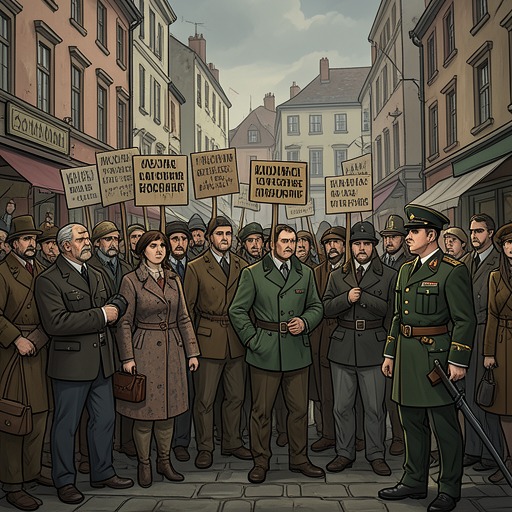
Heralds summon people from north, south, east, and west to hear an announcement described as important and special. Men, women, and children arrive in groups of tens, fifties, and hundreds, and wait before the Palace steps. At eleven o’clock, after finishing breakfast, Gessler appears. The crowded gathering gives him an audience, but not the reverence he expects: when he pauses for cheers, the people remain silent. Voices from among them challenge his speech, including one that tells him to speak up and another that contradicts his claim that they want to honor him.
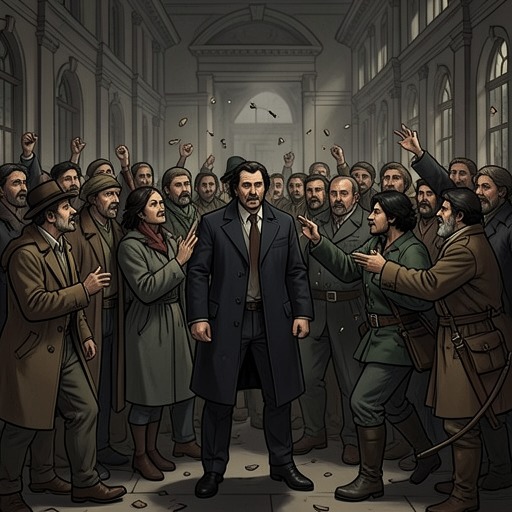
Gessler answers each interruption with an elaborate threat. The speaker who tells him to speak up is threatened with being bitten by wild elephants; the dissenter is promised scorpions on the soles of his feet. He also threatens a man who mocks the cap with trained bluebottles. The comic extravagance does not soften the order beneath it: everyone crossing the meadow must bow before the cap, and anyone who does not will be arrested by his soldiers. Gessler insists that the cap be regarded as if it were him, then commands the soldiers to move the crowd on. As he goes indoors, eggs and cabbages fly through the air, and the soldiers hustle the people into the streets. The announcement has made the cap a proxy for the Governor, but the hostile response shows how little spontaneous respect that proxy commands.
Tell Encounters the Cap
The incident takes place the day before Tell and Walter set out for the town. When Tell arrives striding across the meadow, with Walter beside him and his crossbow over his shoulder, he knows nothing about the order or the cap on the pole. He is surprised by the large crowd, bows politely to the people, and receives their cheers. He bows again, then continues across the meadow. Walter notices the cap and points it out to his father; Tell treats it as irrelevant and walks on with dignity. Walter follows, trying to look like him.
The soldiers stop the pair because neither has bowed. Tell’s refusal is not presented as a response to a planned confrontation: he has arrived without knowing what has been demanded. That ignorance sharpens the encounter. The Governor’s rule expects the cap to command a gesture from everyone who crosses the meadow, while Tell’s ordinary courtesy toward the crowd does not extend to an object imposed as Gessler’s likeness. His refusal makes the decree’s central demand unmistakable: this is not simply a hat placed in a public space, but a test of submission.
The Arrow and the Crowd
The confrontation develops amid a wider disturbance. Tell initially watches with folded arms. While the quarrel is between him and Friesshardt, he does not mind fighting; when the crowd joins in against one man, however badly that man has behaved, Tell considers it unfair to help many attack one. This distinction matters to his intervention: he does not simply join the disorder, but decides that it is time to end it.
Tell draws an arrow from his quiver, sets it in his crossbow, and aims at the cap. Friesshardt recognizes what he intends and rushes to stop him. Before he can do so, someone in the crowd strikes him with a spade, knocking his helmet over his eyes. While Friesshardt cannot see, Tell releases the arrow. It passes through the cap, through the pole, and out the other side. When Friesshardt can look again, Tell is beside him, twirling his moustache; around them, the crowd dances, shouts, and throws caps into the air. The object intended to command a bow has instead become the target of a shot and the focus of public celebration.
The First Blow of Revolution
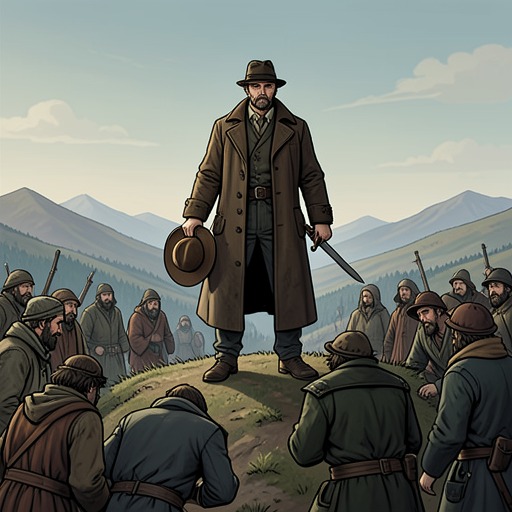
The crowd urges Tell to speak, and he calls the moment the proudest of his life. He says that it is a great day for Switzerland and that they have struck the first blow of the revolution, urging them to strike more. His words give the shot a political meaning beyond the immediate defiance of the hat order: Tell presents the destruction of the cap’s authority as the opening action of collective resistance.
The response is not entirely controlled. Many in the crowd misunderstand Tell’s call to strike again and begin hitting Leuthold and Friesshardt, until cries of order from Ulric the smith stop them. Tell resumes, describing the floodgates of revolution as opened and the Governor’s oppression as something that will be burned away. The sequence holds celebration beside disorder: the crowd has found a public act around which to rally, but its energy can turn against individuals before it is checked. The incident’s decisive change is therefore both symbolic and practical. Gessler’s cap fails to secure the submission it was designed to enforce, and Tell publicly names the shot as the beginning of revolution.