Glass and Glacier
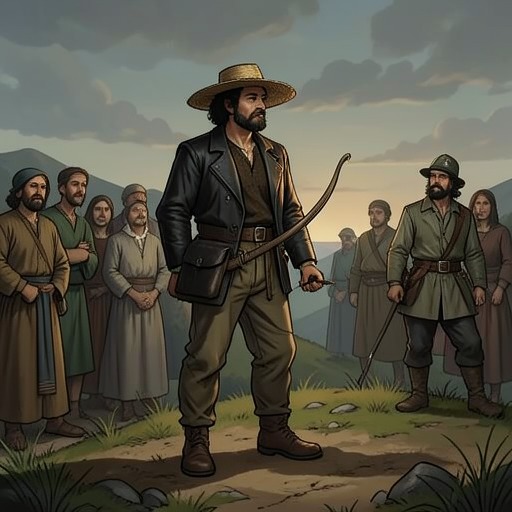
William Tell (P. G. Wodehouse Edition)Glass and Glacier is the town inn that becomes the citizens’ meeting place as they try to secure William Tell’s leadership for a revolution. Its importance lies in the contrast between the practical deliberation inside and the perilous uncertainty outside: the citizens choose their envoys there, and then wait there for news that may determine whether their cause can proceed.
A Meeting Place for Civic Decisions
The citizens talk matters over at Glass and Glacier and conclude that three spokesmen should go to Tell to explain what they want him to do. The plan turns the inn into a setting for collective decision-making: rather than approaching Tell as an unorganized crowd, the citizens agree to entrust their appeal to a small delegation.
The choice of representatives is not immediate. Arnold of Sewa says he thinks he ought to be one of the three, while Werner Stauffacher argues for continuity, proposing that they choose the same men who had already been sent to Hermann Gessler. The exchange brings the earlier mission into the new deliberation and makes the selection a question of both representation and experience.
Disagreement and the Delegation
The discussion also carries the strain of the previous encounter with the Governor. Arnold of Melchthal, whose injured finger still hurts, snaps that Arnold of Sewa had failed as well. Arnold of Sewa answers that the earlier envoys had irritated the Governor by not exercising tact, which he presents as essential in such affairs. His appeal to tact does not win him a place: the citizens choose Werner Stauffacher, Arnold of Melchthal, and Walter Furst.
After draining their glasses, the three leave the inn and climb the steep hill to Tell’s house. The movement from the shared room to the uphill mission gives the decision a concrete next step, while the citizens remain behind at Glass and Glacier, having agreed to wait for the delegation’s return and hear its report.
Waiting and Political Suspense
The wait lasts about an hour, and the citizens are anxious. They believe a revolution would be impossible without Tell, but they also recognize the danger of asking anyone to lead it: if the revolt fails, its leader will be executed as an example. The narration punctures the gravity with the observation that many people object to being executed, even when their deaths might set a good example for their friends.
When the three spokesmen come down the hill, Tell is not with them. The citizens at the inn take his absence as a sign that he has refused their offer, and eagerly ask the returning delegates what happened. The location thus frames a suspenseful gap between a political appeal and its unknown outcome: the citizens can see the envoys return, but the evidence here does not yet disclose Tell’s answer.