Swiss Independence
William Tell (P. G. Wodehouse Edition)Swiss Independence is the result of a popular revolt against Austrian rule, set in motion by the death of Hermann Gessler and completed when the Emperor’s death left his successor unable to attack. The story presents freedom not as the achievement of one archer alone but as a change in the people’s capacity to act together: local defiance becomes a countrywide uprising, while the threat of renewed invasion remains until events beyond Switzerland remove it.
Conditions for Revolt
The uprising had been brewing for a long time. The people were bound by a solemn oath to drive the enemy from the country, and nobles and peasants were already making preparations for revolution. Fear of the Governor, however, had chiefly prevented them from rising. His rule made resistance dangerous, but it also gave the scattered grievances a common object.
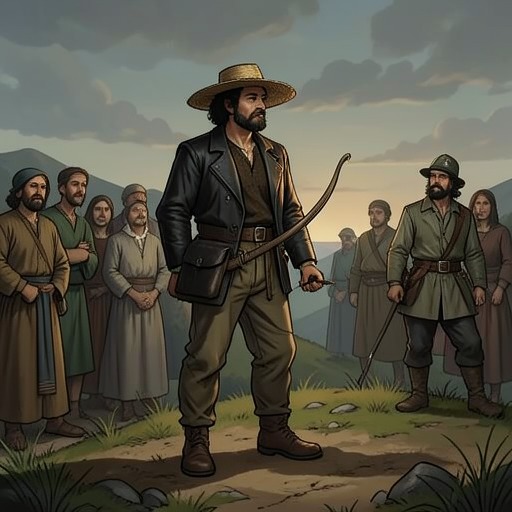
The cap placed on a pole in the meadow outside the city gates made that conflict tangible. Hermann Gessler commanded the people to treat the cap as if it were himself and threatened arrest for anyone who crossed without bowing. Rather than submit, the people avoided the meadow and took the longer route; when a group did pass it, a priest stood before the pole while the sacristan rang a bell, and the people knelt in prayer rather than in homage. Their evasions frustrated the order without yet becoming open revolt.
The question of how to resist had also divided the leaders. Tell had argued that a peaceful people might be granted peace, and that the Governor could tire of oppression if it did not provoke revolt. Walter Furst rejected that confidence: he believed the Governor would not tire of oppressing and urged the people to hold fast together, invoking the strength of union. Tell answered that the strong were strongest standing alone. The argument makes the later revolt’s reliance on unity significant: the collective course the country ultimately takes had not seemed inevitable to every opponent of the Governor.
From Oppression to Open Revolt
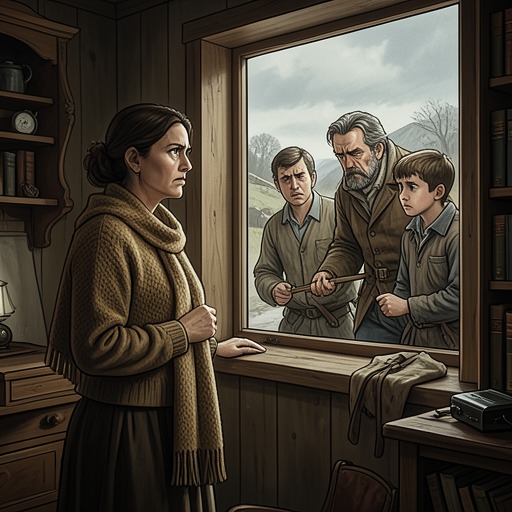
The decisive signal came with Gessler’s death. When the apple shot left Walter unharmed, Arnold of Melchthal asked Werner Stauffacher whether they would permit such a thing before their eyes, and urged the people to rise and kill the tyrant. Stauffacher shared the desire to act but pointed to the immediate imbalance: the people were unarmed, while the soldiers were armed. The exchange captures the gap between resistance as a moral demand and revolt as a perilous practical choice.
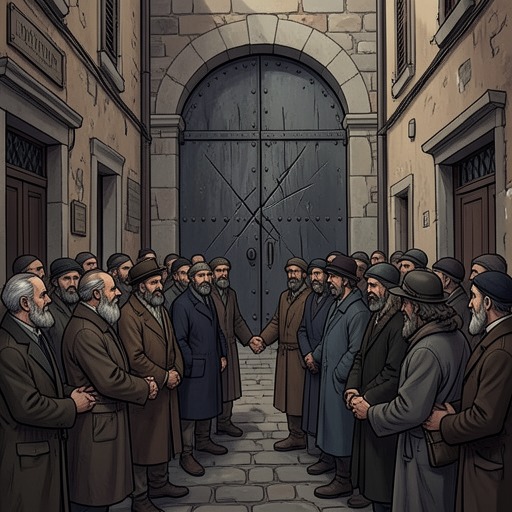
That gap closed when news arrived that the Governor had been slain. Meetings were held in every town in Switzerland, and the people resolved to begin the revolution without delay. The fortresses Gessler had built during his years of rule were taken by assault on the same night. The final one had only recently been begun; people forced to help build it now pulled down its stones, and even the children joined in breaking what they pleased. The labor imposed to strengthen the Governor’s power became material for its destruction.
As the children helped dismantle the last fortress, Tell said they would remember the night as freshly in their old age as they would the following day. His observation joins the immediate victory to its transmission in memory: liberation is shown not only in the fall of the strongholds but in a generation experiencing their destruction together.
The Pole Recast
After the fortresses fell, some called for the pole and cap to be destroyed or burned as emblems of tyranny. Tell stopped them and proposed preserving the pole as a memorial of newly gained liberty, marking the place where the revolution had finished. Its meaning therefore changes with the political order around it. The object once used to demand obedience becomes a marker of the people’s refusal and success.
Arnold of Melchthal questioned whether the revolution could truly be called finished. He anticipated that the Emperor of Austria would seek revenge for Gessler’s death and the destruction of the fortresses. Tell agreed that the Emperor would come, but answered that Switzerland would meet the threat together. He pointed to the few mountain passes through which an invading force could approach and declared that the people would block them with their bodies. The account presents unity not as the absence of danger but as the means by which the country expects to confront it.
Independence Secured
Tell’s confidence that the Emperor would come proved warranted, but the expected attack was prevented by events elsewhere. As the Emperor rode from Stein to Baden, the lords of Eschenbach and Tegerfelden attacked him with their spears. His bodyguard, separated from him by a stream he had just crossed, could not assist; the Emperor died instantly.
His death allowed the revolution in Switzerland to proceed without check. The successor was occupied defending himself against those who had killed his father and could not turn to attacking the Swiss; by the time he was free to do so, the Swiss had become too strong to attack. Independence thus follows both from the people’s own coordinated actions—the assaults on the fortresses and the resolve to resist another invasion—and from the diversion of the imperial succession crisis. The ending confirms the country’s freedom while retaining the distinction between driving out the enemy already present and preventing a new one from returning.