Switzerland
William Tell (P. G. Wodehouse Edition)Switzerland is both the setting of the story and the territory whose passage from Austrian rule to freedom gives the revolt its stakes. It begins under the Emperor of Austria, burdened by Hermann Gessler’s taxes and marked by his fortresses; it emerges through a united uprising that transforms sites and objects of oppression into reminders of liberty. The narrative makes the country’s political change tangible in what its people build, attack, pull down, and choose to preserve.
Austrian Rule and Taxation
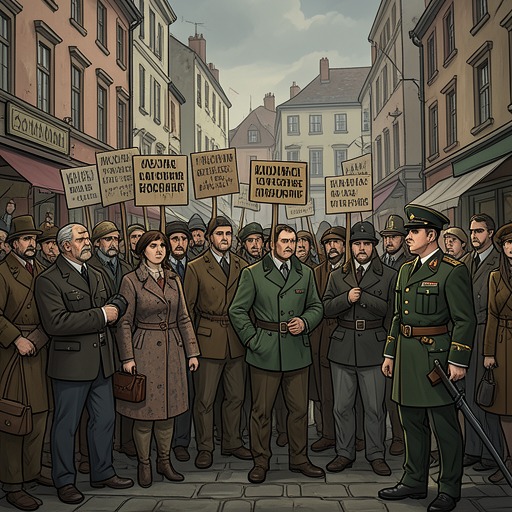
The story opens in a deliberately remote past, before the first hotel or the first tourist photograph of Mont Blanc, when Switzerland belonged to the Emperor of Austria. He sent his friend Hermann Gessler to govern it. Gessler’s authority became most visible in the taxes he imposed: a farmer who owned sheep paid a sum, and one who sold them to buy cows paid still more. Bread, biscuits, jam, buns, and lemonade were taxed as well. By extending the levy to nearly everything he could think of, Gessler made economic pressure a daily feature of his rule and turned resentment into a shared national grievance.
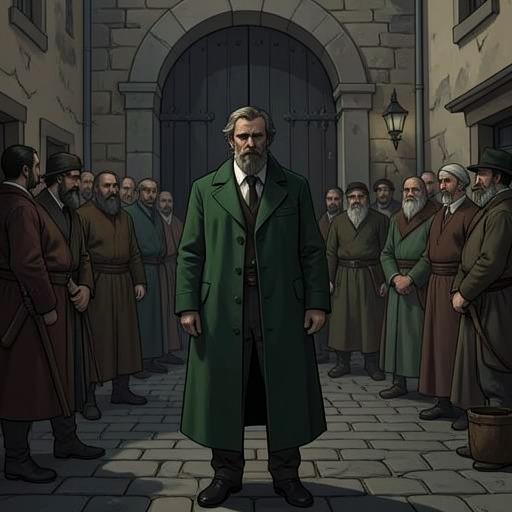
That grievance was not presented as the concern of a single household or rank. The Swiss people appointed Walter Furst, Werner Stauffacher, and Arnold of Melchthal to bring their complaint to the Governor. Later, the narrative describes nobles and peasants as united in preparations for revolution, widening opposition across social positions. Switzerland’s subjection is therefore shown both through the material reach of taxation and through the collective response it provokes.
A Country Preparing to Resist
Even while Tell and his family live contentedly, the political condition of Switzerland shapes their domestic life. Tell believes the Swiss will one day rise against the Governor and drills his two children so they will be prepared. Their marching, tin-can beating, and shouted play-soldier routines make rebellion part of family life before it becomes an open national event. Hedwig objects to the noise and wants the boys to help with housework; Tell insists that those who hope to fight their way through life must be prepared to wield arms. His household thus reflects the tension between ordinary routines and a country anticipating revolt.
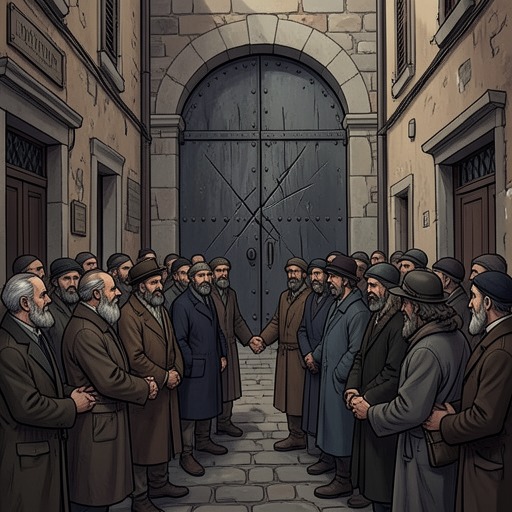
The uprising is also framed as a response to a fear that had delayed it. Gessler’s death acts as the signal: the revolt had been brewing for a long time, and the Swiss people had sworn to drive the enemy from their country. Once news of the Governor’s death arrives, meetings are held in every town and the decision is made to begin without delay. Switzerland shifts from a place where resistance is prepared in private to a country acting collectively in public.
Fortresses, the Hat-Pole, and Liberty
The revolt gives the country’s built landscape a decisive role. On the same night, the Swiss people take by assault every fortress Gessler had built during his years of rule. The last to fall had only recently been begun. People forced to help build it then spend an hour pulling down the stones they had laboured to put in place; children join them, relishing the freedom to break what they please. The reversal is concrete: coerced labour in service of the Governor’s power becomes the dismantling of that power by the people who supplied the labour.
A second object makes the change visible. People bring forward the pole Gessler’s soldiers had set up in the meadow, with the hat still nailed to it by Tell’s arrow. Some call for it to be destroyed as an emblem of tyranny, but Tell argues that it should remain as a memorial of newly gained liberty and mark the place where the revolution ended. The pole’s meaning is therefore reversed rather than erased: the instrument intended to enforce submission is retained as evidence that the country has freed itself. Watching the children pull down the fortress, Tell predicts that, when they are gray-haired, they will remember that night as freshly as the next day. The uprising becomes not only a change of power but an experience intended to live in collective memory.
Independence and Its Uncertain Future
Tell does not treat the end of Gessler’s rule as proof that Switzerland is safe from attack. Arnold of Melchthal asks whether the Emperor will seek revenge after the Governor’s death and the destruction of his fortresses. Tell expects that he will, but points to the country’s few mountain passes as places the Swiss can defend and to their unity as their great strength. Switzerland’s terrain offers a practical means of resistance, while solidarity is presented as the condition that makes that defense possible.
The Emperor’s death allows the revolution to proceed without check. His successor is occupied with defending himself against those who killed his father; by the time he can turn to Switzerland, the Swiss have become too strong to attack. The narrative concludes that they become free. Yet the epilogue opens by acknowledging that the tale may have been amplified and twisted and may not be entirely clear. That qualification leaves the country’s liberation as the story’s outcome while making the way it is remembered part of the story too: Switzerland’s freedom is narrated through revolt, shared memory, and an admitted uncertainty about the legend’s telling.