William Tell and Walter’s father-son relationship
William Tell (P. G. Wodehouse Edition)William Tell and Walter’s father-son relationship is tested in public when Hermann Gessler forces Tell to shoot an apple from Walter’s head. Their shared trust shapes the ordeal: Walter insists that he is not afraid and urges his father to shoot, while Tell refuses to treat the danger to his son as a feat or spectacle. The successful shot resolves the immediate threat, but Tell’s first concern afterward is to find Walter and lead him home, not to join the crowd’s celebration.
Family Life and the Promised Outing
William Tell lives with his wife Hedwig and their two sons, Walter and William, in a mountain chalet. Walter is the child who accompanies his father into the central crisis, but Tell later makes clear that he loves both boys alike. The distinction matters: Walter’s prominence in the episode comes from circumstance and his own participation, not from any stated preference by his father.
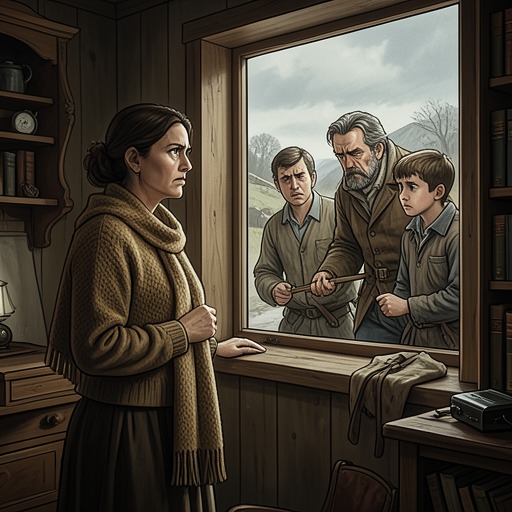
Tell has promised to take Walter to town the next time he goes. Walter has saved his pocket money for the outing, making the trip a specific pleasure he has anticipated rather than an incidental errand. When Hedwig warns Tell to keep away from town because Hermann Gessler has not forgiven him for speaking against him in the ravine, Tell answers that he has promised and must go. Walter is eager to come; Tell allows him to do so, while the other boy, William, stays with Hedwig. The decision brings father and son together in the meadow where the threat will unfold, though neither knows what awaits them there.
A Bond Made Visible in Public
At the meadow outside the city gates, Tell arrives with Walter beside him and his crossbow over his shoulder. He does not know that Hermann Gessler’s hat has been placed on a pole, and walks across the meadow with dignity after greeting the crowd. Walter notices the hat and draws his father’s attention to it; Tell replies, “What is the hat to us?” Walter then walks beside him, trying to look like his father. The small imitation presents their closeness as something practiced and visible: the son takes his father as a model even before the danger begins.
Walter’s admiration becomes explicit when Hermann Gessler questions Tell’s marksmanship. Walter declares, “Father's the best shot in all Switzerland,” and says he has seen him hit an apple on a tree a hundred yards away. His words supply the claim that Hermann Gessler turns into a test. When the Governor asks which son Tell loves most, Tell answers, “I love them both alike, your Excellency.” The question makes family affection part of the public confrontation, while Tell’s answer refuses to rank his children even as Walter is singled out for the ordeal.
The Apple-Shot Ordeal
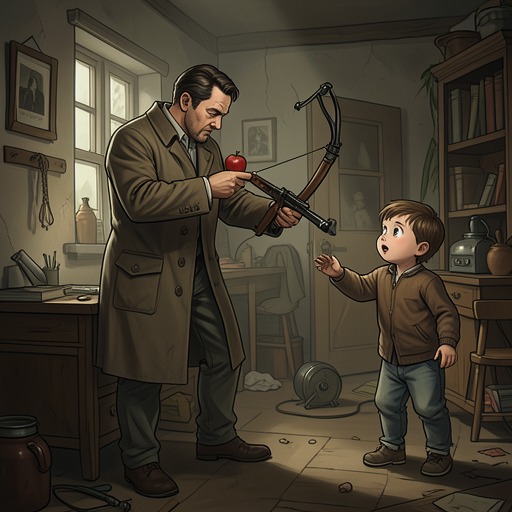
Hermann Gessler orders Tell to shoot an apple from Walter’s head from a distance of a hundred yards, threatening Tell’s life if his first shot misses. Tell protests that the demand is monstrous and asks the Governor to consider what it means to make a father shoot at his own son. His refusal is not a lack of confidence in his aim; it is a protest against the forced risk to Walter. Hermann Gessler insists that the order is his will and presents the danger as a simple demonstration of Tell’s skill.
As the crowd gathers, Rudolph der Harras advises Walter to kneel and beg for his life. Walter refuses. When Hermann Gessler orders him bound to a lime-tree, Walter says he will stand still but will kick if they bind him. He also refuses to have his eyes covered, answering, “Do you think I fear to see father shoot?” His insistence is both defiance of the Governor’s attempt to control him and a declaration of confidence in Tell. He tells his father to show the tyrant how he can shoot, and mocks Hermann Gessler as an “old donkey.” The child is not merely the passive target of the command: he speaks back, rejects the offered posture of submission, and chooses to face the shot with his eyes open.
When Walter walks down the cleared lane carrying the apple, the crowd falls silent and begins to whisper. He calls to Tell, “I'm not afraid.” Tell, whose hands had been trembling while Hermann Gessler spoke, takes a second arrow from his quiver and puts it in his belt. He then regains his calm, raises the crossbow, and takes steady aim. The contrast is sharp: the father’s fear is visible in his trembling, while the son’s reassurance gives the scene its repeated point of contact. Tell releases the string, and the arrow pierces the apple through its centre without injuring Walter.
After the Shot
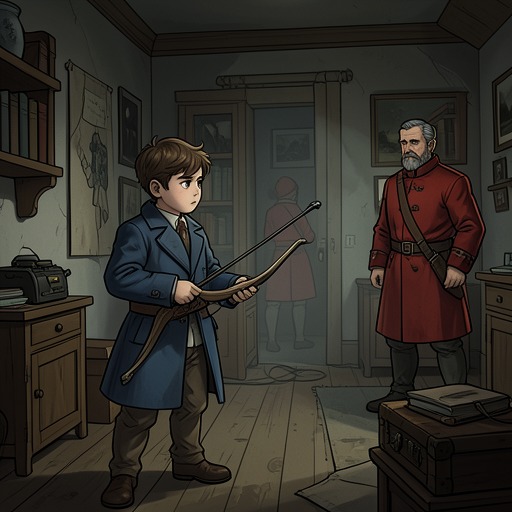
Walter picks up the apple with the arrow still through it and proudly shows it to his friends, repeating that he knew his father would not hurt him and was the best shot in Switzerland. His confidence is confirmed by the result, and the apple becomes tangible proof of the shot as well as the danger they have survived. The crowd cheers, shakes hands, and throws caps into the air; Walter’s success is celebrated alongside Tell’s, and the crowd’s delight also reflects Hermann Gessler’s disappointment.
Tell responds differently. He comes to himself with a start, looks around for Walter, and begins leading him toward home, deaf to the cheering around them. The contrast between Walter displaying the pierced apple and Tell turning away from the crowd distinguishes their immediate responses without diminishing their shared relief: Walter can take pride in the feat, while Tell’s attention returns at once to his son. Their relationship is therefore shown not only through Walter’s faith in his father’s skill but through Tell’s refusal to let public acclaim displace his concern for Walter’s safety.