William Tell’s apple shot
William Tell (P. G. Wodehouse Edition)William Tell’s apple shot is the moment Hermann Gessler turns a father’s skill into a threat against his child, then discovers that the apparently obedient archer has prepared a threat of his own. The trial is not a voluntary contest: Gessler chooses the target, the distance, and the penalty. Its exacting shot brings the crowd from dread to celebration, but the second arrow transforms Tell’s success into open antagonism and ends with an order to seize him.
A Test Imposed by the Governor
The confrontation begins with Gessler asking which of his sons Tell loves most. Tell answers that he loves them both alike. Gessler calls the family happy, then uses Walter’s claim about his father’s marksmanship as the pretext for a test. He has Friesshardt bring an apple. The fruit is bruised, Friesshardt explains, because one of the apples thrown at him and Leuthold earlier had hit his helmet; Gessler replies that he does not need it for eating. The ordinary object is thus selected for a purpose that has nothing to do with food.
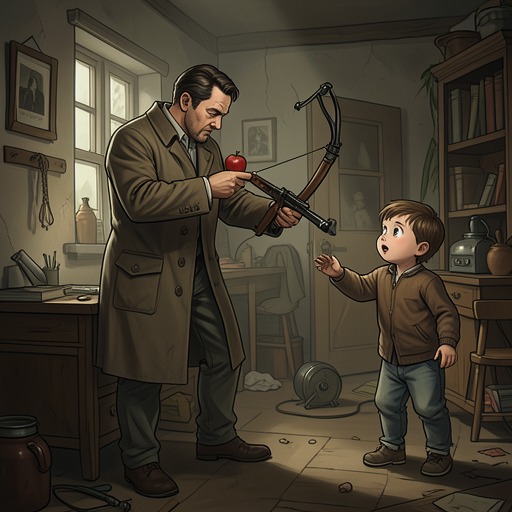
Gessler orders Tell to take up his bow and shoot the apple from Walter’s head, with Walter placed one hundred yards away. If Tell fails to hit it with his first shot, his life will pay the forfeit. Tell protests that the demand is monstrous and asks Gessler to consider what it means to make a father shoot at an apple on his son’s head. Gessler rejects the appeal: he is not jesting, he says, and this is his will. Tell answers that he would sooner die. The terms make the central imbalance plain: the Governor can impose mortal danger on both father and son, while Tell is given no meaningful choice about accepting the test.
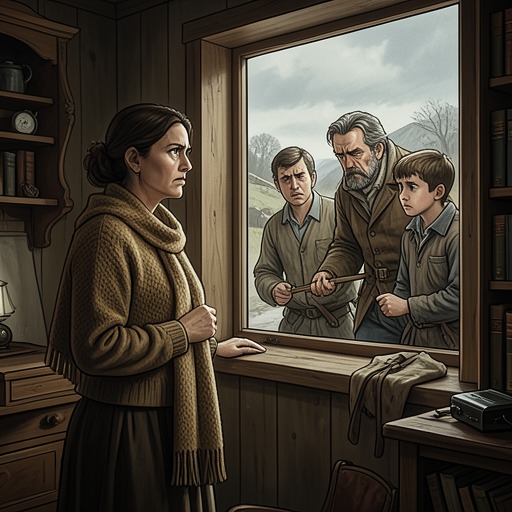
Walter breaks in and objects when his grandfather is made to kneel to the tyrant. Asked where he must stand, the boy says he is not afraid because his father can hit a bird in flight. Gessler points out a lime tree and tells his soldiers to bind Walter to it. Walter refuses to be bound and insists he can stand still without breathing; if they tie him, he says, he will kick. Rudolph der Harras proposes that at least Walter’s eyes be bound. These exchanges give the scene its distinct human stakes: the target is not an anonymous mark but a child who speaks for himself, even as adults decide the conditions around him.
The Shot and the Crowd’s Reversal
Gessler further mocks Tell by arguing that weapons belong only to a country’s ruler and that an armed commoner grows proud and offends those above him. His mock concern about the dangers of carrying arms sharpens the test’s political meaning: the Governor condemns Tell’s possession of a weapon even while forcing him to use it under an intolerable condition. Tell does not answer. He raises his bow, but for the first time his hand trembles; his arrow points not at Walter but straight into the heart of the crowd on his right. The spectators panic and shout that he is aiming the wrong way. Gessler laughs and tells him to shoot and take his chances.
Tell stands in silence, his eyes fixed at times on Gessler and at times on the sky. He takes a second arrow from his quiver and puts it in his belt while Gessler watches. Walter calls from the other end of the lane, urging his father to shoot and insisting that he is not afraid. Tell then regains his calm, raises the bow, and takes steady aim. The crowd cranes forward; people in front tell those behind that pushing will gain them nothing. Gessler leans over his horse’s neck to watch Walter. In the hush that follows, Tell releases the string.
The arrow passes through the centre of the apple, which leaps from Walter’s head. The suspense breaks into cheering. The spectators shake hands, throw their caps into the air, and celebrate both Tell and Walter; they are also pleased to see Gessler disappointed after having things his own way for so long. The meadow outside the city gates becomes the scene of rejoicing on a scale the narration says it had not seen since Switzerland became a nation. The crowd’s response marks a reversal in the public scene: the Governor arranged the spectacle to command it, but the successful shot makes the outcome a shared triumph over his expectation.
The Second Arrow and Its Consequence
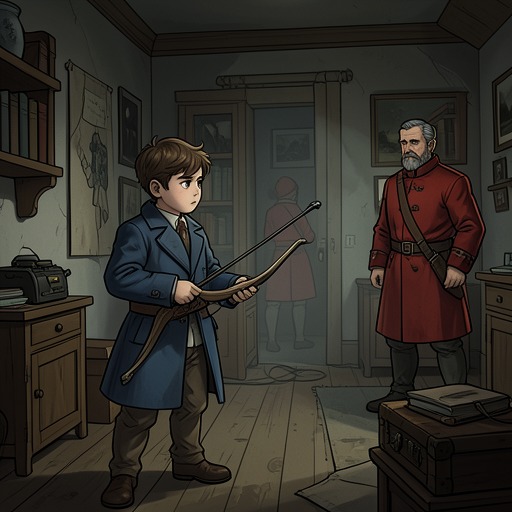
Before Tell goes, Gessler demands an explanation of the second arrow. Tell pretends to be astonished that the Governor noticed it, but Gessler presses him to say what he intended to do with it. Tell draws the arrow from his belt and holds it up as the crowd presses closer to hear. He explains that if his first arrow had pierced Walter rather than the apple, the second would have pierced Gessler; if he had missed the first shot, the second would have found its mark. The success that appeared to satisfy the Governor’s test therefore concealed a contingency aimed directly at the man who created it.
A murmur of approval rises from the crowd as Tell returns the arrow to his quiver and faces Gessler with folded arms and burning eyes. Gessler turns white with fury and orders his men to seize him. The order gives the episode its final change of direction: Tell has met the imposed test, but his account of what the second arrow was for makes clear that compliance did not mean submission. The Governor’s demand produces the exact public display of skill he sought, yet it also elicits an unmistakable declaration of resistance.
Significance of the Trial
The scene’s tension rests on the difference between the shot Gessler commands and the intention Tell keeps in reserve. The first arrow must demonstrate precision under the threat of death; the second records the limit of that forced obedience. The apple, the distance of one hundred yards, the lime tree, and the arrow in Tell’s belt are not incidental details: together they make the danger concrete, then carry the conflict from a public test of marksmanship to a direct confrontation between archer and ruler.
The crowd witnesses both stages. Its fear when Tell’s trembling aim turns toward it gives way to celebration when the apple is split, and its murmur of approval accompanies the disclosure of the second arrow. Gessler can dictate where Walter stands and what Tell must risk, but he cannot control how the spectators interpret Tell’s answer. The apple shot is therefore at once a feat of skill, a family ordeal, and a public exposure of the violence underlying the Governor’s authority.