
The Delegates’ Defeat
William Tell (P. G. Wodehouse Edition)This thread follows the representatives’ attempt to secure tax relief, their humiliation, and the consequences of failed negotiation.
increasing Bearing strength in each event
 decreasing
Bearing strength in each eventdecreasingChosen to Complain
Chosen to Complain
A representative mission
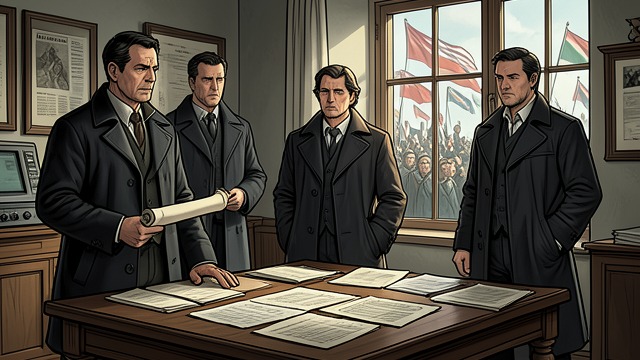
The Swiss people choose Walter Furst, Werner Stauffacher, and Arnold of Melchthal to approach Hermann Gessler.
Three different temperaments
Their confidence in speaking varies, but they carry the same demand for relief.
The mission tests whether a ruler can be persuaded to answer ordinary grievances.
The Audience Hall
The Audience Hall
A hesitant opening
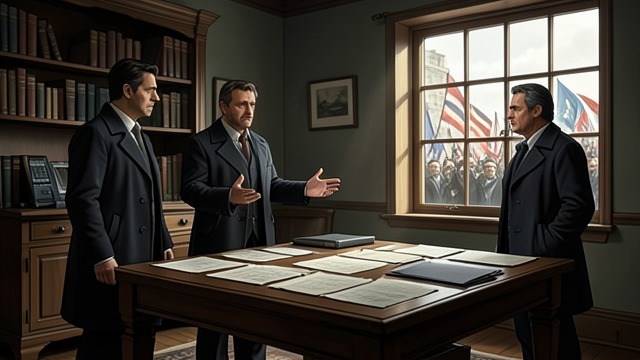
Walter Furst struggles to begin, while Werner Stauffacher and Arnold of Melchthal prompt him.
The demand stated
The delegates tell Gessler that the taxes are too numerous and must change.
Their measured appeal meets a ruler who treats disagreement as defiance.
Oil as Argument
Oil as Argument
Threat made physical
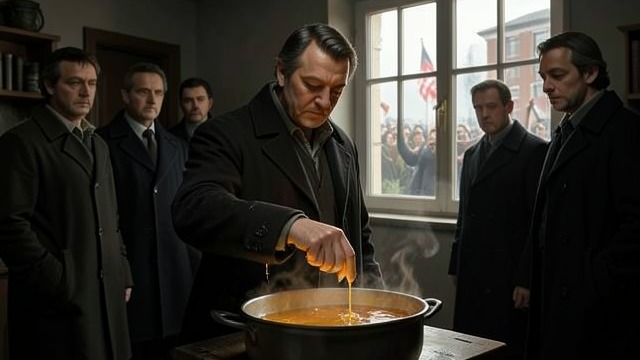
Hermann Gessler brings in a caldron of boiling oil and has Arnold of Melchthal’s finger dipped into it.
Submission bought
Pain persuades the delegates to say that the taxes are acceptable and pay additional fees.
The episode makes coercion a grotesquely literal substitute for debate.
A Second Failure
A Second Failure
Criticism from the crowd
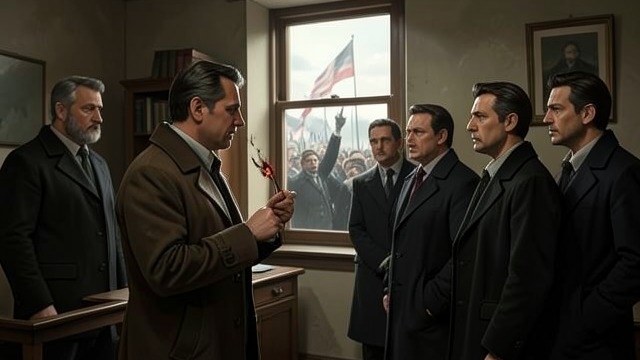
Arnold of Sewa blames the original delegates for lacking tact and claims he could do better.
The same result
He enters the audience hall and returns with a burned finger and no tax relief.
His failure shows that style cannot overcome a system built on intimidation.
Rebellion Proposed
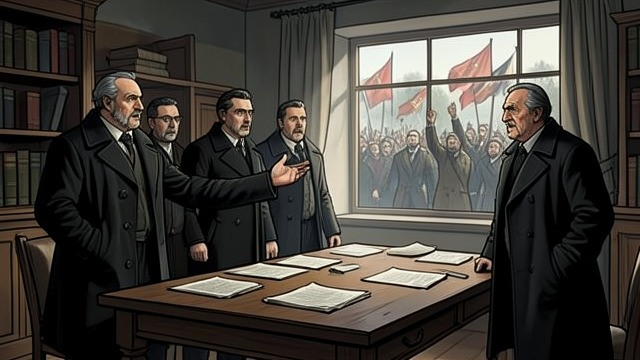
Rebellion Proposed
Negotiation exhausted
The crowd realizes that neither careful representatives nor a self-appointed tactician can persuade Gessler.
A new course
Walter Furst declares that the people must rebel, and the crowd accepts the proposal.
The failed petition becomes a turning point from appeal to resistance.
After discontent over the taxes becomes public
One April morning
During the delegates’ first audience
Soon after the delegates return
Immediately after Arnold of Sewa’s return
