
Unity and Individual Action
William Tell (P. G. Wodehouse Edition)This thread explores the story’s tension between collective organization and the decisive acts of individuals.
increasing Bearing strength in each event
 decreasing
Bearing strength in each eventdecreasingThe Case for Union
The Case for Union
A political principle
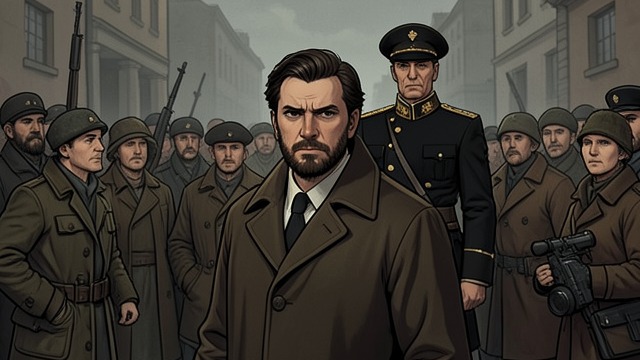
Werner Stauffacher argues that the people can accomplish more if they hold together.
Strength through cooperation
His view anticipates the collective effort eventually required to overthrow the regime.
The story treats organization as necessary even when its leaders disagree about method.
The Case for Solitude
The Case for Solitude
Tell’s counterclaim
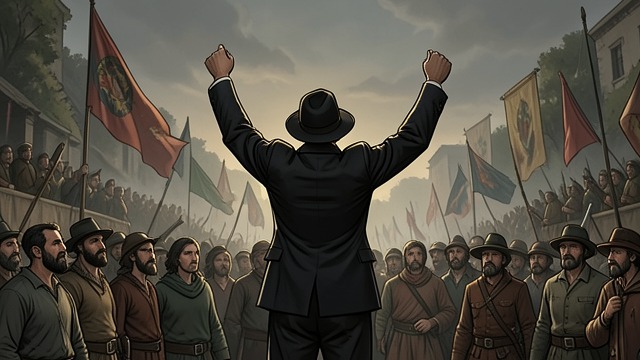
William Tell says that the strong are strongest when they stand alone.
A qualification
He does not reject the people or their cause; he says that his own contribution belongs in deeds, not council.
The tension is between political leadership and individual effectiveness, not between loyalty and selfishness.
A Crowd Waits
A Crowd Waits
Collective hesitation
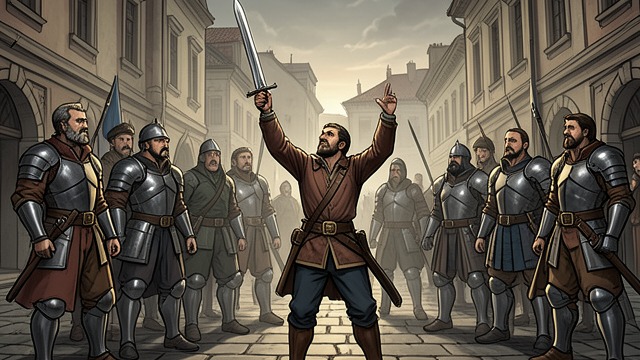
The townspeople taunt the guards but hesitate to begin a fight against armored soldiers.
A leader’s signal
William Tell’s confrontation gives them a moment around which they can gather.
The scene shows both the power and the limitations of spontaneous solidarity.
Individual Deed, Public Meaning
Individual Deed, Public Meaning
A single arrow
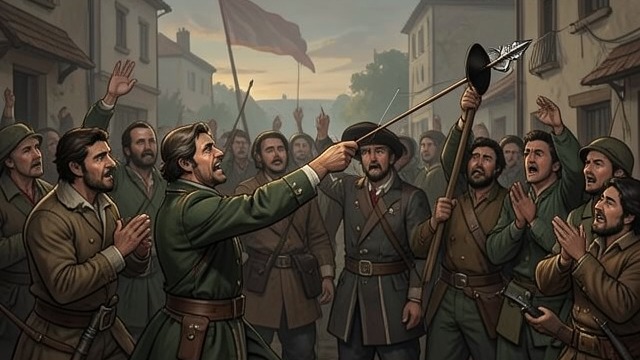
William Tell pierces the hat and pole with a precise shot.
A collective response
The crowd dances and celebrates, interpreting his act as the opening blow of a revolution.
One person’s action acquires political force because a community is ready to receive it.
A People’s Victory
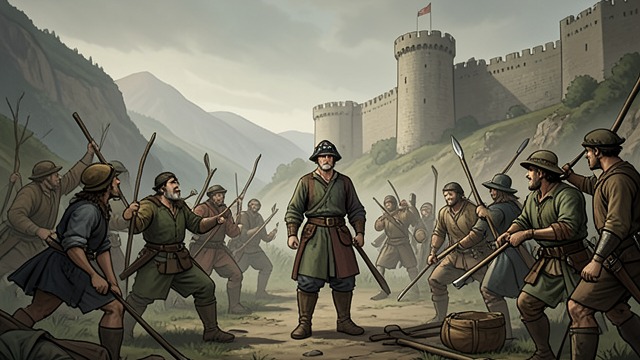
A People’s Victory
Coordinated resistance
The Swiss people attack fortresses across the country after Gessler’s death.
The limits of a single hero
Tell’s acts matter, but the decisive transformation requires many people acting together.
The story reconciles individual courage with collective achievement.
During early resistance discussions
During William Tell’s conversation with the delegates
Before the fight at the pole
After Tell shoots through the hat
On the night the fortresses are taken
