
The Cost of Courage
William Tell (P. G. Wodehouse Edition)This thread examines how courageous resistance repeatedly places individuals in danger and how the story distinguishes bravery from recklessness.
increasing Bearing strength in each event
 decreasing
Bearing strength in each eventdecreasingTell’s Earlier Defiance
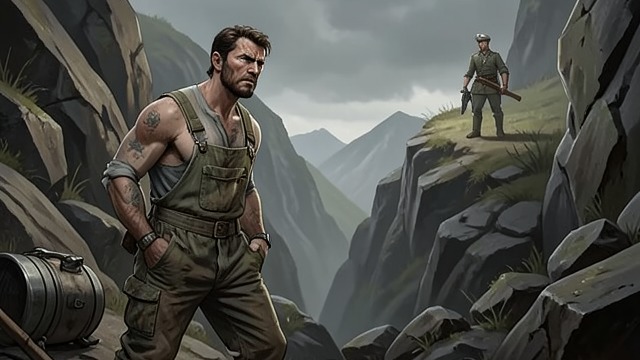
Tell’s Earlier Defiance
Courage in the ravine
William Tell once confronts Hermann Gessler in Schachenthal and speaks contemptuously about his taxes.
A personal cost anticipated
Gessler remembers the insult and waits for a chance to punish him.
The story presents courage as morally admirable but not free of consequences.
A Friend’s Rescue
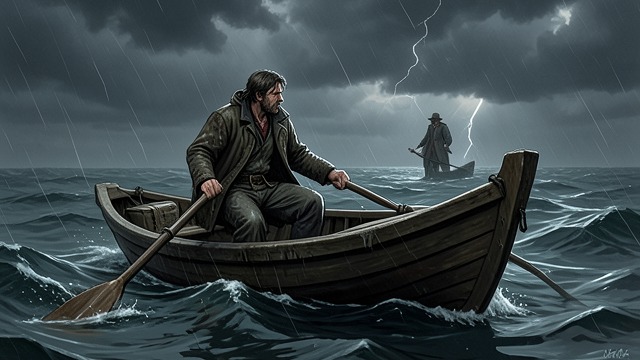
A Friend’s Rescue
Risk accepted
William Tell rows through a storm to save Baumgarten when the ferryman refuses.
Courage as service
His danger is taken on behalf of another person, not for public recognition.
The rescue establishes a pattern of action governed by responsibility to others.
Refusal at the Pole
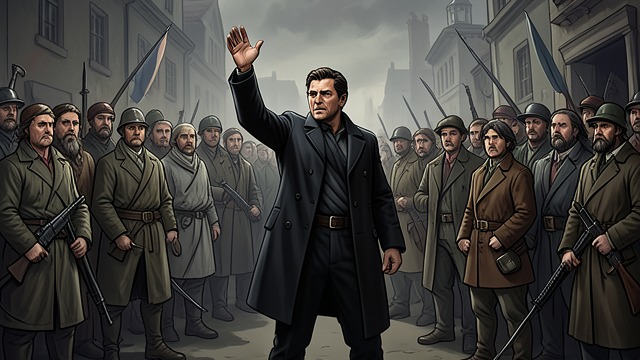
Refusal at the Pole
A risk not calculated
William Tell does not know the new decree but refuses to bow once challenged.
Violence follows
Friesshardt strikes him, drawing the crowd into a fight.
The episode complicates courage: Tell’s defiance is principled, but its consequences spread beyond himself.
A Father’s Impossible Risk
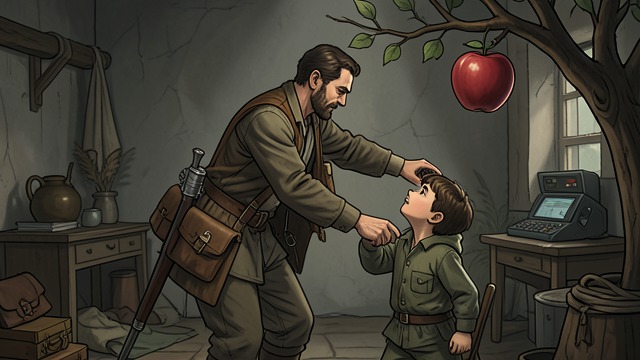
A Father’s Impossible Risk
Courage under coercion
William Tell must shoot at the apple on Walter’s head or face death with him.
Skill constrained by love
Tell initially cannot aim because fear for his son overwhelms his confidence.
The challenge makes clear that bravery does not mean absence of anguish.
The Final Shot
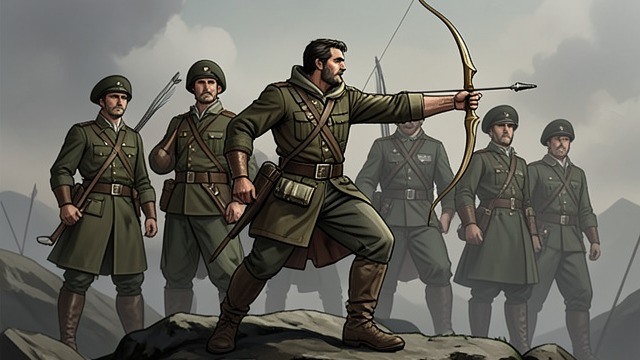
The Final Shot
A captive chooses action
William Tell escapes onto the rock when the soldiers attempt to bind him again.
Danger answered decisively
He shoots Hermann Gessler, completing the threat he had made to protect Walter.
The act carries risk, vengeance, and resistance into a single climax.
Before the tax petition
Before William Tell goes to town
When Tell crosses the meadow
During the apple challenge
During the storm crossing, after Tell reaches the rock
