
The Hat and the Public Test
William Tell (P. G. Wodehouse Edition)This thread traces Hermann Gessler’s hat decree from a petty demand for homage into a public test that exposes and provokes resistance.
increasing Bearing strength in each event
 decreasing
Bearing strength in each eventdecreasingA New Humiliation
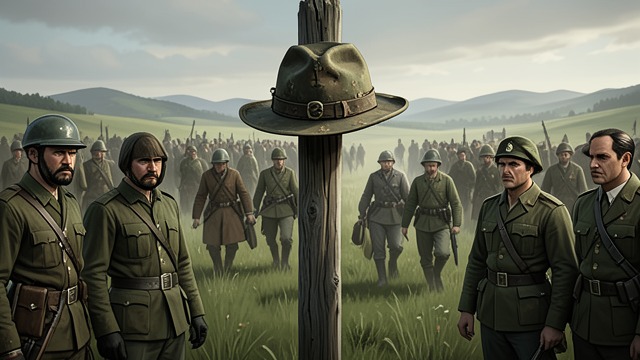
A New Humiliation
An imposed symbol
Hermann Gessler places an old hat atop a pole in the meadow and orders the people to bow to it.
Loyalty made theatrical
The decree turns everyday passage into a public performance of submission.
The hat becomes an emblem of government power precisely because it is so absurd.
Empty Meadow
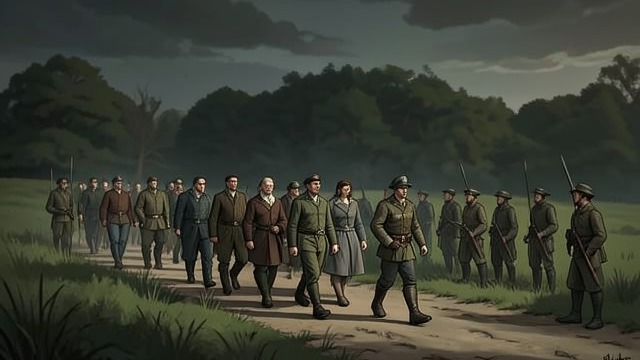
Empty Meadow
Avoiding the command
The Swiss people take longer routes instead of crossing the meadow and bowing to the hat.
A quiet refusal
The soldiers wait at an almost deserted post, unable to compel a display of respect from people who simply stay away.
Their evasion reveals that the decree can be resisted before anyone confronts it directly.
Mockery Turns to Missiles
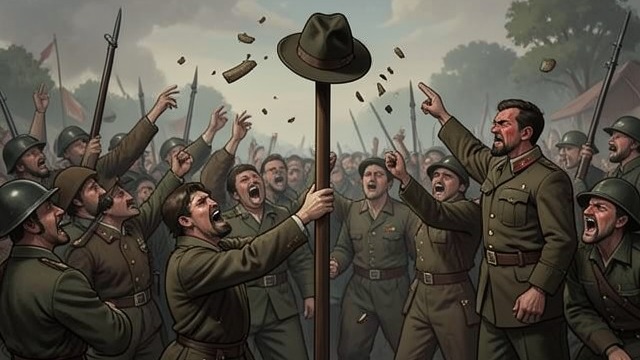
Mockery Turns to Missiles
Public ridicule
People taunt Friesshardt and Leuthold, turning the humiliating order back on its enforcers.
Escalating defiance
Eggs and other missiles fly as the crowd discovers that collective mockery can become direct confrontation.
The gathering prepares the ground for William Tell’s arrival.
The Hat Is Pierced
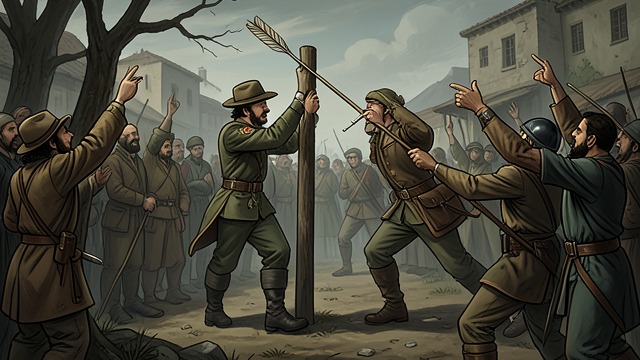
The Hat Is Pierced
Refusal to bow
William Tell walks past the pole without paying homage, and Friesshardt strikes him for disobeying.
A symbol is challenged
After the crowd joins the fight, Tell shoots through the hat and pole with a single arrow.
The act gives popular anger a visible target and a memorable sign of defiance.
A Memorial of Freedom
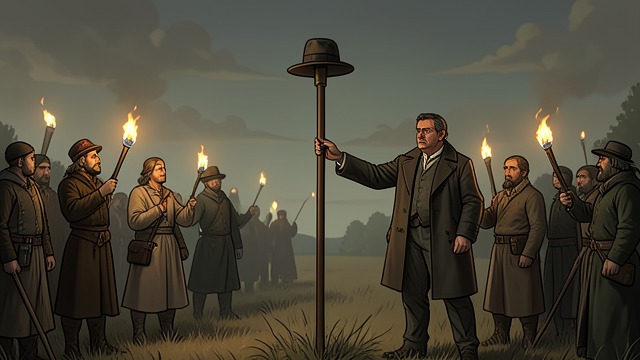
A Memorial of Freedom
Reclaimed meaning
After the revolution succeeds, the people bring the pole and hat forward for destruction.
A deliberate choice
William Tell urges them to preserve the object as a memorial of liberty rather than a tool of submission.
The symbol’s meaning changes with the power to which the people give it.
The day before William Tell reaches the town
The first day of the hat decree
Later that day, as a crowd gathers by the pole
When William Tell crosses the meadow
On the night of the successful uprising
