
The Public Conflict
William Tell (P. G. Wodehouse Edition)This thread traces conflict between the Swiss people and the regime as silence, evasion, confrontation, and rebellion give way to independence.
increasing Bearing strength in each event
 decreasing
Bearing strength in each eventdecreasingPrivate Grievance
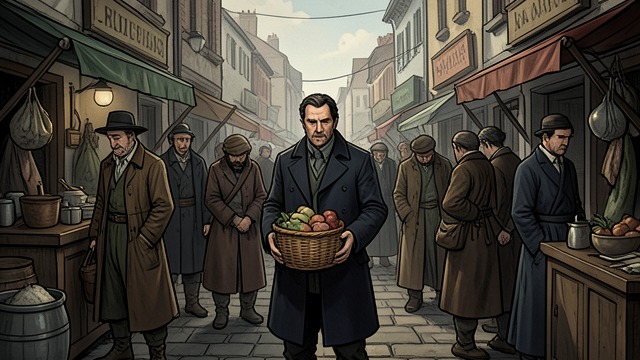
Private Grievance
A common burden
The Swiss people face taxes on goods that shape ordinary household life.
Discontent gains a focus
The Governor’s policy gives people a shared reason to resent rule from Austria.
A diffuse frustration begins to take political form.
A Failed Appeal
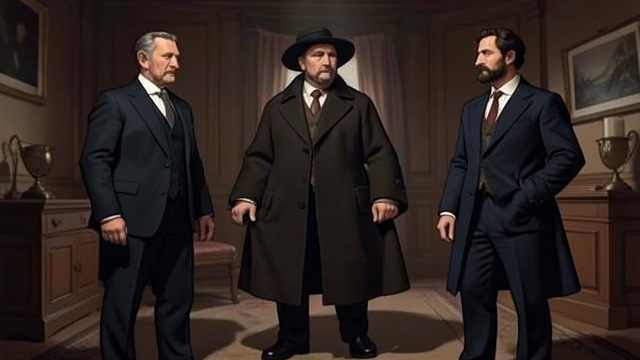
A Failed Appeal
Representatives speak
Walter Furst, Werner Stauffacher, and Arnold of Melchthal carry the people’s complaint into the audience hall.
A humiliating return
They leave without tax relief, having been intimidated into accepting the existing policy.
The failure weakens faith in persuasion and strengthens the case for resistance.
Avoidance and Ridicule
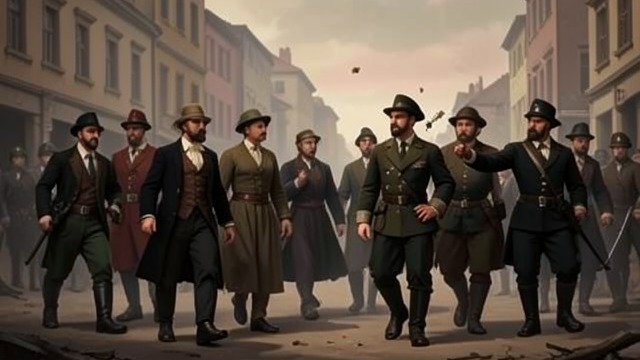
Avoidance and Ridicule
Noncompliance without battle
The people circumvent the meadow rather than perform the required homage.
Mockery follows
A crowd later jeers at the guards and pelts them with missiles.
The resistance is still improvisational, but it is no longer invisible.
The Crowd Joins Tell
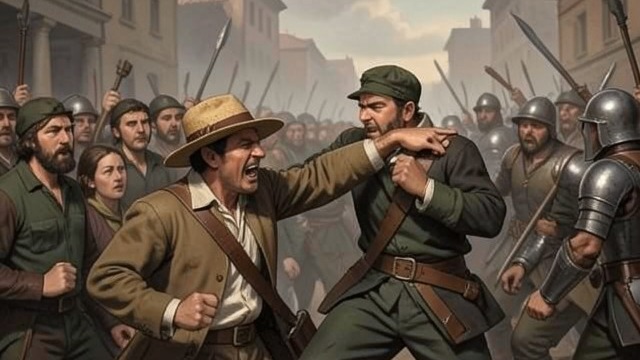
The Crowd Joins Tell
A first act of violence
Friesshardt strikes William Tell, and Tell answers with a blow of his own.
Collective action
The crowd now fights beside him, despite its fear of the soldiers’ armor.
The clash transforms spectators into participants, though Tell’s arrow through the hat makes the clearest statement.
Rebellion and Freedom
Rebellion and Freedom
A rising becomes possible
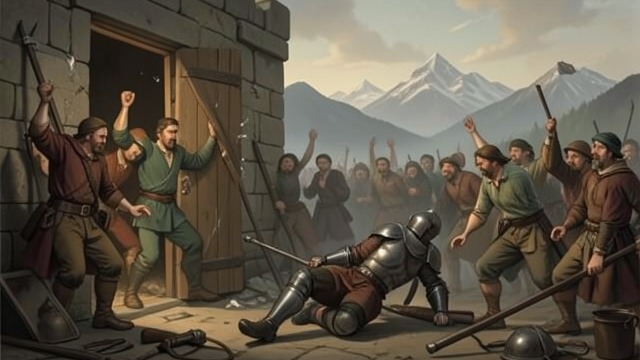
The people attack the fortresses built by Hermann Gessler and dismantle the regime’s strongholds.
A favorable opening
The Emperor’s death prevents Austria from responding quickly, and the Swiss people consolidate their freedom.
What began with taxes and a hat ends in independence.
Early in the story
After the people send their delegates
The first day of the pole decree
During the fight around the pole
After news of Hermann Gessler’s death reaches the towns
