“For he’s a jolly good fellow”
William Tell (P. G. Wodehouse Edition)For he’s a jolly good fellow is the crowd’s celebratory chant after Werner Stauffacher proposes William Tell as the leader they seek. Its significance lies in how it makes the choice public: the people do not merely hear a name put forward but answer together, turning a proposal into a moment of communal endorsement.
From nomination to acclamation
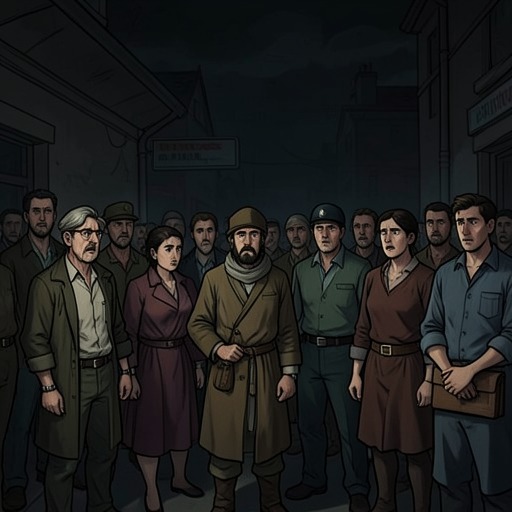
The chant follows a brief exchange about leadership. One speaker says that the group wants a leader; Arnold of Sewa begins to offer himself, but Werner Stauffacher identifies William Tell as the man for the job. The crowd responds with a hurrah and immediately takes up the song, making the expression an enthusiastic answer to Stauffacher’s nomination.
A song shaped by collective voice
Werner Stauffacher sets the time, and the crowd sings the refrain in successive, emphatic repetitions: “For he's a jolly good fellow!”; “For he's a jolly good fellow!!”; and “For he's a jolly good fe-e-ll-ow!!!!” The stretched final syllable and accumulating exclamation marks give the printed chant a rising, performative energy. Its closing line, “And so say all of us!”, makes the collective nature of the praise explicit: the song presents approval not as one person’s judgment but as the crowd’s shared declaration.
The chant’s immediate aftermath
The people sing until they are all quite hoarse, then go off to bed for a few hours’ sleep before beginning the day’s labours. The sequence gives the cheer a practical as well as celebratory place in the scene: the crowd’s public affirmation of William Tell is followed by a pause before work begins.