Cap Homage Decree
William Tell (P. G. Wodehouse Edition)The Cap Homage Decree is Hermann Gessler’s order that anyone crossing the meadow outside the town gates must bow before his hat. By making an old cap stand in for the governor and backing the demand with threatened arrest, Hermann Gessler turns a public space into a stage for compulsory submission; the townspeople’s answer is to avoid the stage altogether.
Construction and Display
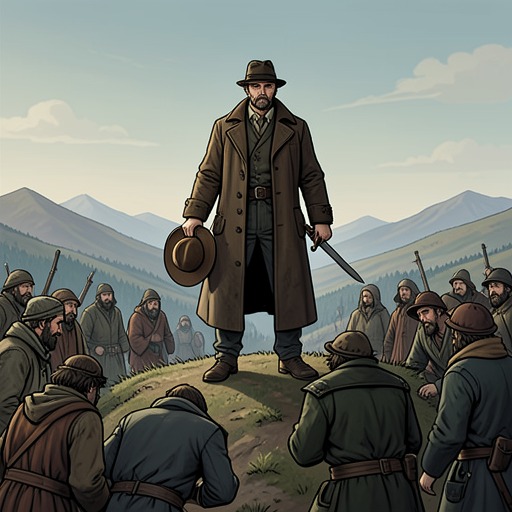
After wanting to forbid something else but failing to think of what, Hermann Gessler devised a new command. He had his servants cut a very long pole and fetch the oldest of his hats, specifying that it should be neither the Sunday and State occasions hat, nor the everyday hat, nor the hunting hat. The servants placed the old hat on top of the pole and set it in the middle of the meadow just outside the town gates. The chosen object was not a ceremonial best hat but one Hermann Gessler could spare, made conspicuous by its height and position.
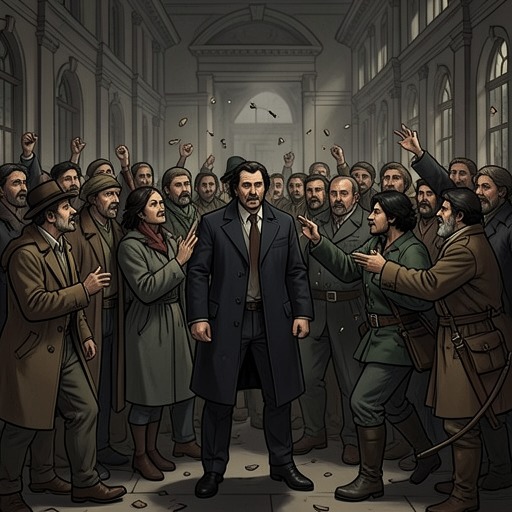
Hermann Gessler then sent heralds north, south, east, and west to summon the people, saying he had something important and special to tell them. Men, women, and children gathered in front of the Palace steps. At eleven o’clock, after breakfast, he appeared to explain the pole and hat, presenting the display as a solution to the supposed difficulty of having too many people visit his Palace to do reverence to him.
The Order and Its Threats
Hermann Gessler claimed that the people respected and loved him and would like to come to the Palace every day to pay homage. The crowd did not cheer when he paused for their response, and voices from among them contradicted his account. He answered heckling with threats of extravagant punishments: wild elephants, pink scorpions, and trained bluebottles. The threats make the speech comic in form, but also establish the force behind the decree: dissent is met not with argument but with promised bodily torment.
The order itself made the cap a proxy for Hermann Gessler. Since the crowd could not all fit at the Palace, he announced that people could pay reverence to the hat instead, then made that act compulsory: anyone crossing the meadow without bowing would be arrested by his soldiers and subjected to another threatened punishment, pecking by infuriated blackbirds. The decree therefore attached a political gesture to an ordinary act of passage. It did not require everyone to visit the Palace; it required anyone who crossed this particular open ground to acknowledge the governor’s authority.
Enforcement and Evasion
To enforce the command, Hermann Gessler assigned two bodyguards, Friesshardt and Leuthold, to watch the pole all day. Their task was to ensure that nobody passed without kneeling before it and taking off a hat. The decree thus depended on a visible test and a visible guard: a passerby’s conduct could be judged at the spot where the hat had been planted.
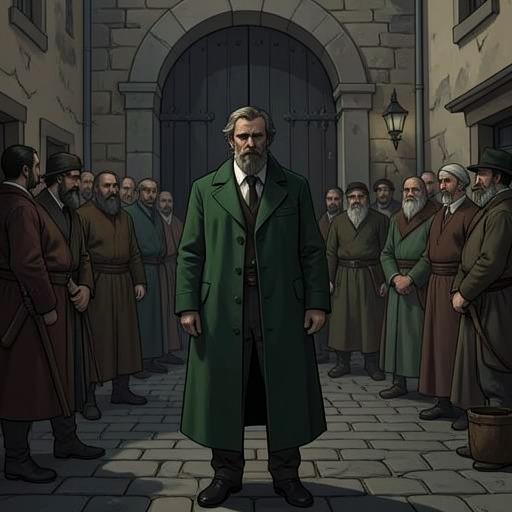
The townspeople found a practical way around the demand. Knowing that crossing the meadow would require them to bow, they chose not to cross it and went the long way round instead. The meadow, once remembered by Friesshardt as crowded like a fair, was deserted, leaving the two guards with no one to compel. Their evasion frustrates the decree without requiring them to submit or confront the soldiers directly: the governor controls the terms of passage across the meadow, but the people decline to use that route.
Public Reception and Significance
When Hermann Gessler went indoors after his announcement, eggs and cabbages flew through the air, and the soldiers hustled the crowd away until the space before the Palace gates was clear. The scene gives the decree an immediate public response that his speech had failed to obtain: the crowd’s silence, heckling, thrown produce, and subsequent avoidance all contrast with the reverence he says he expects. The narration places the proclamation the day before William Tell and Walter set out for town, establishing the decree as the public rule awaiting them there.
The hat’s elevation makes the demand simple to see, while the crowd’s detour exposes its practical limit. Hermann Gessler can station guards at the pole and threaten those who cross without bowing, but the townspeople can make the meadow empty. The episode presents authority as both theatrical and coercive: the cap is made to represent the governor, and an imposed gesture is treated as proof of obedience, yet enforcement cannot produce the willing homage the speech pretends already exists.