Tell’s Second Arrow
William Tell (P. G. Wodehouse Edition)Tell’s Second Arrow is first a hidden possibility, then a warning spoken under a promise of safety, and finally the weapon that kills Hermann Gessler. Its significance lies in the way these stages are joined: William Tell explains exactly what the arrow is for, and the later shot makes that conditional declaration real. The arrow’s meaning therefore changes from evidence of Tell’s intention to the instrument of its fulfilment.
The Arrow as Evidence
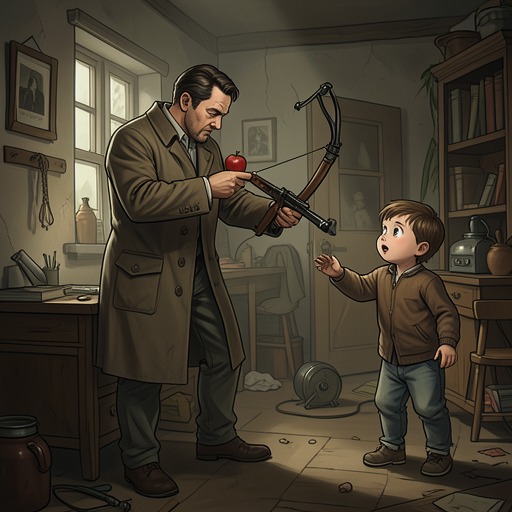
When Gessler asks Tell to explain his actions before leaving, he points to a detail from the apple shooting: Tell had put one arrow in the string and kept another in his belt. Gessler insists there was only one thing he wished to know, despite Tell’s initial reply, “A thousand, your Excellency.” The second arrow is not a weapon that appears unexpectedly at the later confrontation; its presence was visible during the earlier test, where it quietly raises a question about what Tell feared or intended.
Tell pretends to be astonished when Gessler names it, but the pretence does not fool the Governor. Gessler repeats the question and, when Tell does not immediately answer, says his life is safe whatever the explanation. That assurance changes the terms of the exchange: Tell can now disclose the arrow’s purpose under Gessler’s own promise. The episode makes the hidden weapon evidence in a contest of interpretation. Gessler has noticed the act; Tell has to decide whether to give it meaning in words.
A Conditional Threat Made Plain
Tell stops fidgeting with his bow and meets Gessler’s eye steadily. He accepts the promise, draws the arrow from his belt, and holds it up as the crowd presses forward to hear him. The gesture makes the weapon visible while he states the condition attached to it: “Had my first arrow pierced my child and not the apple, this would have pierced you, my lord. Had I missed with my first shot, be sure, my lord, that my second would have found its mark.”
The threat is precise rather than general. Tell connects the second arrow to two possible failures of the first shot: it might strike his child instead of the apple, or it might miss. In either case, he says, the next target would be Gessler. The arrow thus expresses both a father’s response to the danger imposed on his child and Tell’s declared intention toward the Governor. The first shot had been made under the pressure of the apple test; the second was reserved for what would follow if that test ended in catastrophe.
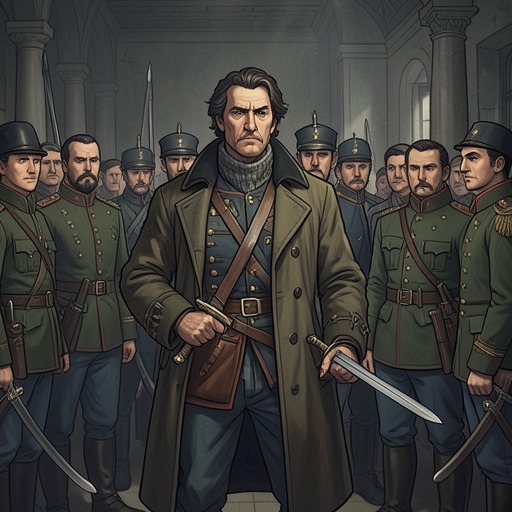
The crowd responds with a murmur of approval. Tell thrusts the arrow back into his quiver and faces Gessler with folded arms and burning eyes. Gessler turns white with fury and orders, “Seize that man!” His reaction immediately exposes the conflict between the promise that Tell’s life was safe and the Governor’s response to hearing the truth. The arrow is no longer merely a concealed object: once Tell has explained it, its meaning becomes a direct challenge to Gessler’s authority.
Fulfilment on the Deck
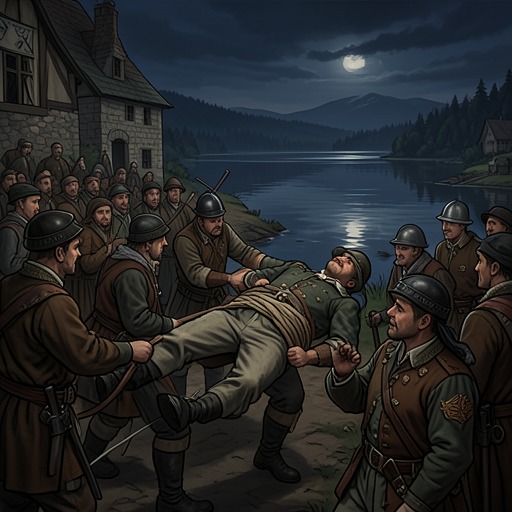
The later scene converts the declared possibility into action. Gessler roars to his bowmen, “Shoot! shoot!” They hastily fit arrows to their strings, but Tell is ready before they are. His shaft rushes through the air, and Gessler falls dead on the deck, pierced through the heart. The narrative identifies the weapon explicitly: “Tell’s second arrow had found its mark, as his first had done.” The first arrow reached the apple; the second reaches the Governor.
That parallel gives the two shots sharply different outcomes while binding them into one sequence. In the first, Tell’s skill brings the perilous test to its intended mark. In the second, he uses the reserved arrow against the man who imposed the danger and then ordered his arrest. The bowmen’s belated attempt to shoot cannot interrupt the action: Tell is ready first, and Gessler is dead before they can act. The arrow’s earlier concealment and spoken purpose now have an irreversible consequence.
Narrative and Thematic Significance
The arrow’s force comes from the gap between preparation, explanation, and use. At first, Gessler sees only an unexplained second shaft. Tell’s answer discloses the contingency behind it; the later shot fulfils that contingency in a different immediate circumstance. The story does not leave the threat as bluster or let its meaning remain uncertain. Tell says what the arrow would do, and the action on the deck confirms its capacity to do it.
The scene also turns speech into part of the action. Tell’s disclosure is made after Gessler promises his life, before an expectant crowd, and while Tell holds up the very arrow he is describing. Its effect is immediate: the crowd approves, Gessler grows furious, and he orders Tell seized. The later killing gives the earlier words further weight without changing what they originally specified. Tell had described the arrow as the answer to the possible death of his child or a missed shot; when he eventually fires it, Gessler becomes its target and the declared danger to the Governor is fulfilled.
As a narrative object, Tell’s Second Arrow links the apple test to Gessler’s death through a visible, remembered detail. It begins in Tell’s belt, is displayed and explained, returns to the quiver, and finally strikes the Governor. Its course makes the reversal legible: the weapon kept ready in the shadow of a test imposed by Gessler becomes the instrument that ends his life.