
Baumgarten’s Flight and Rescue
William TellThis flow follows the consequences of Baumgarten’s defense of his household and Tell’s intervention on the stormy lake.
increasing Bearing strength in each event
 decreasing
Bearing strength in each eventdecreasingAn Attack on the Household
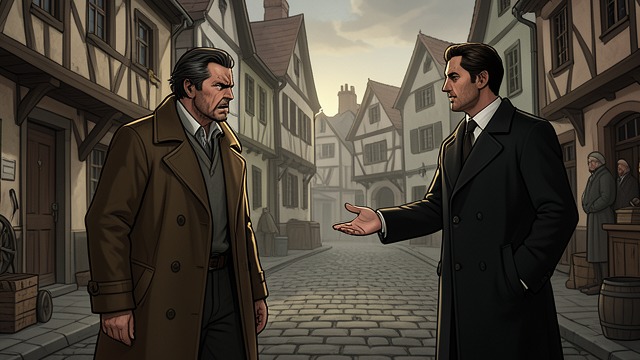
An Attack on the Household
A wife under threat
Conrad Baumgarten tells the herdsman and fisherman that a seneschal entered his home and tried to force himself on his wife. Baumgarten says he stopped the assault with his axe.
A desperate flight
He is now being pursued by the governor’s horsemen and begs for passage across the lake. His act is presented as a defense of his household’s honor, though it has placed his life in immediate danger.
The incident makes tyranny intimate and physical. The abuse does not stop at political rights; it reaches into homes and threatens those with the least power to resist.
A Boatman’s Refusal
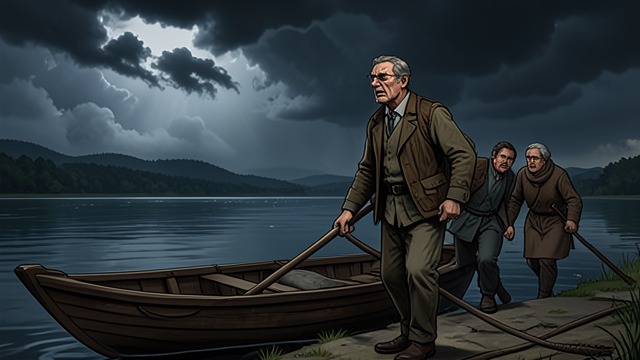
A Boatman’s Refusal
Fear of the storm
Ruodi refuses to steer into the rising lake, fearing that the wind and waves will kill him. Kuoni and Werni urge him to help the fugitive, but they cannot dismiss the danger to his own family.
A moral dilemma
Baumgarten pleads that the authorities will kill him if he is caught. Ruodi’s hesitation reflects the pressure created by both natural danger and political pursuit.
The scene avoids making courage effortless. A rescue will require someone to accept a real risk, not simply condemn the person who is afraid.
Tell Takes the Helm
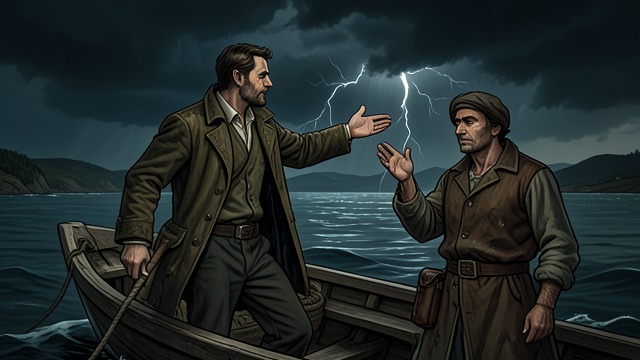
Tell Takes the Helm
A choice without delay
Wilhelm Tell arrives and learns that the pursuers are close. He rejects further discussion, takes the boat, and tells the herdsman to comfort his wife if he does not return.
Courage as responsibility
Tell does not claim that the crossing is safe. He believes Baumgarten’s danger makes action necessary and would rather trust himself to the storm than leave another man to the governor.
His decision embodies the play’s contrast between caution and immediate aid. It also creates a debt of gratitude that shapes later relationships among the Confederates.
A Successful Crossing

A Successful Crossing
Skill under pressure
Tell pilots the small boat through the storm and brings Baumgarten to safety. His skill does not make the crossing harmless; it makes a dangerous rescue possible.
The pursuers arrive too late
The governor’s horsemen reach the shore and threaten the people left behind, but Baumgarten has already escaped. The immediate rescue succeeds while the broader violence of the regime remains visible.
Tell’s action becomes a remembered measure of courage. Later, when he is seized, Hedwig will recall that he risked his life for another household.
Gratitude Repaid
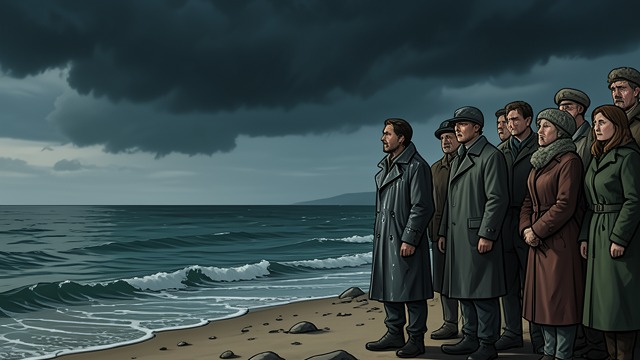
Gratitude Repaid
A rescued man joins the cause
Baumgarten later appears among the armed Confederates at Rütli and contributes to the common undertaking. His rescue has brought him into a network of mutual aid rather than leaving him as an isolated fugitive.
A debt transformed
He offers his life for the country, saying that Tell saved him and that his own honor is at rest. His private deliverance becomes a reason to defend other people’s homes.
The subplot links personal kindness to political solidarity. The Confederacy grows not only from councils and oaths but from acts of help remembered and returned.
Opening scene, at the shore of Lake of Lucerne
Moments after Baumgarten reaches the shore
Moments after Tell arrives
During the storm, across Lake of Lucerne
Near the ending, after Baumgarten joins the rising
