
The Governors’ Strongholds
William TellThis flow follows the fortresses from symbols of domination to targets of coordinated resistance and eventual destruction.
increasing Bearing strength in each event
 decreasing
Bearing strength in each eventdecreasingBuilding the Keep
Building the Keep
Forced labor
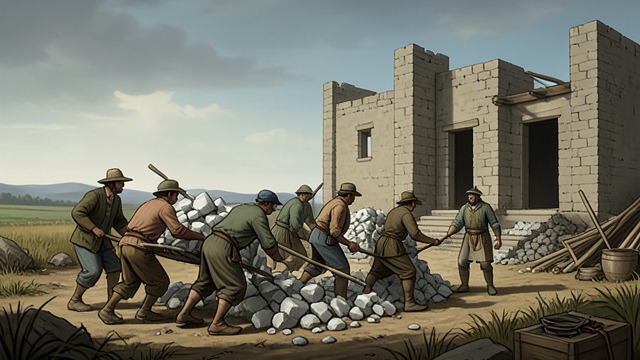
Workers haul stone and mortar to build the keep at Altdorf. They complain that they are making a prison for themselves, while the taskmaster insists that the structure will keep the people obedient.
A threat made permanent
The building changes the landscape from an open communal space into a site of armed authority. Its unfinished walls already shape how the workers imagine their future under the governor.
The keep turns oppression into architecture. Its presence makes the question of resistance urgent before the governor even completes the fortress.
Fear of Rossberg and Sarnen
Fear of Rossberg and Sarnen
Strongholds as weapons
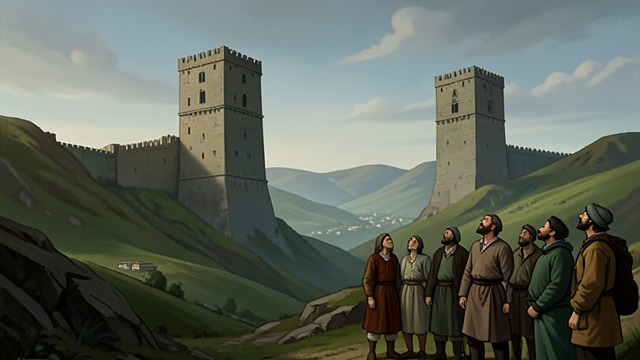
The delegates identify Rossberg Castle and Sarnen as bases from which the governors can strike the valleys. Their walls protect officials while allowing sudden violence against surrounding communities.
A coordinated objective
The Confederates conclude that the fortresses must be taken before they can safely rise in arms. Their plan depends on surprise and simultaneous action across the cantons.
This military calculation links local geography to political power. A community may be numerous and determined yet remain vulnerable if the enemy controls its entrances and fortified heights.
A Secret at Rossberg
A Secret at Rossberg
An opening inside the fortress
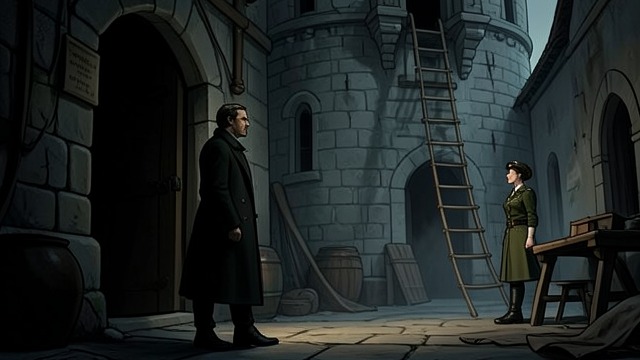
Arnold of Melchthal proposes that he can scale Rossberg with help from a woman in the garrison who may lower a rope ladder. The plan depends on secrecy and on an existing personal connection within the stronghold.
Risk concentrated in a few hands
The proposal shows that the uprising is not a simple mass assault. Its success requires carefully chosen people to act inside enemy defenses while others remain ready nearby.
The plan also carries human risks that the political assembly cannot fully control. Once the ladder is lowered, the operation must unfold faster than the governors can respond.
The Strongholds Taken
The Strongholds Taken
The rising begins
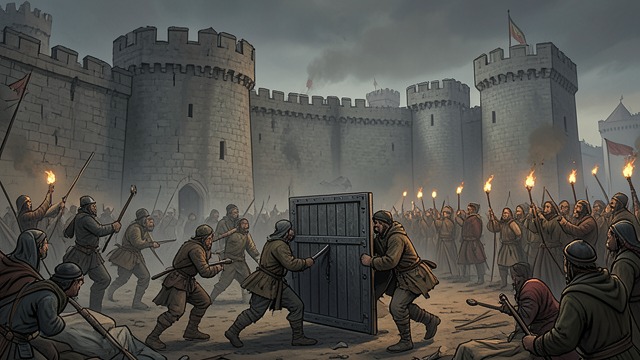
The Confederates seize the governors’ strongholds and drive the officials from the country. The action fulfills the strategy agreed at Rütli, though the developing crisis over Bertha puts additional pressure on the participants.
A fortress becomes a trap
When people learn that Bertha has been imprisoned in the stronghold, rescue becomes urgent. The battle against an institution of control now also requires saving a person trapped within it.
The success of the uprising is therefore both military and moral. The Confederates must show that their cause protects individuals rather than merely exchanging one set of rulers for another.
The Scaffold Destroyed
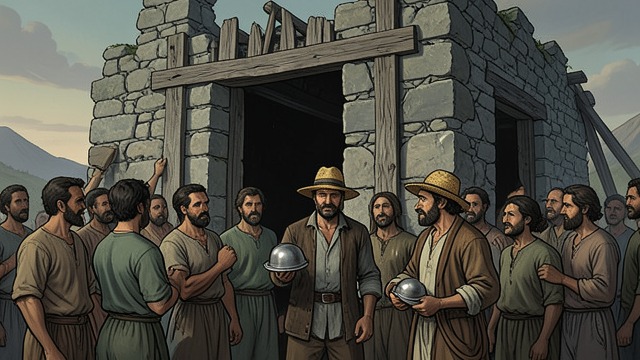
The Scaffold Destroyed
A public structure falls
As news of victory arrives, the people of Uri rush to tear down the keep and its scaffold. The builders themselves know how to dismantle the structure they were forced to raise.
A symbol reclaimed
The cap that once demanded a salute is carried into the crowd. Walter Furst refuses to destroy it, proposing that it be preserved as a reminder of the power the people have overcome.
The scene converts objects of domination into evidence of collective victory. The keep disappears, while the cap’s meaning changes from compulsory obedience to remembered freedom.
Early in the story, at Altdorf
At the Rütli meeting
After the Rütli meeting, before the uprising
Near the ending, during the coordinated rising
At dawn near the ending, at Altdorf
