
Freedom and the Limits of Victory
William TellThis flow traces how the play tests whether the fall of the governors can create a more inclusive and durable freedom.
increasing Bearing strength in each event
 decreasing
Bearing strength in each eventdecreasingFreedom as a Shared Defense
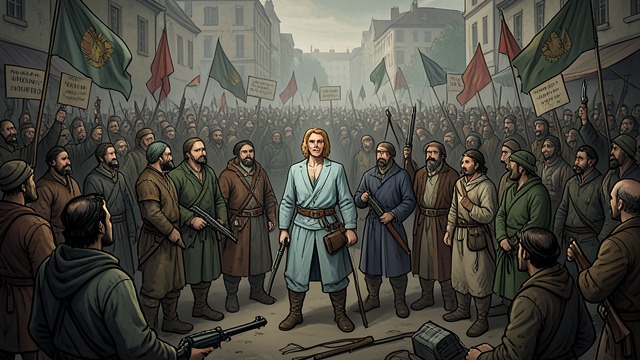
Freedom as a Shared Defense
A common stake
The Confederates swear to stand together in danger and death. Their oath is rooted in the understanding that each canton is vulnerable if it faces the governors alone.
Protection beyond self-interest
The alliance asks its members to defend one another’s homes and families, not merely their own property. The stories of Baumgarten and Melchthal make that obligation concrete.
Freedom in the play is therefore relational. A community is secure only when its members accept responsibility for people beyond their immediate household.
A Victory Not Yet Secure
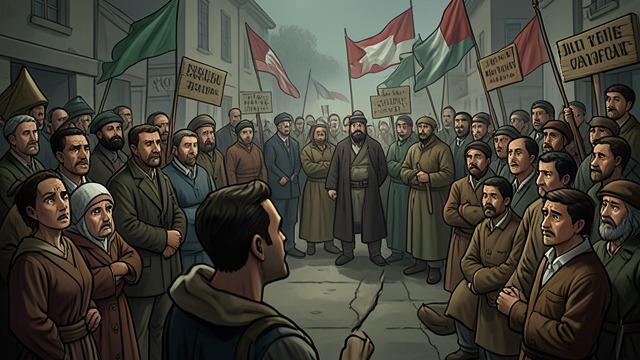
A Victory Not Yet Secure
The warning after celebration
Walter Furst reminds the people that the ruler may send an army to restore the expelled officials. Removing the local governors has not ended every external threat.
Freedom requires vigilance
The Confederates answer that their unity and knowledge of the mountain passes will help them resist. Their confidence is matched by an awareness that victory must be defended after the fighting ends.
The play refuses to treat a single successful rising as permanent safety. Political freedom requires institutions, cooperation, and readiness to confront future attempts at domination.
The Limits of Aristocratic Inheritance

The Limits of Aristocratic Inheritance
A noble house at a turning point
Attinghausen dies as the last of his line, and his possessions pass to Rudenz. The succession might have restored traditional hierarchy without changing the condition of the people.
Inheritance redirected
Rudenz pledges himself to the Confederates and rejects the distance he once maintained from the peasantry. His later decision to free his serfs demonstrates that political conversion can reshape what inheritance means.
The transition does not erase social divisions, but it makes inherited power answerable to a wider community. The future depends on whether the new heir uses his position in service rather than domination.
Freedom Extended to Bertha

Freedom Extended to Bertha
A claim to citizenship
Bertha asks the Confederates to receive her into their league and protect her rights. She does not seek rescue only as a noblewoman; she asks for membership in the new community.
Consent replaces coercion
The people welcome her, and she chooses Rudenz freely. Her marriage follows the end of the court’s attempt to control her future.
The resolution shows that public liberty must be credible in personal relationships. A free community cannot claim success while treating women as property to be assigned by powerful men.
A Wider Meaning of Liberation

A Wider Meaning of Liberation
More than a change of rulers
The governors are expelled, the keep is dismantled, and the cantons reclaim control of their local affairs. These events establish the immediate meaning of political victory.
A promise beyond the battlefield
Rudenz frees his serfs, Bertha enters the league as a citizen, and Tell returns to his family. Each resolution extends freedom into social relations that the fall of a fortress alone could not transform.
The ending presents liberty as a continuing responsibility. Its promise depends on communities choosing mutual protection over coercion after their former enemies have been driven out.
At the Rütli meeting
After the governors’ strongholds fall
After Attinghausen’s death
At the final gathering
At the close of the play
