
The Language of Nature and Political Freedom
William TellThis flow traces how mountains, storms, animals, and open landscapes give physical shape to the play’s ideas of danger and liberty.
increasing Bearing strength in each event
 decreasing
Bearing strength in each eventdecreasingThe Alpine Opening
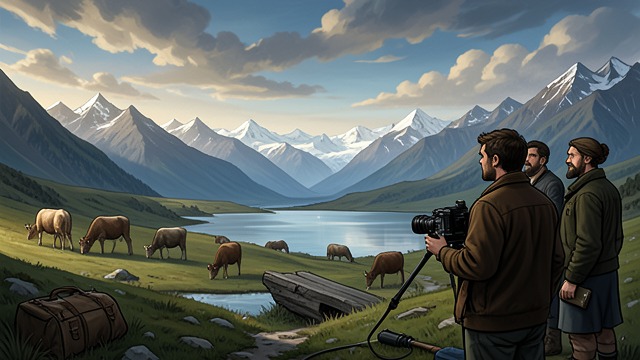
The Alpine Opening
A living landscape
The play opens with music, grazing herds, the lake, and distant glaciers. Local people read changes in the weather through animal behavior and familiar mountain signs.
Beauty beside danger
The same landscape that offers pasture and shelter can produce storms, falling ice, and sudden death. Its inhabitants are neither secure nor helpless; they learn how to move through its dangers.
The opening sets a physical standard against which political power will be measured. The people’s knowledge of their environment is practical, inherited, and closely tied to their ability to live freely.
Mountains as a Bulwark
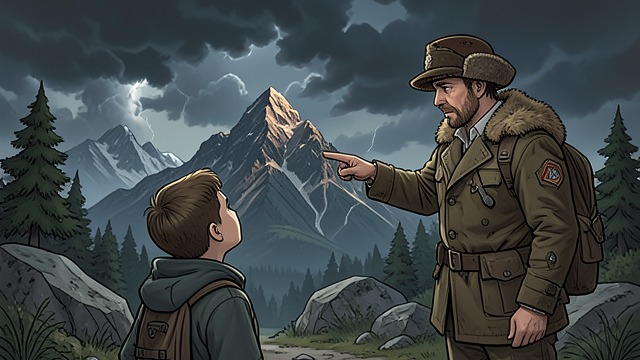
Mountains as a Bulwark
A child’s question
Walter asks why people do not leave the difficult mountain country for the fertile lowlands. Tell explains that the lowland fields and resources belong to kings and bishops.
A different kind of safety
Walter concludes that he would rather live beneath avalanches than among people who cannot trust one another. Tell agrees that mountain peaks are preferable to evil-minded rulers.
The exchange gives hardship a political meaning. Freedom does not mean that nature is gentle; it means living with dangers one understands rather than submitting to human domination.
The Storm as a Limit on Power
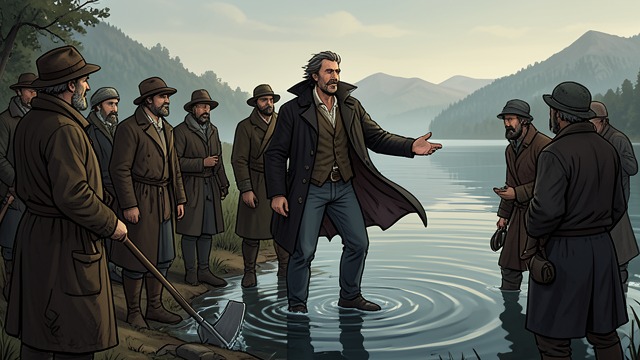
The Storm as a Limit on Power
Nature ignores commands
Gessler’s armed party cannot order the wind and waves to subside. The governor’s official authority has no effect on the elements that threaten the ship.
Knowledge becomes decisive
Tell’s familiarity with the lake makes him valuable to his captors. When they free him to steer, he uses his skill to reach a ledge and escape.
The storm does not serve as a simple moral judge. It reveals that political power is limited and that practical knowledge can matter more than rank when people face a danger no one controls.
The Pass as an Arena
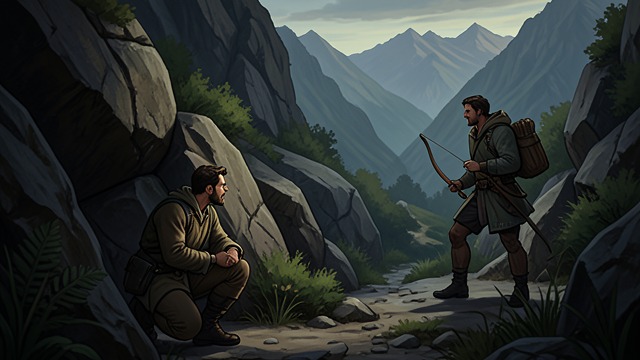
The Pass as an Arena
A narrow route
Tell chooses a constricted pass where Gessler must travel and where pursuit is difficult. The landscape that protects the people also shapes the terms of their confrontation with the governor.
Concealment and exposure
Rocks and brushwood give Tell cover, while the passing road brings ruler and archer within range. The geography makes a private act possible at the heart of a public conflict.
The pass concentrates the play’s opposing forces. Political authority enters a terrain it cannot fully command, and Tell’s knowledge of that terrain helps determine what follows.
Signals over the Valleys
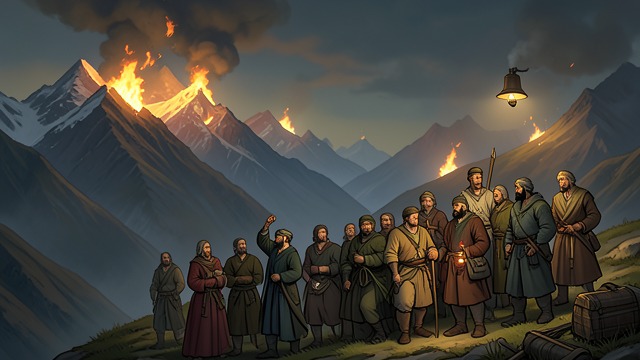
Signals over the Valleys
The landscape carries news
Beacon fires appear on the mountain tops and bells ring across the country. Communities separated by distance can see and hear that their allies have acted.
A shared landscape reclaimed
The mountains that once made communication difficult become the medium through which the rising coordinates its victory. People gather at Altdorf with knowledge that the other cantons have also moved.
Nature does not create political unity by itself, but the Confederates use the landscape they know to sustain it. Their freedom is rooted in a country that they can navigate, inhabit, and defend together.
At the beginning of the play
Midway through the story, as Tell walks with Walter
Near the ending, while Tell’s ship is caught in the storm
Near the ending, on the road to Küssnacht
At dawn, during the successful rising
