
The Two Assassinations
William TellThis flow contrasts the killing of Gessler with the murder of Albert I and examines how motive and context shape their different meanings.
increasing Bearing strength in each event
 decreasing
Bearing strength in each eventdecreasingGessler’s Pattern of Coercion
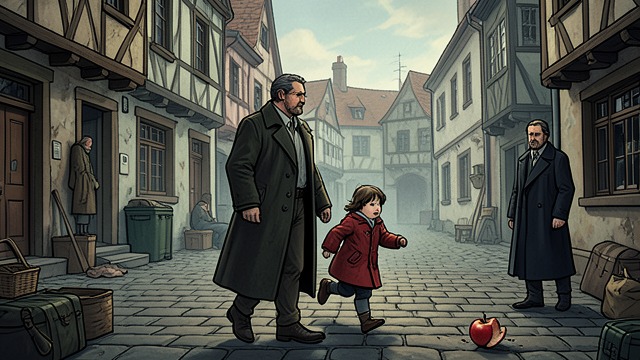
Gessler’s Pattern of Coercion
Repeated abuses
Gessler has threatened households, demanded a salute to his hat, and forced Tell to risk his son’s life. Each episode suggests that his authority serves intimidation rather than impartial justice.
A crisis of protection
The governor imprisons Tell after the apple shot, leaving the family and community uncertain whether law offers any protection. His conduct creates the immediate political and personal danger against which Tell acts.
This pattern is essential to understanding the later killing. The story establishes Gessler’s coercion before Tell’s arrow turns the conflict into a final confrontation.
Tell’s Family at Risk
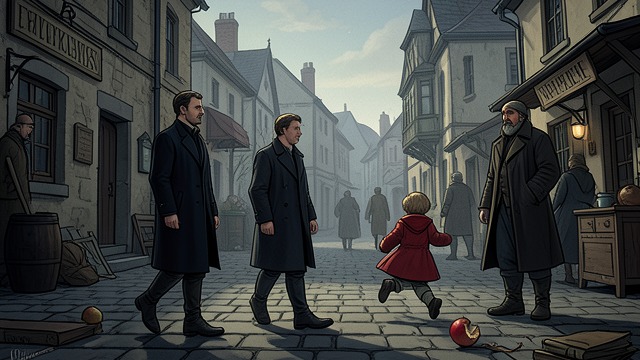
Tell’s Family at Risk
A threatened return
Tell learns that Gessler intends to transport him to confinement. Even after his escape, the governor remains free to pursue him and threaten his home.
A vow shaped by fear
Tell recalls the moment when Gessler made Walter the target of the apple shot. He says his second arrow had been intended for the governor if the child had died.
The memory connects Tell’s planned attack to protection of his family. It does not make violence harmless, but it makes its motive distinct from a struggle for personal advancement.
Gessler Killed in the Pass
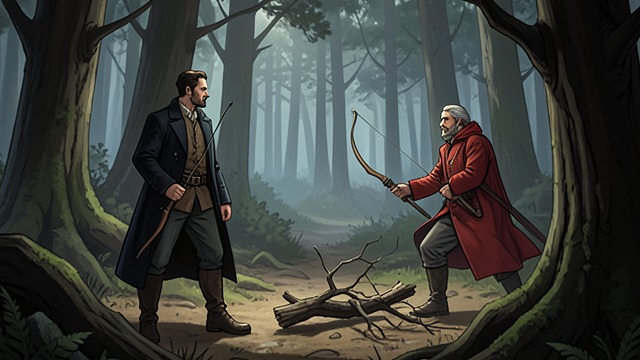
Gessler Killed in the Pass
The ambush
Tell waits along Gessler’s route and kills him with an arrow. The governor’s death ends his immediate ability to persecute Tell’s household and the people of Uri.
An unstable aftermath
The witnesses declare the country free, but Gessler’s armed followers remain and attempt to protect the stronghold. His death accelerates the uprising rather than resolving every danger.
The act belongs to a conflict already shaped by repeated abuses. The play presents its political effect alongside its personal origin in the threat to Tell’s child.
Albert I Murdered by Kin
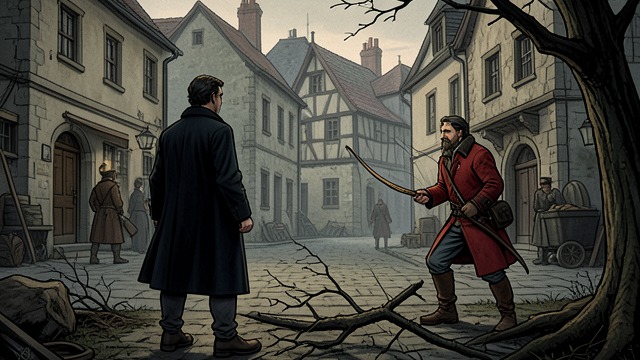
Albert I Murdered by Kin
A dynastic grievance
Stauffacher reports that Duke John and other nobles killed Albert I while the emperor traveled near Bruck. Their stated grievance concerns withheld inheritance and political status.
Violence apart from the uprising
The murder is not part of the Confederates’ plan and does not arise from an attack on a child or an immediate household danger. It introduces a separate act of revenge into the newly liberated country.
The juxtaposition challenges any simple claim that all violence against rulers serves freedom. Motive, circumstances, and the victims’ relationship to the perpetrators matter.
Tell Rejects the Comparison
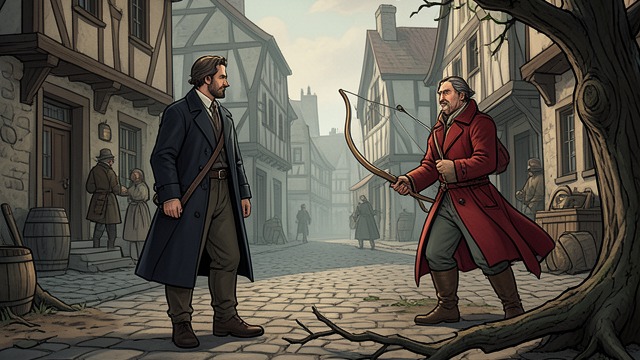
Tell Rejects the Comparison
A shared word, different acts
Duke John tells Tell that he too has killed an enemy who denied him justice. Tell rejects the comparison between dynastic assassination and the act he says he committed to defend his children.
Compassion without excuse
Tell condemns Duke John’s crime but gives him directions toward confession and repentance. He offers humane assistance without pretending that grievance absolves murder.
The encounter supplies the play’s clearest moral distinction between resistance and vengeance. The same appeal to injury can lead toward very different judgments depending on necessity, motive, and the protection of others.
Before Tell’s shot, during the apple ordeal
After Tell escapes from the ship
Near the ending, on the way to Küssnacht
Near the ending, reported at Altdorf
At the ending, during Duke John’s visit
