
The Household as a Political Sanctuary
William TellThis flow traces how homes become vulnerable sites of oppression and, in turn, spaces of hospitality and recovery.
increasing Bearing strength in each event
 decreasing
Bearing strength in each eventdecreasingStauffacher’s House at Risk
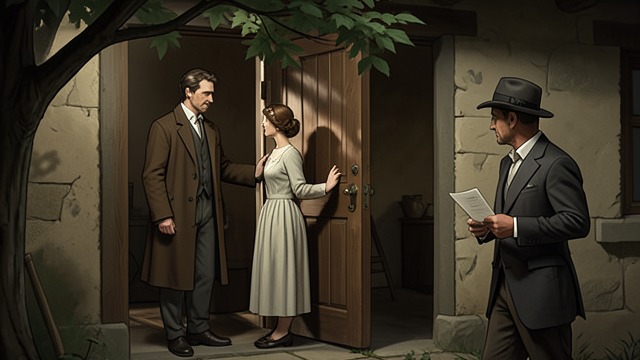
Stauffacher’s House at Risk
A home built with care
Werner Stauffacher takes pride in the house he has built, its windows, timber, and signs of hospitality. Gessler’s threat converts those signs of prosperity into a reason to fear official interference.
Home and political standing
Gertrude understands that the threat concerns more than a building. If the governor can dictate how a family lives on its own land, local security and custom have already been weakened.
The household becomes a miniature of the larger political crisis. Its safety depends on rights that no family can protect alone once authority becomes arbitrary.
Baumgarten’s Home Violated

Baumgarten’s Home Violated
An official enters
Baumgarten reports that the seneschal visited his home and tried to assault his wife. The danger comes from a man empowered by the same regime whose justice should protect households.
A defender becomes a fugitive
Baumgarten kills the attacker and must flee before the governor’s horsemen arrive. The household has defended itself, but that defense brings immediate danger to the husband and family.
The incident demonstrates how political authority can invert the meaning of law. The person who seeks to protect a home becomes the one pursued by officials.
A Refuge Offered
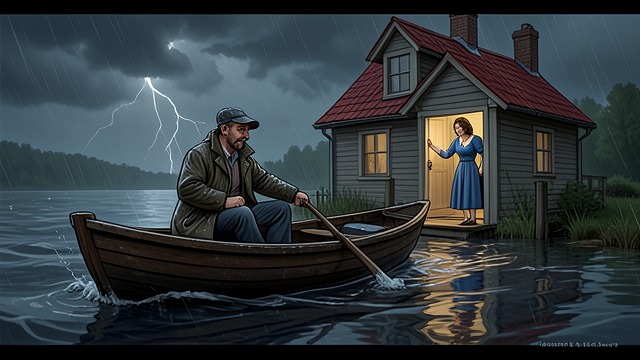
A Refuge Offered
Safety through hospitality
After Tell carries Baumgarten across the stormy lake, he directs him to Werner Stauffacher’s house. He describes Stauffacher as someone who gives shelter to people in distress.
A home becomes a link
Stauffacher receives the fugitive, turning his threatened household into a refuge for someone pursued by the authorities. The hospitality connects two families facing different forms of insecurity.
The scene suggests that homes can resist oppression not only through force but through welcome. A network of refuge helps those targeted by isolated abuses survive long enough to join a common cause.
A Family Left Waiting

A Family Left Waiting
Absence made frightening
Hedwig waits without knowing whether Tell will survive confinement. She imagines him deprived of sunlight and fresh air and fears that he may fall ill before anyone can reach him.
The costs of public resistance
Her worry is not a side issue to the political struggle. The governor’s use of imprisonment separates a father from his children and leaves his family to bear uncertainty alone.
The scene makes the consequences of authoritarian power legible at the level of daily life. Freedom includes the security of knowing that a loved one cannot be removed without remedy.
The Hearth Reclaimed
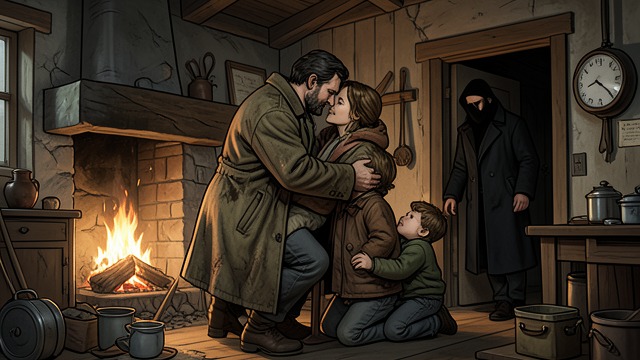
The Hearth Reclaimed
Return to the household
Tell returns to the cottage and embraces Hedwig and his sons. The family’s joy is inseparable from the knowledge that Gessler can no longer separate them.
Hospitality extended again
Hedwig welcomes a disguised traveler into the house before learning that he is Duke John. Tell later asks her to feed him, despite condemning his crime, and sends him on a road toward repentance.
The cottage becomes a place both of recovery and moral choice. Its hospitality survives political victory, but it does not require the family to approve every act or shelter every crime.
Early in the story, at Steinen
Opening scene, before the crossing
After Baumgarten reaches the far shore
After Tell is imprisoned
At the ending, at Tell’s cottage
