
Rudenz’s Conversion
William TellThis flow traces Rudenz’s movement from courtly ambition and political estrangement to service among his people.
increasing Bearing strength in each event
 decreasing
Bearing strength in each eventdecreasingA Courtward Ambition

A Courtward Ambition
Distance from home
Ulrich von Rudenz prepares to leave for the governor’s court, drawn by status and the wider world beyond the valleys. Werner, Baron of Attinghausen sees that his nephew has become uncomfortable with the household and its local customs.
A political choice disguised as advancement
Rudenz regards attachment to the Austrian court as practical prudence. He believes that service to a powerful ruler could protect his interests and offer a more prestigious life.
His ambition makes him vulnerable to a system that prizes personal advancement over communal responsibility. The conflict is initially emotional and political, long before he openly changes sides.
The Uncle’s Warning
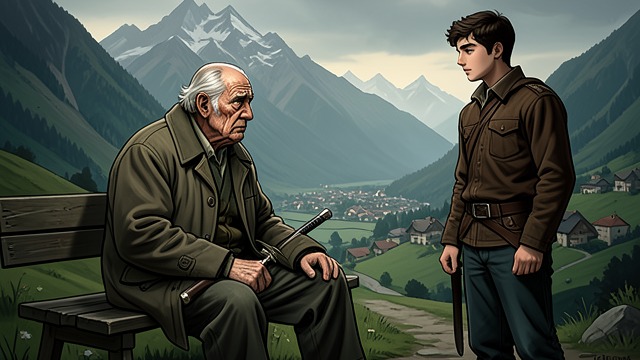
The Uncle’s Warning
A plea for belonging
The elderly baron urges Rudenz to stay among the people and remember the freedom inherited from their ancestors. He warns that courtly favor may leave his nephew a stranger among strangers.
A family rift
Rudenz hears the appeal but remains committed to leaving. The baron’s distress is sharpened by the thought that his lands and political place may be inherited by someone who accepts feudal submission.
Their disagreement makes the political crisis personal. The old order cannot survive merely through ancestry if its heirs turn away from the people who sustain it.
Bertha’s Challenge
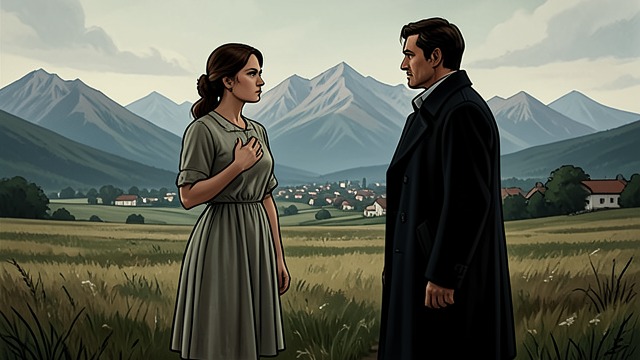
Bertha’s Challenge
Love and political refusal
Bertha of Bruneck rejects Rudenz’s appeal to love while he remains aligned with Austria. She accuses him of abandoning the people whose natural protector he should be.
A choice made visible
She explains that her own lands and freedom are threatened by the same expansion he hopes to serve. Her judgment forces Rudenz to see that his private ambition cannot be separated from the country’s fate.
Bertha does not ask him to choose between love and public duty; she insists that the two have become inseparable. Her challenge begins the change he will prove through action.
The Break with Gessler
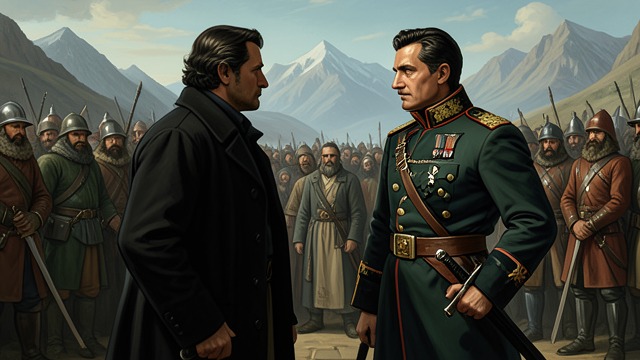
The Break with Gessler
A public limit
When Gessler forces Tell to aim at his son, Rudenz can no longer remain silent. He confronts the governor and argues that such cruelty discredits the king whose authority Gessler claims to represent.
Allegiance redirected
Rudenz acknowledges that he has misjudged his duty and that his honest intentions nearly aided his country’s ruin. He declares that he is free by birth and will not tolerate Gessler’s treatment of the people.
This is the turning point in his political life. His break with the governor is not merely a declaration of feeling; it occurs under public danger and carries real consequences.
Inheritance as Service
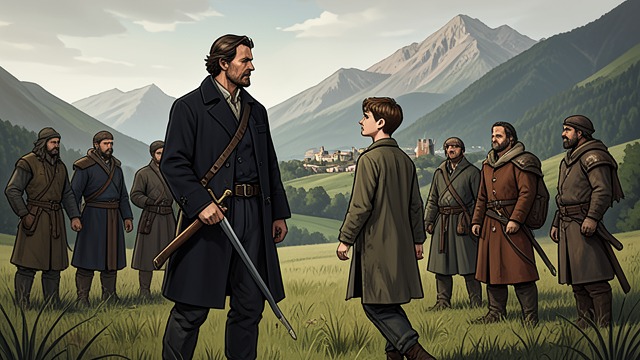
Inheritance as Service
A changed heir
After Werner, Baron of Attinghausen dies, Rudenz returns in grief and vows to serve the country. He asks the other leaders to trust him despite his earlier contempt for the peasantry.
A future made public
Rudenz joins the effort to take the strongholds and later frees his serfs. His inheritance becomes an obligation to protect others, not a private claim to rank.
The transformation joins family succession to political reform. He fulfills his uncle’s hopes not by becoming a replica of the old baron, but by widening freedom to people whose status he once accepted.
Early in the story, at Attinghausen
Early in the story, before Rudenz leaves
Midway through the story, in the forest
Midway through the story, during the apple ordeal
Near the ending, after Attinghausen’s death
