
Tell and His Family
William TellThis flow traces the cost of public violence within Tell’s household and the family’s difficult return to safety.
increasing Bearing strength in each event
 decreasing
Bearing strength in each eventdecreasingHedwig’s Foreboding
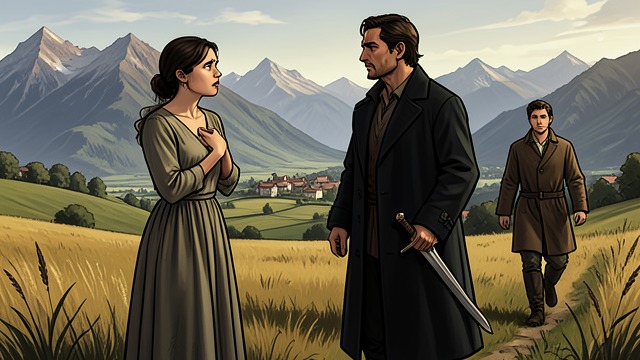
Hedwig’s Foreboding
A wife’s fear
Hedwig worries that Tell’s dangerous hunting will one day separate him from his family. His calm confidence in his skill and in God does not settle her anxiety.
Danger brought home
She has also heard that political resistance is being discussed and fears Tell will be drawn into it. He insists that he will answer when the country calls, but declines to offer a promise of safety.
The scene establishes a marriage built on love and unequal exposure to risk. Tell’s independence can appear courageous to the public while remaining frightening to those waiting at home.
Father and Son on the Road
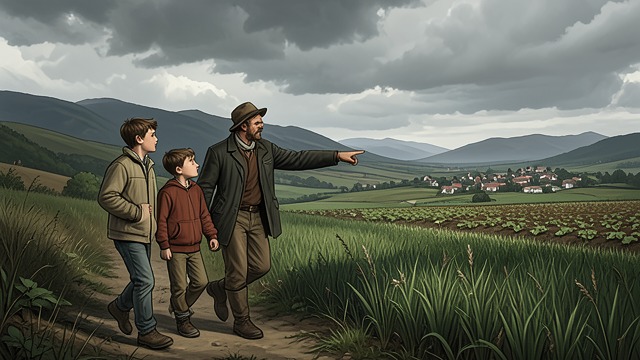
Father and Son on the Road
A boy’s questions
Walter Tell accompanies his father and asks about mountains, distant lowlands, and the people who live there. Tell explains that fertile country can still be unfree when rulers claim the land, game, and water.
A lesson in belonging
Walter says he would rather live among the mountains than under such conditions. Tell’s answer connects family teaching to political freedom: a secure home matters more than comfort without autonomy.
Their conversation gives the later ordeal emotional depth. The boy who learns what freedom means will soon be made the instrument of its violation.
The Apple on Walter’s Head
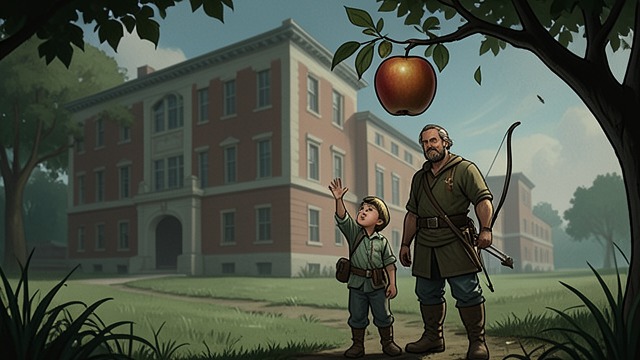
The Apple on Walter’s Head
A father made the weapon
Gessler orders Tell to shoot an apple from Walter’s head, turning the father’s practiced skill against the child he loves. Tell pleads against the command, but the governor makes refusal fatal.
The boy’s courage
Walter refuses a blindfold and says he trusts his father’s aim. Tell shoots successfully, yet the boy’s bravery cannot make the coercion harmless.
The scene leaves both parents with a lasting image of what might have happened. It shows how political domination invades the most intimate bond in the family.
A Mother’s Anguish
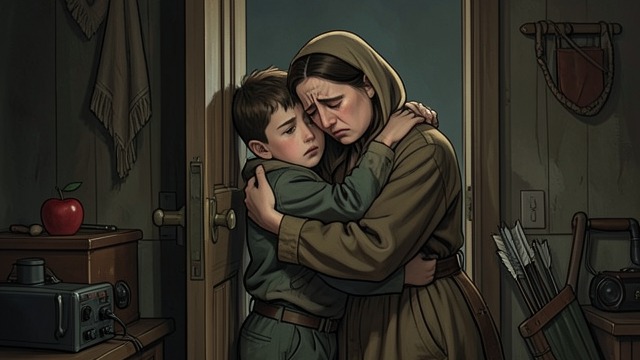
A Mother’s Anguish
Reunion without the father
Hedwig arrives at Attinghausen’s house and clings to Walter, grateful that he survived but unable to forget the shot. She imagines the apple, the child, and the arrow as an injury that will remain in her mind.
Grief becomes accusation
She rebukes those who let Tell be taken, contrasting their helplessness with his earlier rescue of Baumgarten. Her pain is directed at the men who could not save her husband, even as they explain their lack of arms and numbers.
The argument shows that public strategy carries private consequences. The Confederates’ caution may be defensible, but to Hedwig it feels like abandonment of the man who repeatedly risked himself for others.
The Family Restored
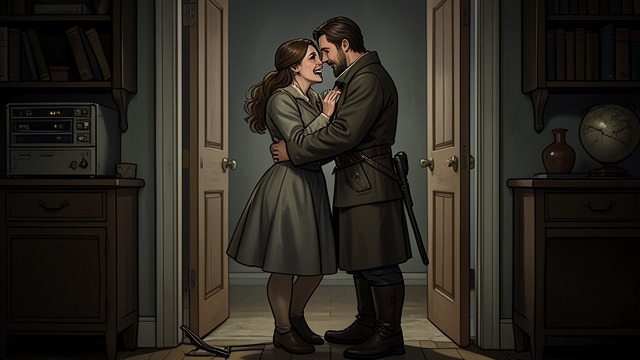
The Family Restored
Return after separation
Tell comes home after escaping capture and killing Gessler. Hedwig trembles between joy and fear as she confirms that the family has been reunited.
A changed household
Tell declares that his crossbow will no longer be used for hunting. The family’s reunion does not erase what happened, but it marks a return to domestic life after a crisis that made home itself feel vulnerable.
Their embrace provides an intimate measure of the political outcome. Freedom matters not only as a public settlement but as the ability of families to live together without a governor threatening their children.
Early in the story, before Tell goes to Altdorf
Midway through the story, on the road to Altdorf
Midway through the story, at Altdorf
After Tell is taken away
At the ending, at Tell’s cottage
