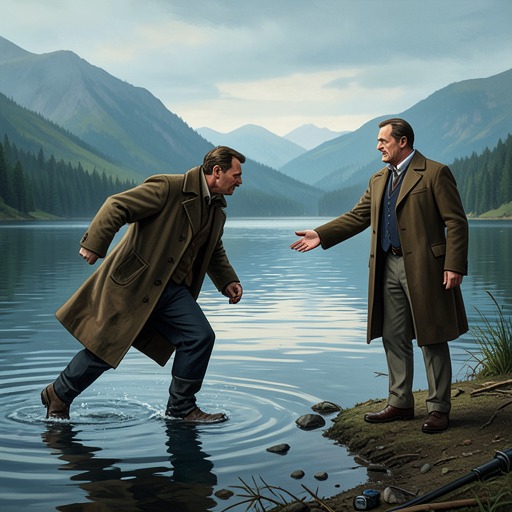
“The brave man thinks upon himself the last”
William Tell“The brave man thinks upon himself the last” is Wilhelm Tell’s appeal for courage in a perilous moment on the lake. Spoken as the storm intensifies and Ruodi hesitates to face it, the line recasts bravery as a willingness to put another person’s need before one’s own safety.
The Saying in the Storm
Thunder breaks over the lake, which grows more tempestuous. Ruodi voices his fear of plunging into danger and doubts the wisdom of attempting the desperate passage. Tell answers, “The brave man thinks upon himself the last.” The saying is not detached counsel: it comes as Tell urges trust in God and help for the person in need, placing the immediate appeal to action within a moral frame.
Meaning and Dramatic Function
The line defines courage through the ordering of concern. Rather than denying the danger, it challenges the idea that personal safety should settle the question. Its force depends on the contrast between the worsening conditions and the obligation Tell invokes: the risk remains real, but another’s need makes self-protection an insufficient answer. Ruodi’s reply—that it is easy to advise once safely in port—underscores the tension between speaking about danger from safety and facing it directly. The exchange leaves the saying as a compact principle of selflessness, tested against the practical fear of the storm.