Duke John
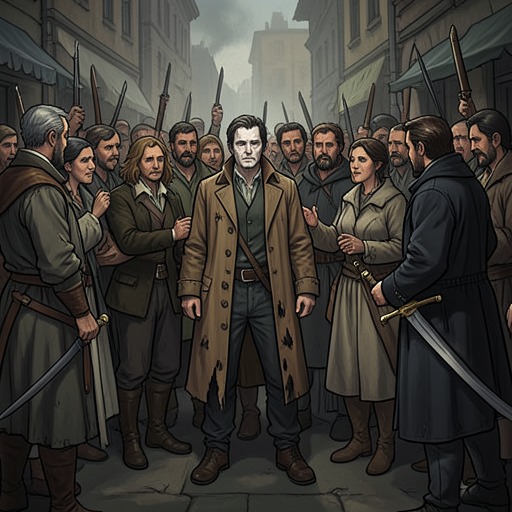
William TellDuke John enters the closing encounter as a monk and is identified by Wilhelm Tell as the Duke of Austria who has slain his uncle and liege lord, Emperor Albert I. His stated grievance is the loss of his patrimony; Tell, however, rejects that claim as a justification for murder. The scene makes Duke John’s appeal for compassion a test of the boundary between private revenge and action defended as protection of others.
Identity and Revelation
Duke John is not introduced here through a narrated history of his life but through recognition and accusation. Tell addresses the monk as the Duke of Austria and identifies Albert I as both his uncle and his liege lord. That combination makes the killing at once a family crime and a breach of allegiance. The scene confirms the emperor’s death and supplies the killer’s identity at the moment Duke John seeks help.
Duke John gives a brief explanation: Albert robbed him of his patrimony. The play establishes this as his stated grievance, not as an independently examined account of the inheritance or its circumstances. His claim helps explain his appeal to injury, but does not settle the moral question Tell puts to him: whether being wronged makes the killing justifiable.
The Encounter with Wilhelm Tell
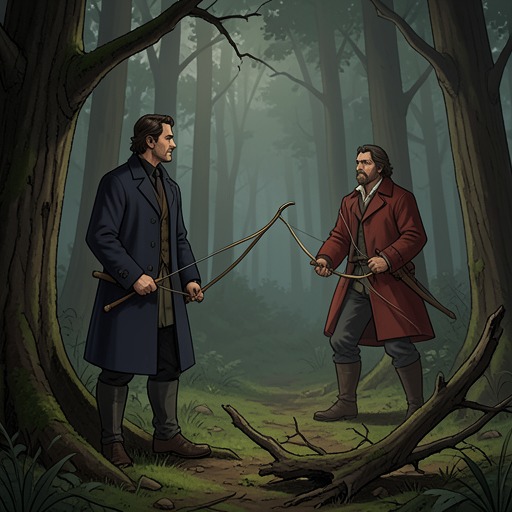
Duke John appeals to Tell for compassion and argues that Tell, too, took revenge on an enemy. The comparison is an attempt to make their acts morally equivalent. Tell refuses that equivalence. He distinguishes Duke John’s ambition and bloody crime from his own action, which he presents as necessary to guard his home and protect those he loved from a final danger. He declares his hands unpolluted and condemns Duke John for profaning what Tell regards as sacred human ties.
The exchange therefore turns on more than the fact that both men have killed an adversary. Tell frames his act through the threat to his household and the need to defend it; Duke John’s own explanation centers on his patrimony. The contrast is sharpened by their relationship to their victims: Tell names Albert as Duke John’s uncle as well as his liege lord, while describing his own violence as a defense against danger to his family. The play gives no basis for treating the two killings as interchangeable simply because both arise from grievance.
Partners, Plea, and Counsel
Tell asks where the bloody partners in Duke John’s crime are. Duke John answers that they have gone wherever the demon of revenge has borne them, but the exchange does not identify them or establish what became of them. The plural language places the assassination within a wider criminal company without resolving its membership or subsequent fate.
Duke John will not stand until Tell promises assistance. Tell’s response is not an offer to conceal him or to vindicate the killing. Instead, Tell tells him to go to Italy, to Rome, and cast himself at the pope’s feet to confess. The advice redirects Duke John from demanding practical support toward confession and religious appeal. Tell thus offers a course to seek mercy without withdrawing his condemnation of the act.
Political and Moral Context
The play’s account of authority gives the final confrontation a broader setting. The Forest Cantons are described as having freely sought the empire’s protection while retaining their own laws and ancient usages; the emperor’s stated judicial right is to adjudge the death penalty, exercised through a delegate. In the resistance council, Walter Fürst argues for preserving ancient rights and doing no more than necessity requires, including driving out tyrants and their agents. These passages frame political authority as a matter of competing obligations and limits, rather than simple obedience or unrestricted power.
Duke John’s case is not presented as the same kind of collective defense. His appeal rests on personal dispossession, and Tell explicitly names ambition as the character of his crime. Set beside the cantons’ stated aim of protecting their rights, Duke John’s killing of his liege lord appears as private retaliation rather than a defense of a community. The distinction is the scene’s central judgment: a grievance may explain violence without making it legitimate.
Narrative Role and Ending
Duke John’s appearance brings the play’s ethical argument about killing into a personal encounter. He asks Tell to recognize a likeness between them; Tell answers by insisting on the difference between revenge for an injury and force used to shield a household from danger. The exchange does not erase the violence of Tell’s own action, but it makes the grounds on which Tell distinguishes it explicit.
The scene ends with a direction, not a reported resolution. Tell points Duke John toward Rome and confession, but the supplied text does not say whether he follows that counsel, receives absolution, or meets any later fate. His final position is therefore unresolved: identified as the emperor’s killer, refused moral exoneration, and given a path toward seeking mercy.