Rossberg Castle
William TellRossberg Castle is a powerful enemy stronghold whose capture helps shift control of the country away from the occupying force. Paired with Sarnen as one of the two fortresses that command the land and shelter the foe, it represents both a practical military danger and a concentrated obstacle to liberation.
Identity and Strategic Position
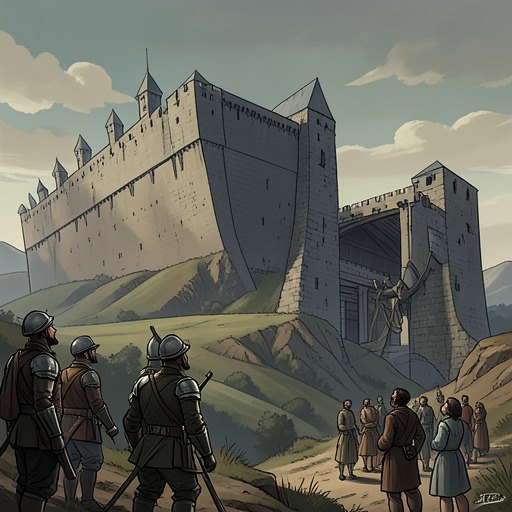
The play identifies Rossberg Castle as one of two fortresses of strength that command the country; the other is Sarnen. Their rocky walls give the enemy protection, and the fortresses are described as shielding its position. Their importance is not merely defensive: if a king were to invade, control of such strongholds would make the undertaking dangerous. Rossberg therefore figures as part of a system of fortified power capable of constraining the country and sustaining the foe.
Capture
Melchthal says that he stormed Rossberg the night before the events being recounted. His statement establishes that the castle was taken through an assault, though the play’s account here gives no further details of the fighting or the castle’s internal layout. The timing makes the capture a recent achievement rather than a distant episode, and places it alongside the seizure of Sarnen: Rudenz took the keep there, while Melchthal claims Rossberg.
Role in the Conflict
The two fortresses are presented as a matched strategic problem. Meyer warns that their strength makes the task difficult, especially if a king should invade; Melchthal’s report that Rossberg has already been stormed answers that concern with evidence of action. The castle’s capture thus marks a reversal in the balance of power: a structure that had sheltered the enemy has been wrested from its control. Rossberg matters less as an individually described building than as a stronghold whose loss helps make resistance and the recovery of the country possible.