Rosselmann
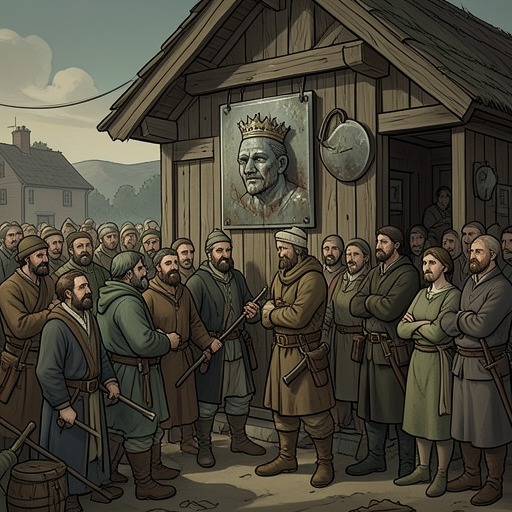
William TellRosselmann is the pastor who helps give the Swiss Confederates’ clandestine assembly both a public form and a moral language. At the gathering on Rütli Meadow, he invokes God, addresses the men as a united body, and directs them into a sword-centered ceremony. His contribution is not presented as solitary action: he supplies words and ritual through which the assembled people can understand themselves as a community acting together.
Identity and Role
Known in the play as the Pastor, Rosselmann appears among the Confederates during their secret meeting. The evidence identifies him through his religious office and his actions within the assembly, rather than through a personal history or an account of his life outside it. His authority in the scene is expressed in two linked ways: he speaks as a religious figure and takes responsibility for organizing the group’s ceremonial movement.
Voice at the Secret Gathering
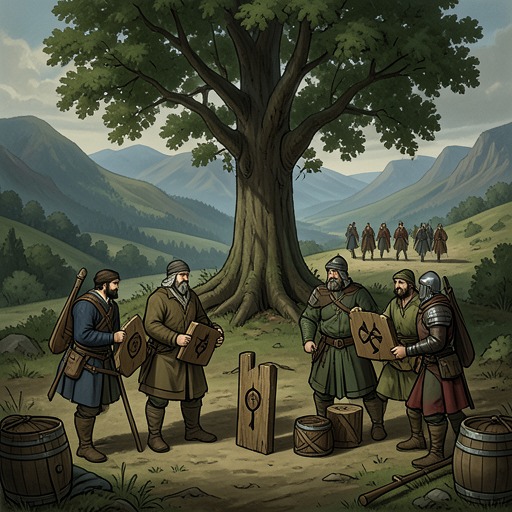
The assembly has been associated with plans formed under cover of night. Rosselmann calls the Confederates to listen, presenting his words as inspired by God. This invocation gives the gathering a moral and spiritual register: its purpose is framed not only as a political undertaking but as something the speakers understand in relation to a higher authority. The scene establishes his role as a mediator between the group’s shared resolve and the language used to articulate it.
The Ring and the Swords
Rosselmann’s direction that the men form a ring and plant their swords in the ground turns the meeting into a coordinated act. The circular arrangement makes the assembly physically collective, while the swords bring its capacity for resistance into the center of the scene. He does not merely address the Confederates; he gives them a concrete action to perform together. The gathering’s resolve is thus made visible through bodies arranged in a ring and weapons fixed in the earth.
Dawn and Collective Meaning
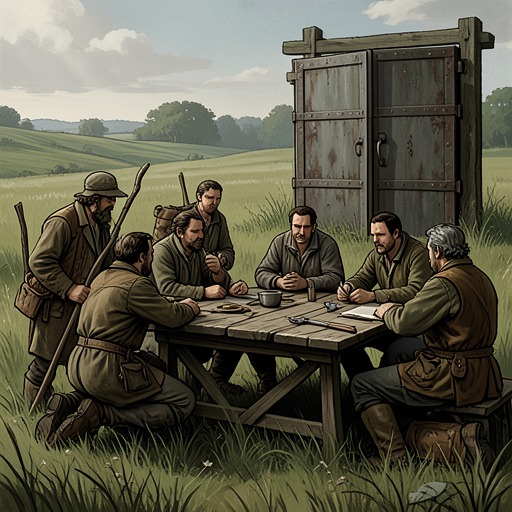
At daybreak, the assembled men remove their caps and contemplate the breaking light in silence. Rosselmann speaks into this communal pause, addressing the fair light and contrasting the Confederates’ freedom with the confinement of people in cities elsewhere. The change from a night meeting to a dawn scene gives the assembly a movement from secrecy toward open affirmation. Rosselmann’s religious language and ceremonial direction help bind that movement together: the gathering becomes not simply a meeting of individuals, but a community represented through shared gestures, weapons, and speech.