August Abandons His Suicide Plan
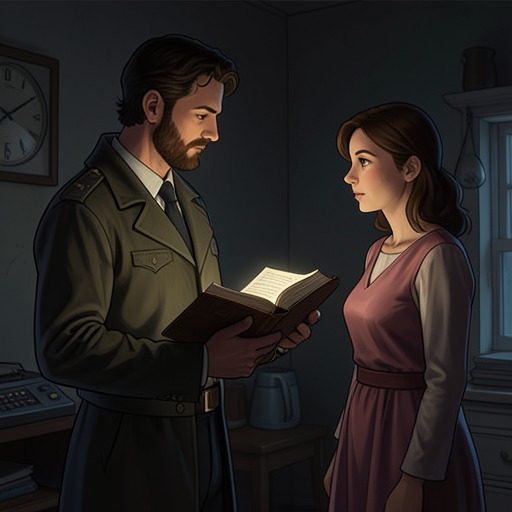
Women TalkingAugust Epp’s decision to remain alive takes shape not as a declaration but as a succession of practical acts. After planning to leave Molotschna once the women had gone and then kill himself, he instead stays behind to watch over the Koop brothers, ensuring that they remain unconscious long enough for the women to get away. The work of guarding them becomes a first purpose; Ona Friesen’s request that he take minutes for the women’s meetings helps him understand that this purpose can continue beyond their departure.
The choice to stay
August had imagined his own departure as following the women’s: he would wait until they were gone, then end his life. The reversal is immediate and concrete. Rather than leave the Koop brothers unattended, he watches over them so the women can gain ground. His attention shifts from a future organized around his death to the task directly before him, and from himself to people whose escape depends on his staying at his post.
The difference is more than a change of plan. August had come to Molotschna as a last resort, seeking peace and a purpose. Watching the women leave, he sees that they are leaving for the same reasons. Their departure does not provide him with an exit from his own life; it makes his connection to their choices and needs newly visible. Their shared search for peace becomes a point of recognition, even though they are moving in opposite directions: the women leave Molotschna, while August remains.
Keeping watch in the loft
The immediate responsibility is delicate and limited. One of the Koop brothers begins calling out in his sleep and moving his legs as though he might stand. August sprays a small amount of Belladonna anesthetic spray on the brother’s face. He is unsure whether the larger man is Joren or Sibbe; the other brother’s name is correspondingly uncertain. The important result for August is that the man becomes quiet and the pair remain unconscious while the women’s departure gets underway.
August checks that both brothers are breathing regularly and that their pulses are even. He turns them onto their sides in case they vomit, cushions and slightly raises their heads with straw, and corrects their disordered clothing. These careful measures establish the character of his vigil: he is not simply waiting for time to pass, but attending to the two men in his care while protecting the women’s head start. His plan to die is deferred through acts of observation, judgment, and responsibility.
From the window of Earnest Thiessen’s farm loft, August watches the convoy move away. A horse briefly disrupts its formation by rearing and shifting a buggy’s axle; the axle has to be realigned and the horse calmed before the teams can proceed. At least twelve buggies, carrying women, children, and supplies, eventually move off. They are too far away for August to distinguish faces or individual figures. Their distance gives the departure its own starkness: he witnesses the collective movement but cannot follow any one person’s progress.
From departure to a continuing purpose
At first August thinks he hears the women singing. He corrects himself: the sound is wind whistling in the long grass outside the barn, not Ona Friesen’s soprano. Yet he also allows that he may be imagining or remembering the singing. The moment holds together absence and attachment without turning either into certainty. The women are gone from the loft, but their departure remains present in what August thinks he hears and in the work he has chosen to do for them.
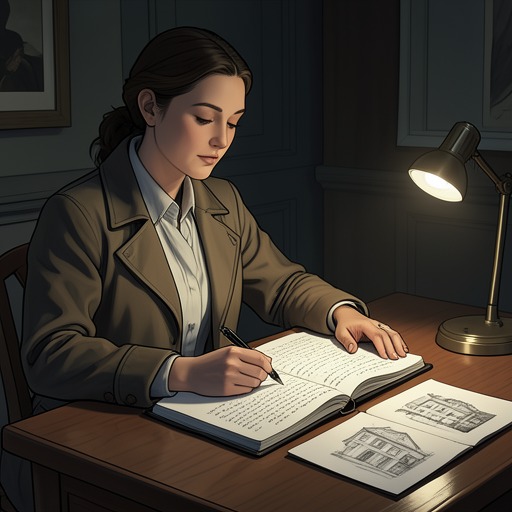
His understanding of that work develops around Ona’s request that he take the minutes of the women’s meetings. He had hesitated, but recognizes that his silence, his eyes, and especially his gun had already conveyed the danger he posed to himself. The minutes are not useful to the women if they cannot read them, he reasons; but that practical objection points toward another responsibility. August can teach basic reading, writing, and mathematics, and organize games of Flying Dutchmen. The minutes may be intended less as a document the women can immediately use than as a reason for him to make and preserve them.
Life as the purpose of the minutes
August’s conclusion is plain: he is of more use alive, teaching and helping organize the women’s meetings, than dead. The purpose of taking the minutes and the purpose of staying alive become inseparable. Ona’s favour gives him a task that asks for his continued presence, while his teaching can address the very illiteracy that makes the minutes inaccessible to the women. What first looks like an impossible assignment becomes a reason for him to remain available and useful.
The squirrel and rabbit story Ona tells him, about animals secretly playing, helps him reconsider whether the minutes need to serve an immediate practical function. Their purpose, he comes to think, may have been for him to take them. This does not make the women’s literacy irrelevant: it places August’s own act of recording alongside the possibility of teaching. The task matters partly because it keeps him in the world where further work can be done.
His final response is not a grand resolution. He smiles and laughs at the apparent lack of point in the minutes, seeing the world as turning inward like waves without a sea or shore to contain them. He then stands at the window and looks for smoke, detecting none. The image returns the decision to the quiet aftermath of departure: August remains in the loft, no longer merely waiting for the women to leave, but facing an uncertain life in which teaching, recording, and attending to others have become possible purposes.