August's Gun
Women TalkingAugust’s Gun is the firearm August Epp has kept with him, a concealed object whose importance emerges not through its use but through what it reveals. He considers killing himself with it, stays silent when the women might have accepted it, and carries it into an encounter with Ona Friesen that helps turn his attention back toward living and serving others.
Possession and Withholding
August says he has had the gun all along. As the women prepare to leave Molotschna Colony, he watches their convoy and regrets not offering it to them. Salome Friesen or Mariche Loewen had asked whether the women had guns; August cannot be certain which of them asked. He could have offered his own, but remained silent. In retrospect, he judges this silence selfish.
The imagined offer would not have been received uniformly. August believes Agata Friesen, Greta Loewen, Ona, and the younger women would have refused the weapon, while Salome, Mejal Loewen, or perhaps Mariche might have been persuaded to take it. This distinction matters: the gun is not simply a tool awaiting a user. It stands at the edge of a collective decision shaped by different commitments and by the women’s response to danger. August’s regret concerns not only a possession he withheld, but an opportunity to let the women decide for themselves whether it might serve them.
The narrative does not establish that the gun is used against anyone or transferred to the women. Its force lies instead in the gap between what August could have offered and what he does. As the convoy departs, he is left with the weapon and the knowledge that his silence has become consequential to him.
The Gun on the Path
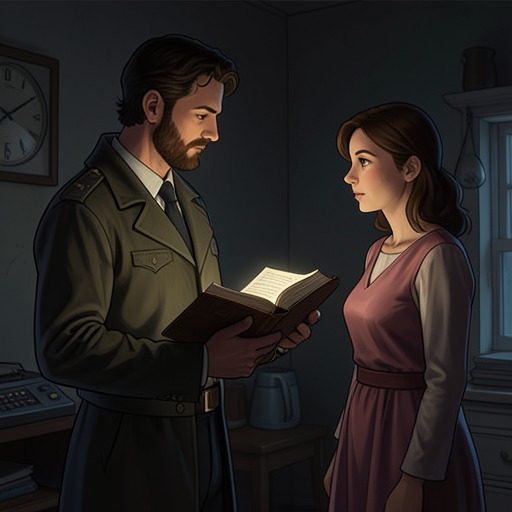
Two days before the departure, August meets Ona on the dirt path between her house and the shed where he sleeps. He is carrying the gun in his hand. He has been crying and wandering outside the colony, intent on shooting himself; when he sees Ona approaching, he considers running away or throwing the gun into a cornfield, then freezes and stares at her.
Ona approaches smiling, almost skipping, and asks where he is going and what he is doing. August answers that he is going nowhere and doing nothing. When she asks whether he is hunting, he says no, then explains the gun away by claiming he is returning it to the co-op. The account makes clear that this answer conceals his real purpose: he has not been hunting, and the weapon is connected to his plan to die.
When Ona asks why he has it, August looks into her eyes. She stops smiling, and the two fall silent. He lowers his head because he does not want her to see him crying again. The gun has made his intention legible even though he has not put it into words; August later understands that he had communicated it through his eyes, his silence, and especially the weapon itself.
Ona’s Intervention
Ona takes August’s hand and guides it onto her pregnant belly. She tells him that she has prayed he will find God’s grace and that, to her, he is a physical reminder of goodness and hope, and of life after violence. Her words turn the encounter away from the death August had been preparing for, without making the gun disappear or pretending that his despair has been spoken away.
Ona’s response also reinterprets August’s presence in the colony. He has been made to feel connected to shame and violence through his family history, but she sees him as a reminder of the possibility of goodness. In the scene, the same object that disclosed his suicidal intention becomes part of a moment in which another person recognizes his distress and offers him a reason to remain. The gun is not itself a cure or a resolution; its significance depends on August’s encounter with Ona and on his eventual decision to live.
From a Means of Death to a Task
August later concludes that he is more useful alive: he can teach basic reading, writing, and mathematics and organize games of Flying Dutchmen. Ona has also asked him to take the minutes of the women’s meetings. He initially hesitates, then recognizes that his earlier silence and the gun had already expressed what he could not bring himself to say. Accepting the work gives him a concrete responsibility within the women’s plans and conversations.
The record does not say that August gives up the gun, returns it to the co-op, or resolves every cause of his despair. The change it does establish is more specific: he rejects the death he had planned and accepts a role that requires him to remain present. Against the women’s departure, the gun marks the difference between withholding help and becoming useful. Its narrative function is therefore double: it makes August’s unspoken crisis visible, and, through Ona’s response, helps frame continued life as action rather than mere survival.