Do Nothing women opting out of the escape
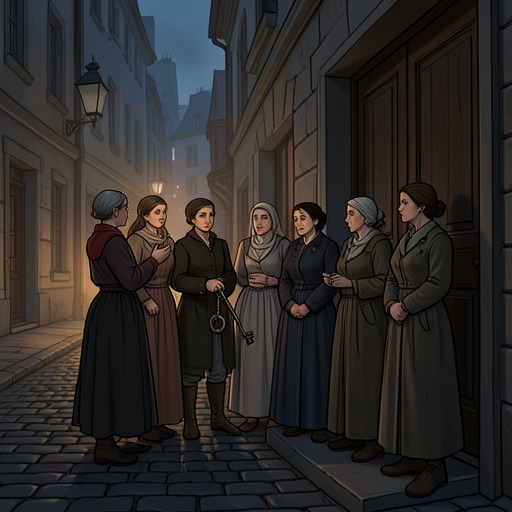
Women TalkingThe Do Nothing women opting out of the escape form the group that does not join the women’s planned departure from Molotschna Colony. Their position is one of the possible responses to the crisis, not simply a detail of the escape: it shapes who can be told about the plan, who will care for children, and which families will be divided when the others leave.
Identity and choice
Do Nothing is named as one of the women’s possible responses while they weigh what to do. The choice takes shape under severe pressure. The colony’s men have gone to the city to post bail for the imprisoned attackers, hoping the men can return to Molotschna Colony while awaiting trial. Peters says that, if the women refuse to forgive the returning men, the women themselves will have to leave for an outside world they know nothing about. They have only two days to organize a response. Against this threatened expulsion, the women’s options include leaving by choice, remaining to fight, or doing nothing.
The account does not give a list of the women who choose Do Nothing or explain each woman’s reasons. It does establish the practical distinction: this group does not take part in the departure being organized by the others. Their choice therefore cannot be treated as a single shared motive beyond opting out of that escape plan.
A position within the deliberations
The women considering departure continue to deliberate while ordinary work presses on. Agata Friesen tells them that the women handling tasks on the ground can manage the milking and supper preparations, making it possible for the group in the hayloft to address its remaining concerns. The meeting’s material needs are also handled collectively: Salome Friesen offers to bring spelt bread while Mejal Loewen fetches soup, so the women can eat and continue talking. These arrangements show that the decision is made amid, rather than outside, the everyday work sustaining the colony.
The departing women eventually agree to leave after dark, hoping not to be seen as they pass the Chortiza and Hiakjeke colonies. That covert plan marks the contrast between their chosen course and the Do Nothing women’s nonparticipation. The difference matters not only as a vote but as a limit on what can safely be shared: Mejal tells Salome that the Do Nothing women’s menfolk are still in the city with Peters, so the women cannot inform them of the plan.
Children and family consequences
The Do Nothing women become part of the arrangements for children who will remain behind. Agata Friesen says that the children’s care will be entrusted to them and to the children’s fathers, who are expected back soon. The arrangement links the group’s decision to a concrete responsibility: while some women prepare to leave, others are expected to help care for those who stay.
The division also affects children’s own choices. Greta Loewen asks whether Cornelius is ready and whether his wheelchair has been packed away. The reply is that Cornelius will not be joining after all: his mother is in the Do Nothing camp, and he has no choice but to stay with her. His case makes the cost of the group’s position visible in a family relationship; a child’s participation in the departure is determined by his mother’s decision.
Role in the departure
The Do Nothing women’s presence gives the women’s decision a consequence beyond the people who leave. Their menfolk’s absence helps keep the plan from being passed on, while their expected role in caring for children helps make separation from the departing group possible. The novel does not present the group as a unified political argument or supply its members’ private explanations. Instead, it registers their position through these practical effects: information withheld, care assigned, and Cornelius left behind with his mother.