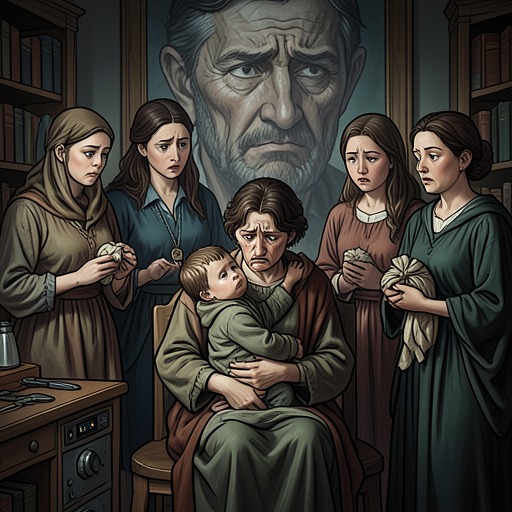
Klaas’s Violence Against His Daughter Autje
Women TalkingKlaas’s Violence Against His Daughter Autje is a relationship defined in the evidence by an act of violence within the family and the prospect of separation. Autje Loewen identifies Klaas Loewen as her father, but the preparations for the women’s departure bring no assurance of reconciliation: she says they may never see him again.
Family Relationship and Separation
As the women consider leaving Molotschna Colony, Autje gestures toward her mother and herself and says that they might never see her father again. Her words make the cost of departure immediate and personal. Leaving is not only a break with the colony’s household order; it may also mean a lasting separation from Klaas. Agata Friesen gently reminds her that the women are all leaving family members behind, including husbands, brothers, fathers, sisters, aunts, and uncles. The reminder places Autje’s fear within a shared loss without diminishing the particular strain of her relationship with her father.
Violence After Ruth and Cheryl Disappear
The conflict becomes concrete when Klaas discovers that Ruth and Cheryl are missing. He demands that Mariche explain where the horses have gone. She tells him they escaped while he was unconscious after having a tooth pulled, a cover story he rejects. Klaas strikes Mariche, then strikes her again when she repeats the explanation. When Autje tries to intervene, he slaps his daughter. The account links violence against both mother and daughter to the missing horses and to the women’s effort to carry out their plans without the men’s knowledge.
Autje’s Intervention and the Cost of Leaving
Autje’s attempt to intervene places her directly between her father and her mother. The scene does not describe what she says or suggest that she can stop Klaas; it records that she is struck for stepping in. Later, her statement that she may never see him again gives the impending departure a painful double meaning: the family violence is part of what makes leaving necessary, while leaving may sever a relationship that remains emotionally consequential. The evidence offers no later account of a reunion or of a change in Klaas’s conduct.
Significance
The relationship shows how the costs of the women’s departure extend into family life. Autje is not only a daughter who fears losing contact with her father; she is also a participant in the women’s collective effort, and her intervention when Mariche is attacked exposes the danger within the household itself. The contrast between her concern about future separation and Klaas’s violence in the present prevents the family bond from being treated as simple or secure. The relationship remains unresolved as the women prepare to leave.