Mina Friesen's Suicide
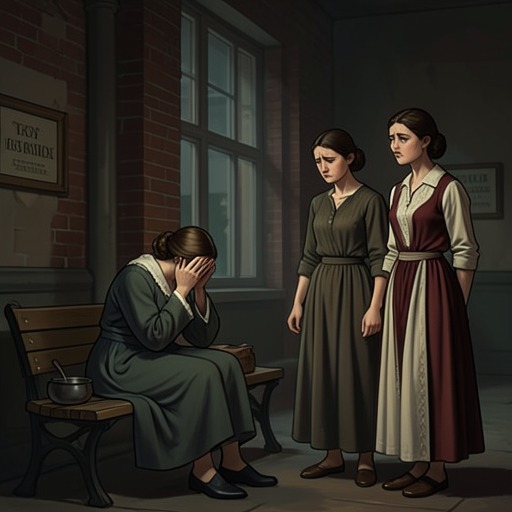
Women TalkingMina Friesen’s suicide is revealed as the consequence of a family’s trauma compounded by the colony’s denial and concealment. After her daughter Neitje was attacked, Mina received contradictory explanations from Peters; her death was then attributed to ammonia fumes, a claim Ona challenged publicly at the funeral.
Background and Crisis
Neitje was Mina’s daughter. After Neitje was attacked in her bedroom, Mina sought an explanation from Peters. He first told her that Satan was responsible and that God was punishing the women for their sins; later, he said that Mina had invented the attack. His use of the phrase “wild female imagination” dismissed her account rather than resolving the contradiction. Mina demanded to know which explanation was true.
Mina’s Death
Mina’s distress escalated after Peters’s conflicting responses. She confronted him, then went to the barn and hanged herself. Peters cut her down and told the colony that she had inhaled too many ammonia fumes while cleaning the yearling shed. The account of her death thus became entangled with an official explanation that displaced the preceding crisis and concealed its connection to Neitje’s attack.
The Funeral and Its Witnesses
Mina’s funeral was held outside the church because suicides were not permitted to be buried in the sanctuary. Her body lay on a block of ice, and Ona pulled Mina’s kerchief down to reveal marks that contradicted Peters’s account. She told the congregation that ammonia had not killed Mina. When Peters interrupted the service and directed Deacons Klippenstein and Unrau to take Ona home, Ona ran away from the men; Peters prayed, and the congregation bowed its heads.
Consequences and Significance
The women’s account also preserves what happened after Mina’s death: Agata Friesen, Mina’s mother, washed her daughter’s body while weeping. The detail stands against the public explanation that had reduced Mina’s death to an accident and makes the women themselves witnesses to what the colony’s authorities obscured. Ona’s intervention at the funeral gives that witness a public form, even as the service’s interruption and her removal from it show the limits placed on speaking openly.