Minutes of the Women Talking meetings
Women TalkingThe Minutes of the Women Talking meetings are August Epp’s record of the women’s June 6–7, 2009 meetings in the Molotschna Colony. Made at Ona Friesen’s request because the women cannot read or write, the document preserves their deliberations about violence, faith, authority, and whether to leave. Its significance lies partly in that act of preservation and partly in its limits: the women’s spoken testimony reaches the page through a literate male recorder who translates, explains, and sometimes interprets it for future readers.
Commission and Purpose
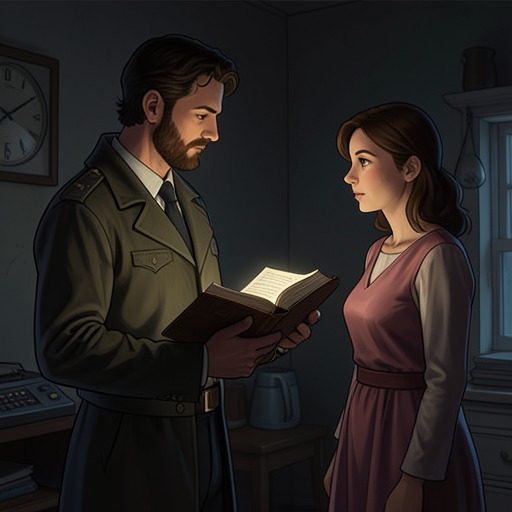
August Epp identifies himself at the beginning as the appointed minute-taker. Ona had asked him to record the meetings and create a document about them; August notes that she did not use the word minutes. He considers his name and the date appropriate to include, drawing on his work as a schoolteacher, where he instructs students to make written records. The request makes the document necessary, but also defines an unequal arrangement: the women conduct the meeting, while August supplies the writing they cannot produce themselves.
The record concerns meetings organized hastily by Agata Friesen and Greta Loewen in response to attacks that had haunted women and girls in the colony for years. The attacks had been attributed to ghosts or Satan and treated as punishment for sin; the later discovery that eight men from Molotschna were responsible fundamentally altered that understanding. Many were close relatives of the women. The minutes thus preserve deliberation in the aftermath of a crisis that had first been explained to its victims through religious claims that obscured the human perpetrators.
Translation and Mediation
The women speak Plautdietsch, the only language they know. August describes it as an unwritten language, while explaining that he must translate their speech mentally into English before he can write it down. The minutes are therefore not a transparent, word-for-word transcript: speech passes through translation, selection, and the recorder’s judgments about what readers need explained.
August’s interventions are visible in the text. He supplies explanatory notes about the language and its social context, and acknowledges that some of his wording is an interpretation rather than the women’s own term. In recording Salome Friesen’s denunciation of women’s position in the colony, for instance, he says that he inserted the concept of patriarchy in place of her curse. He likewise flags his choice of the word commodities as a translation decision. Such notes make the record more informative, but they also show where August’s vocabulary shapes the surviving account.
The document’s narrative frame further complicates its status as minutes. August records the women’s statements alongside his own observations and explanations, including context about why he can read and write English. His account is both a record of their meeting and a narrated document that makes its own production part of what readers encounter. The women’s voices remain central, but they reach an eventual audience through his language and perspective.
The Debate Preserved
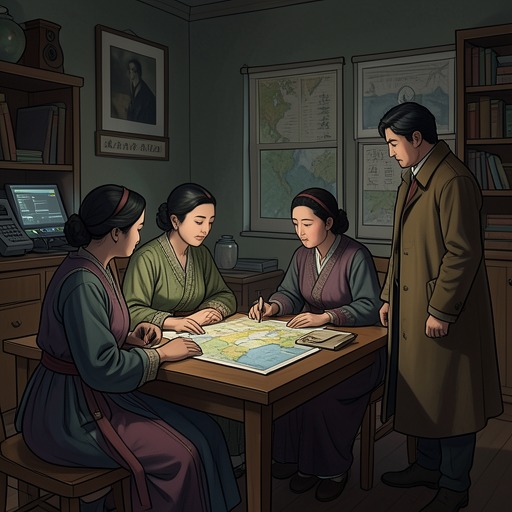
The meetings address what the women should do in response to the assaults and the colony’s treatment of them. The women consider three possible courses, although many reject doing nothing; they agree to let the Friesen and Loewen families debate the alternatives and recommend a course of action. Their discussion records disagreement as well as collective decision-making: Salome resists allowing any one person to define what counts as a real option, while Mejal Loewen points out that Salome has not been given authority to decide that question for everyone.
The minutes preserve the women’s challenge to the religious and civic arrangements that leave them dependent on male authority. Ona questions what women are expected to forgive when the elders and bishop have denied that they need counseling because they were unconscious during the assaults. She connects that denial to a broader problem: without knowledge of the world, women may not even recognize the conditions that confine them. Salome argues that the central issue is men’s interpretation of the Bible and the way that interpretation is handed down; Ona adds that women’s inability to read or write puts them at a disadvantage in any negotiation over scripture.
The record also captures how the debate turns from immediate safety to the colony’s wider obligations. Salome asks why boys aged thirteen and fourteen cannot accompany the women if they leave, particularly when younger boys may go with them and fifteen-year-olds count as baptized members of the church. August answers that boys of that age can pose risks, but are still children capable of learning, and argues for direction, firm love, and patience rather than treating them as beyond change. Elsewhere, the minutes note the particular constraints facing Ona, who is pregnant and stigmatized because of her Narfa. The elders intend for another family to raise her unborn child, a consequence that makes the women’s debate about safety inseparable from their control over their own lives and families.
Record, Artifact, and Afterlife
August distinguishes the minutes from another written object made during the meeting. Ona gives him brown paper used to package cheese and meat and asks him to use it for large lists of the pros and cons of the women’s options. The women will not be able to read what he writes, she explains, but they want to leave the paper in the hayloft as an artifact for others to discover. The lists are therefore not the minutes themselves: they are a separate material trace, designed with a future audience in mind even as the women who commission them remain unable to read them.
That tension returns at the end of the account. As he is leaving, August runs back to retrieve his notebooks and the minutes and asks Salome to give them to Ona. Salome points out that Ona cannot read them and questions what use they will be to her. The exchange leaves the document’s purpose unresolved in a revealing way: it can preserve the women’s words for others, but cannot by itself give its subjects access to what has been written about them. Its archival promise and its exclusion are held together on the page.