Ona and Agata’s Mother-Daughter Bond
Women TalkingOna and Agata’s Mother-Daughter Bond is defined by practical care and shared exposure to a community that constrains Ona’s choices. As Ona faces pregnancy, stigma, and the prospect of leaving Molotschna, Agata’s failing health makes their attachment visible in acts of concern and in the choices they make about the journey. Their bond does not remove the dangers before them; it helps give those dangers a family meaning.
Kinship under communal pressure
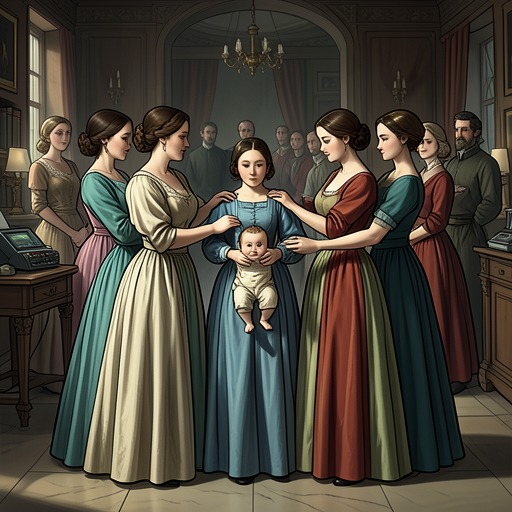
The women must decide how to respond after the men who attacked women in Molotschna are imprisoned. The colony’s remaining men go to post bail, hoping the accused can return while awaiting trial. Peters says the women will then have the opportunity to forgive them, with forgiveness presented as necessary to everyone’s place in heaven. If the women refuse, they will have to leave for an outside world they know nothing about, and they have only two days to organize their response. This pressure bears directly on Ona and Agata: the question is not simply where they will live, but whether the conditions imposed by the colony can be accepted as the price of belonging.
Ona’s pregnancy makes that pressure especially concrete. She keeps an empty feed pail beside her because she is nauseated. When it becomes clear that she is expecting, several women hurry to arrange a marriage between her and Julius Penner, the son of Ondrej Penner. Ona refuses, saying that Julius deserves better and that marriage to a woman who is not a virgin would taint him with sin. The proposed match treats marriage as a means of managing her status; Ona instead asserts a moral judgment of her own, even though it leaves her exposed to the colony’s condemnation.
The elders conclude that Ona is beyond redemption and that Narfa has made her incapable of reasoning. The narrator points out the irony: the elders’ accusation of impaired judgment is itself unreasonable, while their religious framework also means Ona will not be eternally damned if she has not sinned willfully. The child, described by the elders through a euphemism for the attackers, is to be given to someone else. These judgments show how little authority Ona has over the public meaning of her pregnancy, even as she continues to make decisions about marriage and departure herself. Agata’s place beside her is part of a family bond situated against those judgments, not a power to undo them.
Concern expressed through the body
Agata’s own health is declining as the plan to leave takes shape. She has edema, and after faspa she rests with her feet raised on Autje’s old light-blue cradle, decorated with angels and made by Kurt. From there, she recounts hearing terrible moaning across the northwest field beside her house. The account gives her a place in the women’s shared effort to understand what has happened, while the detail of the cradle locates that effort within ordinary domestic life. Her illness and rest are not separate from the crisis: they limit what she can do even as she contributes her knowledge.
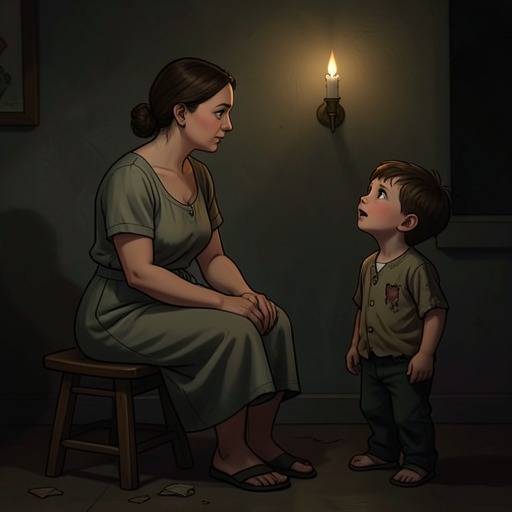
As the departure becomes imminent, Agata is breathing heavily and Ona looks at her with concern. Ona names the trip as arduous and perilous. The brief exchange reverses the more usual direction of care: the daughter registers the mother’s physical vulnerability and recognizes what the journey may demand of her. Agata does not answer by pretending the risk is small. She says she will not be buried in Molotschna and asks to be helped into a buggy, accepting that she may die on the trail. The statement makes her commitment to leaving unmistakable while keeping the cost of that choice in view.
A decision made together
The women agree to leave that night after dark, planning to pass the Chortiza and Hiakjeke colonies unseen. Their departure is a chosen response to an ultimatum, not evidence that the risks have disappeared. August Epp prepares practical supplies: he wraps the map around a large block of cheese, places the Co-op Safe beneath the back seat of Greta Loewen’s buggy, and packs onions, soap, and pieces of wood to provide traction in mud or kindling for a fire. The planned journey depends on such modest provisions as well as on the women’s collective decision.
Agata’s willingness to go despite her condition makes her part of that decision in a particularly exposed way. Ona, meanwhile, must contemplate leaving while pregnant and while knowing that the elders have decided the child will be given to someone else. Their circumstances are not identical: Agata faces declining health, while Ona faces the physical demands of pregnancy and the loss of control over her child’s future. The bond between them therefore appears not as sameness, but as a shared commitment carried by two people with different vulnerabilities.
Agata’s final request
As the departure draws near, Agata turns to August Epp and asks whether he would marry Ona. The request follows her insistence that she will leave Molotschna even if she dies on the trail. The text does not explain her motive, so the moment is best understood through its placement: at the edge of a dangerous separation, Agata addresses Ona’s future and the possibility of a lasting connection to someone who is leaving with them. Her attention remains directed beyond her own immediate condition.
The request does not resolve Ona’s pregnancy, the elders’ plans for the child, or the uncertainty of life outside the colony. Instead, it gathers the relationship’s central pressures into one scene: Agata’s failing health, Ona’s precarious position, and the family’s departure from a place that has made their choices for them. The mother-daughter bond is neither a refuge from every consequence nor a simple promise of safety. It is a form of mutual regard that persists as the two women move toward an uncertain future.