Ona’s Pregnancy After the Assault
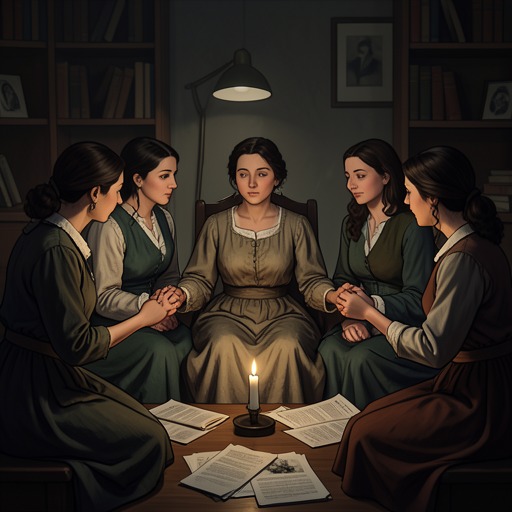
Women TalkingOna Friesen’s pregnancy after the assaults in the Molotschna Colony exposes the colony’s unequal power to define women’s guilt, marriage, and motherhood. The elders regard her as beyond redemption and plan to place her unborn child with another family; Ona, by contrast, insists on the child’s innocence and love. As the women debate whether to stay or leave, her pregnancy makes the stakes of those choices immediate: her idea of home rests with her mother, her sister, and the child, wherever they may be.
Pregnancy and the Colony’s Response
Ona is pregnant after being raped while unconscious, an experience shared by other women in the colony. At the women’s meetings in the hayloft, she keeps an empty feed pail beside her because the pregnancy makes her nauseated. The detail places her condition within the practical circumstances of the debate: she is present, reasoning and participating, while managing a physical consequence of the assault.
When the pregnancy becomes apparent, several women hurry to arrange a marriage between Ona and Julius Penner, the simple son of Ondrej Penner. Ona refuses the proposal. She argues that Julius deserves better than a woman afflicted with Narfa, and that marrying a woman who is not a virgin would taint him with sin. Her refusal shows how deeply the colony’s sexual and religious judgments shape the choices available to her, even when the assault was not her act or her consent.
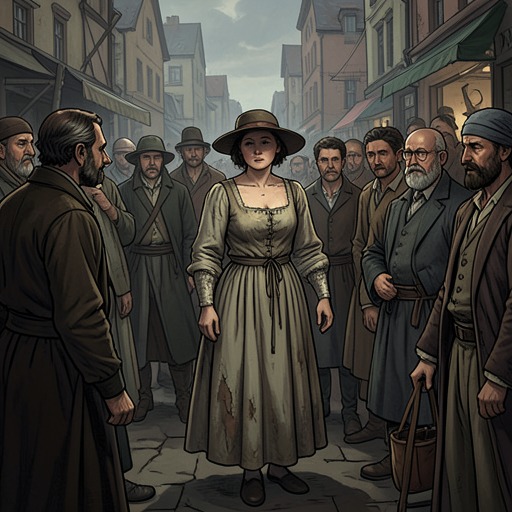
The elders take that stigma further. They conclude that Narfa has left Ona incapable of reasoning and that she is beyond redemption. They also decide that her unborn child, conceived through the assaults, will be raised by another colony family, perhaps even by the family of one of the attackers. The proposed separation treats the child’s future as something authorities can assign and Ona’s pregnancy as a condition to manage, rather than a relationship in which she might have a say.
Defending Ona and Claiming the Child
The treatment of Ona becomes explicit during the women’s argument about their future. When Mariche Loewen attacks her as an unmarried mother, Salome Friesen rises to defend her. Salome reminds the group that Ona, like many others, was unconscious and raped, and challenges the implication that this makes her a whore. The dispute reveals how the stigma attached to pregnancy can be turned against a woman even when the circumstances that led to it were involuntary.
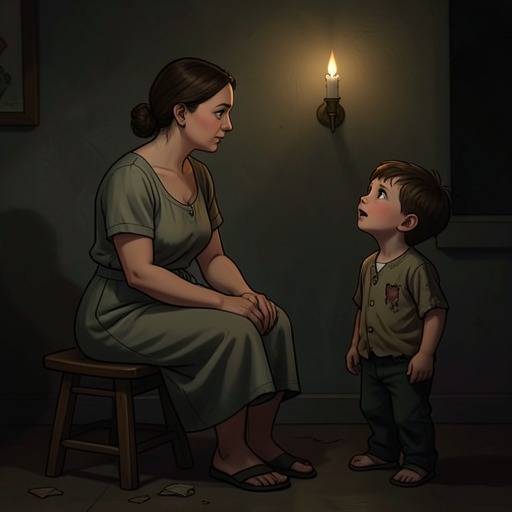
Ona does not present herself as certain about marriage, security, or family life. Asked whether she will hate the child because its father inspires violent thoughts in her, she says that she already loves the child more than anything and regards it as innocent and lovable. She also draws attention to the fact that the child’s father, too, was once an innocent newborn. Her answer separates a child’s identity from the violence of the circumstances of conception, and directly opposes the elders’ plan to transfer the child to another household.
Her answer is not an abstract defense of motherhood. Ona describes home as being with her mother, Agata Friesen, her sister, Salome, and her unborn child, wherever they may go. She says that love is the one element of the familiar arrangements of marriage and family she can affirm, while admitting its mystery to her. Pregnancy thus becomes part of her own account of belonging: the child is not merely a consequence to be assigned by the elders but a loved member of the family she chooses to name.
Pregnancy Amid the Decision to Leave
The immediate political pressure around the women’s meetings sharpens the conflict. The accused men have been taken to the city, and the remaining men of the colony have gone there to post bail in hopes of their return. Peters tells the women that they will then have the opportunity to forgive the accused; if they refuse, they must leave the colony for an outside world they know nothing about. They have only two days to organize a response. Ona’s pregnancy unfolds within this forced choice, while the elders’ proposal about the child makes clear that staying does not guarantee her authority over her own family life.
In the debate about the women’s options, Agata argues that remaining in the colony would place them in the path of violence and violate Mennonite pacifism. Ona also weighs freedom, forgiveness, and hope for the unknown against hatred of the familiar. Her pregnancy does not dictate a decision on its own, but it makes the human stakes of the debate concrete: the question of where the women can live is also a question of whether Ona can remain with the child she already loves.
The meeting’s ordinary tasks continue alongside these arguments. Salome leaves to hide antibiotics in strained beets so her daughter Miep will take them, then suggests bread and soup for the women’s lunch. Agata, Miep’s grandmother, becomes still when she hears details of the assault on the child. These moments place Ona’s pregnancy in a community already burdened with care for children and with the effects of violence; they also show that the women’s collective deliberation takes place amid the work of sustaining one another.
Ona’s Voice in the Record
Ona asks August Epp to record the women’s meetings because they are illiterate and cannot make the minutes themselves. He must translate their spoken Plautdietsch into English as he writes. During the discussions, Ona proposes using brown packaging paper to list the pros and cons of the women’s options, explaining that although none of them can read the writing, the paper can remain in the hayloft as an artifact for others to discover. Her pregnancy is therefore presented not as the limit of her participation but as one circumstance within a larger effort to speak and deliberate together.
At the end of the narrative, August runs back to the table for his notebooks and minutes and asks Salome to give them to Ona. Salome points out that Ona cannot read them. The exchange leaves unresolved how Ona will receive the written record, just as the cited account does not establish what ultimately happens to the pregnancy or the child. What it does establish is the contrast at the heart of her situation: authorities speak of deciding the child’s future, while Ona has already named the child as loved and placed that bond within her own sense of home.