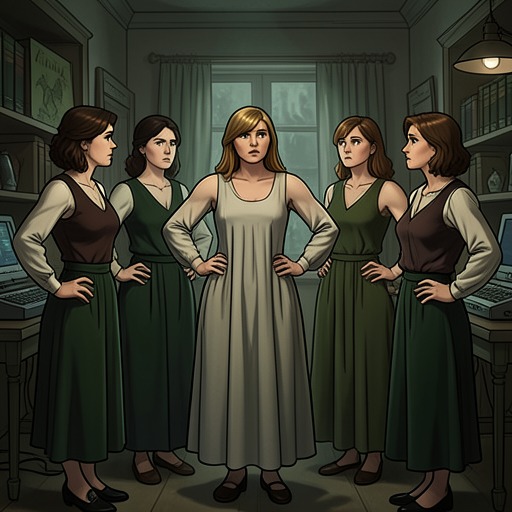
We have chosen to leave
Women TalkingWe have chosen to leave is the expression through which the women’s departure from the Molotschna Colony is framed as a decision, not a flight. Spoken in response to the language of running away, it gives a name to a choice made under severe pressure: the women must decide how to respond to the return of imprisoned attackers and the threat that refusal to forgive them will mean exile from the colony.
The choice under pressure
The expression takes shape within a two-day deadline. The remaining men of the colony, apart from those too old or infirm and the narrator, have gone to the city to post bail for the imprisoned attackers, hoping the men can return while awaiting trial. Peters says the women will then have the opportunity to forgive the perpetrators, a condition presented as necessary for everyone’s place in heaven. If they refuse, they will have to leave for an outside world they know little about. Departure is therefore not an unpressured preference: it is a response to a coercive choice imposed on the women.
The women’s discussion gives the decision its alternatives. One option is Do Nothing. Ona Friesen proposes a section on staying and fighting, and the meeting weighs its possible advantages. In the discussion of leaving, however, Salome Friesen states that there are no disadvantages. The expression belongs to this collective process of comparing constrained possibilities; it does not erase the dangers of departure, but marks which course the women have chosen.
Naming departure as a decision
As the women prepare to move, Agata Friesen forcefully points out that the group is planning to leave that night, with complicated logistics, many variables, and little time. Ona Friesen answers by rejecting the description of the women as fleeing like animals escaping a burning barn. Her distinction is between being driven in panic and making a decision to leave. The language does not change the external pressures or guarantee safety, but it recasts the women as agents in the action they undertake.
The decision also has a practical form. Ona Friesen asks whether the women agree to leave after dark, so they will not be seen when passing the Chortiza Colony and Hiakjeke Colony. August Epp reports that he has obtained the co-op safe, dynamite, and a world map. He later describes wrapping the map around a large block of cheese and concealing it in brown paper; the safe is placed under the back seat of Greta Loewen’s buggy. Onions, soap, and pieces of wood are packed as provisions and as possible help if the wheels become stuck or a fire needs to be started. These preparations make the declared choice a coordinated undertaking rather than a figure of speech.
A collective decision with uncertain risks
The plan is exposed to possible interference. Agata Friesen says the Koop brothers may be waiting for the women to act so they can alert the men in the city, or prevent the women from leaving themselves. She also describes a possible deception: a claim of fire to the north intended to push the women south, toward the city and the men. This is presented as a feared trap, not as an event that has already occurred. The phrase therefore asserts resolve without pretending that the route or outcome is secure.
In a later exchange, August Epp tells Ona Friesen that she is not fleeing; Ona laughs and confirms that the women have chosen to leave. The repetition makes the wording a concise statement of the distinction at the heart of the plan. The women do not claim that their movement is free of danger or compulsion. They claim the right to describe and own their response to it. In that sense, the expression converts a threatened expulsion into a collective act of departure, while leaving its uncertain consequences open.