We may feel guilty but we will know we are not guilty
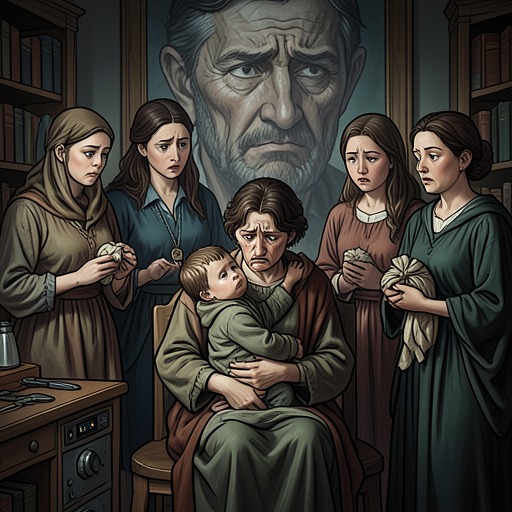
Women TalkingThe expression “We may feel guilty but we will know we are not guilty” is Mariche Loewen’s concise revision of the women’s discussion about leaving Molotschna. It recognizes that departure may bring painful feelings without treating those feelings as proof that leaving is morally wrong. In doing so, it helps the women name the difference between the emotional cost of their choice and the judgment imposed on them by others.
The decision behind the words
The women face a short deadline and a choice shaped by the colony’s male authorities. The remaining men have gone to the city to post bail for the imprisoned attackers, hoping they can return to Molotschna while awaiting trial. Peters says the women will then have the opportunity to forgive them; if they refuse, they must leave for an outside world they know nothing about. The women have only two days to organize their response. In that setting, leaving is neither an abstract possibility nor an uncomplicated act of independence: it means accepting uncertainty rather than submitting to a demand imposed as the price of remaining in the colony.
The moral question is also bound up with forgiveness. Ona Friesen argues that forgiveness compelled by expectation would not be heartfelt, and that pretending to forgive while withholding forgiveness inwardly could itself be a grave wrong. She considers whether some acts, including violence against one’s children, might be left for God alone to forgive. She also insists that the women’s task is to protect their souls, whether or not the men ask forgiveness or admit responsibility. The expression about guilt belongs to this same effort to distinguish the women’s own moral judgment from the obligation others would place upon them.
Agata’s formulation and Mariche’s amendment
Agata Friesen brings the question of guilt directly into the practical discussion. She strikes her hand on the plywood and notes that time is running out, then asks whether the women can agree not to feel guilty about disobeying their husbands by leaving Molotschna—or whether disobedience is even the right name for their decision. Her argument connects departure to the values she believes their faith requires: pacifism, love, forgiveness, and protection of themselves and their children. Staying, she reasons, risks making genuine forgiveness impossible and teaching the children that their fathers’ expectations take priority over those values.
Agata first describes what the women may feel instead: anguish, sorrow, uncertainty, and sadness, but not guilt. Mariche amends that assurance with the more qualified statement, “We may feel guilty but we will know we are not guilty.” The revision does not deny that the women may experience guilt; it refuses to let that anticipated feeling settle the moral question. The distinction gives emotional difficulty its due without conceding that the decision to leave is a wrongdoing.
From moral language to collective action
The phrase gains force because the women must turn deliberation into a plan. The choice among doing nothing, staying and fighting, or leaving is framed against the prospect of coerced forgiveness; Ona says there are no disadvantages to leaving. Agata, meanwhile, presents departure as a way to gain the distance and perspective needed to practice compassion and forgiveness without remaining in danger or at war with the attackers. Mariche’s amendment makes room for the distress that can accompany such a choice without allowing that distress to dictate it.
The decision becomes concrete when the women agree to leave after dark, hoping not to be seen as they pass Chortiza Colony and Hiakjeke Colony. August Epp reports that he has obtained the Co-op Safe, dynamite, and a World Map; he has wrapped the map around a block of cheese and placed the safe in the back of Greta Loewen’s buggy with practical supplies. Agata also warns that the Koop brothers may report the women’s departure or try to prevent it, and that a supposed fire to the north may be intended to drive them south, toward the men. These preparations and risks show the distance between accepting the possibility of guilt and accepting the authorities’ account of what leaving means.
Significance
The expression is not a claim that the women will feel no pain or doubt. Its force lies in holding two truths together: they may feel guilty, and they may nevertheless know that they are not guilty. That distinction allows the women to acknowledge the inward consequences of separation without confusing distress with moral culpability. As a collective statement, it supports a decision made under threat of expulsion and unfamiliarity, while preserving the women’s right to judge their actions by their own commitments rather than by the expectations of husbands or Peters.