
The Choice Between Revenge and Respect
WoodwalkersCarag's encounters with hunters, bullies, and Milling develop a moral distinction between resisting harm and becoming an agent of vengeance.
increasing Bearing strength in each event
 decreasing
Bearing strength in each eventdecreasingAn Inherited Warning
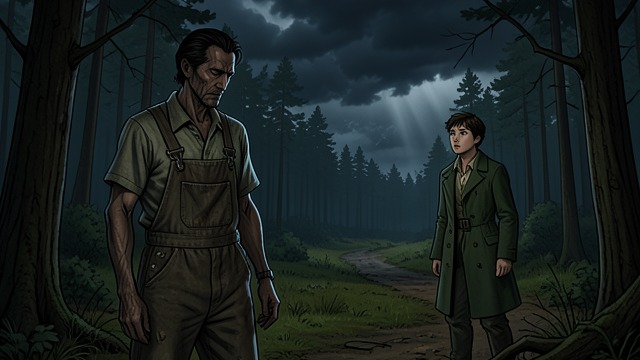
An Inherited Warning
A family's fear
Carag's father warns that humans are dangerous and insists that a woodwalker must choose one side. The warning is rooted in the family's preference for isolation and its distrust of human society.
A question left open
Carag experiences both human kindness and human threat, so neither his father's certainty nor his own early idealism proves sufficient. The story begins its moral inquiry by showing that humans are neither uniformly safe nor uniformly cruel.
A Predator Defends Prey
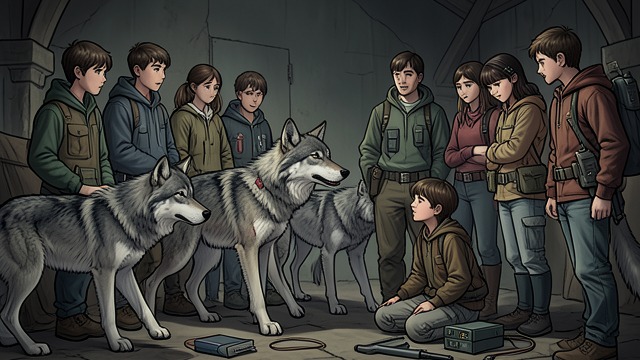
A Predator Defends Prey
Hierarchy challenged
Carag intervenes when Jeffrey's pack humiliates Nimble and Nell. His own predatory identity does not prevent him from seeing that the wolves' treatment of prey students is unjust.
Ethics in a shared society
The scene connects school rules to an ethical choice. Carag does not reject predator nature; he rejects the claim that nature gives one student permission to dominate another.
Violence Without Hatred
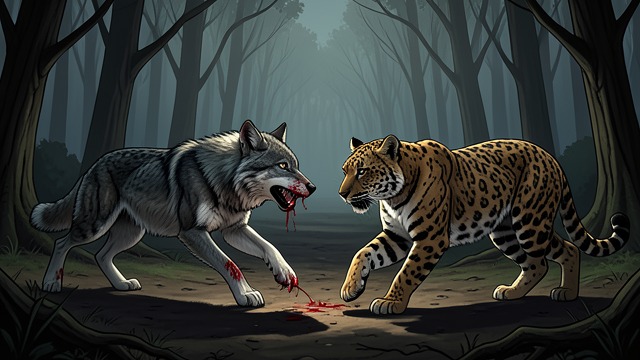
Violence Without Hatred
A fight under unequal terms
Carag fights the wolves to protect his own place and discourage future harassment. He uses claws and teeth, but the contest is a response to a social threat rather than a campaign against an entire group.
Limits of victory
Carag defeats Jeffrey, yet the pack's later extortion shows that force alone does not create justice. The encounter gives Carag confidence but also warns that victories can leave the underlying system intact.
Milling's Moral Argument
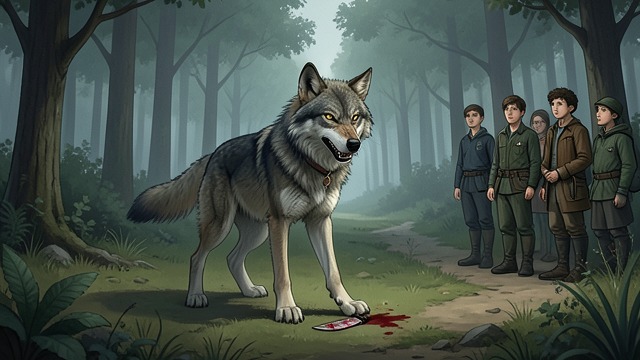
Milling's Moral Argument
A real wrong
Milling recounts the hunters' killing of Evelyn and June, giving Carag a concrete reason to understand his anger. Carag is disturbed by both the hunters' brutality and Milling's consuming rage.
Justice becomes revenge
Milling presents power as the means to punish humans, shifting from grief to collective hostility. Carag must distinguish acknowledging an injustice from endorsing a plan that harms people indiscriminately.
Choosing Against Retaliation
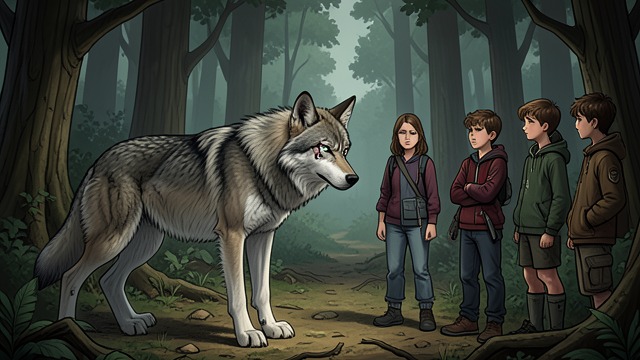
Choosing Against Retaliation
Fear does not dictate allegiance
Carag has been shot by a human hunter, making Milling's hostility easier to understand emotionally. Yet the experience does not persuade him to join a movement that would punish humans as a whole.
Refusal as moral agency
Carag rejects Milling while still recognizing the harm caused by hunters. His choice is not a denial of danger or grief; it is a refusal to convert individual wrongdoing into indiscriminate revenge.
During Carag's childhood in the mountains
During Carag's first lunch at Clearwater High
During the midnight duel
During the Sierra Lodge dinner
After Carag survives the hunter's attack
