
Learning to Live with Difference
WoodwalkersThe school community's varied bodies and histories deepen the story's argument that difference calls for respect, practical accommodation, and self-acceptance.
increasing Bearing strength in each event
 decreasing
Bearing strength in each eventdecreasingMany Forms, One School
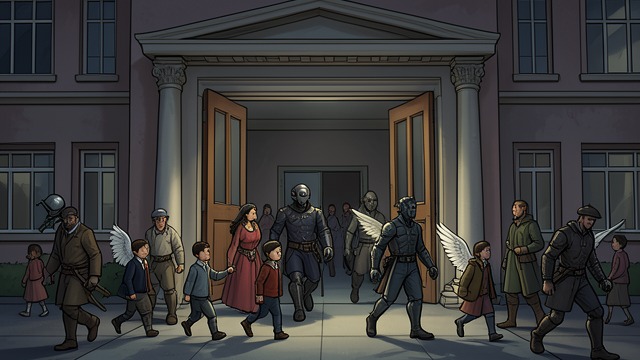
Many Forms, One School
A visible range of lives
Carag meets woodwalkers whose forms include birds, prey animals, large predators, and insects. The school building itself accommodates bodies and needs that an ordinary institution would not anticipate.
Difference is ordinary here
The students' forms are not treated as curiosities for outsiders but as part of daily life. Carag's sense of isolation begins to shift because no single animal identity defines the whole community.
The Fear of Being Prey
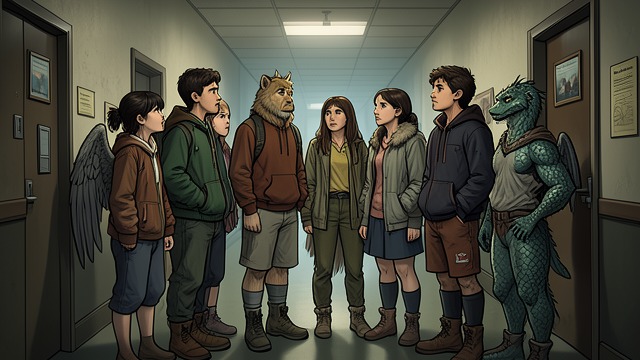
The Fear of Being Prey
Vulnerability within community
Nell and Nimble are vulnerable to predatory classmates even in a school intended for all woodwalkers. The rules recognize that different animal forms carry different risks.
Respect as an active practice
Carag's intervention shows that coexistence requires action, not merely shared space. The school must challenge those who turn natural differences into a justification for social humiliation.
A Spider Seen at Last
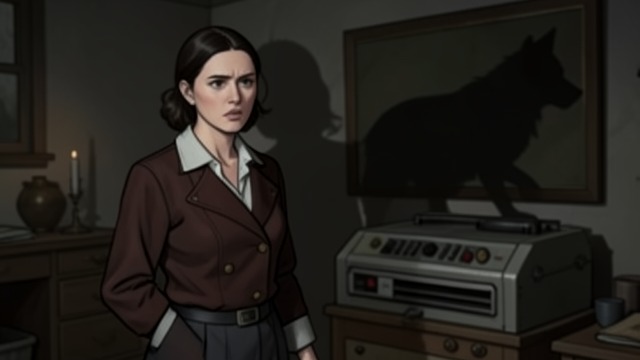
A Spider Seen at Last
Juanita's quiet position
Juanita usually remains a spider and is easy for classmates to overlook. She gathers the courage to approach Carag in human form because she has information about the wolves' plans.
Listening changes the encounter
Carag recognizes that he nearly frightened her by assuming she could not matter to him. He turns away to let her speak safely, and her warning helps him understand that attention and respect are forms of protection.
The School's Unusual Exam
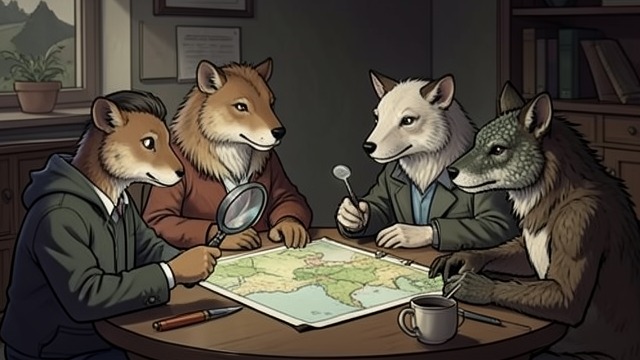
The School's Unusual Exam
Abilities beyond paperwork
Students demonstrate animal knowledge, transformation, fighting, and human-world understanding. Juanita's contest against a formic shapeshifter requires even the audience to adapt, with Theo providing a magnifying glass.
Fairness requires accommodation
The unusual format recognizes that not every student can be measured in the same way. At the same time, the exams expose areas where students need further support before they can progress safely.
A Community at the Party
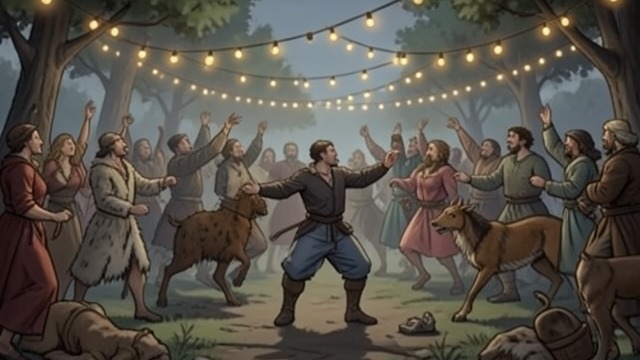
A Community at the Party
Shared space, different habits
Students dance, play music, eat, climb decorations, and move between human and animal forms. Their differences produce both comic disorder and a distinctive collective life.
Belonging without sameness
Carag takes part without needing to become an ordinary human or a solitary puma. The celebration embodies the school's ideal imperfectly but persuasively: a community can make room for many forms of life.
During Carag's arrival at Clearwater High
During the first dining-hall confrontation
After Carag tells Bridger about Milling
During the midyear examinations
At the end-of-year celebration
