
The Architecture Of Safety
World War ZThis flow traces how survivors rediscover walls, castles, fortified roads, and local defense as practical forms of communal memory.
increasing Bearing strength in each event
 decreasing
Bearing strength in each eventdecreasingCastle Memory
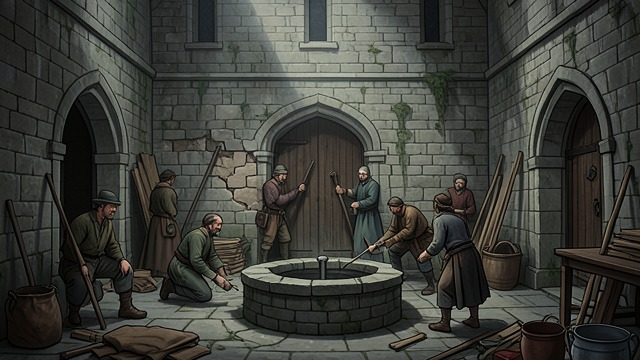
Castle Memory
Old Fortifications
David Allen Forbes revisits medieval castles as possible refuges.
Limits
Disease, fire, bad maps, and internal conflict threaten even strong walls.
Insight
Safety depends on organization and resources, not stone alone.
Windsor Refuge
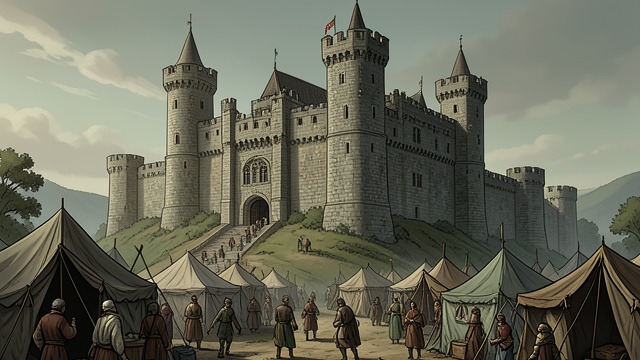
Windsor Refuge
Preservation
Windsor Castle shelters civilians, engineers, fuel systems, and wartime stores.
Leadership
The monarch remains in place rather than fleeing to a safer country.
Symbol
The castle protects both bodies and the idea of national continuity.
Fortified Roads
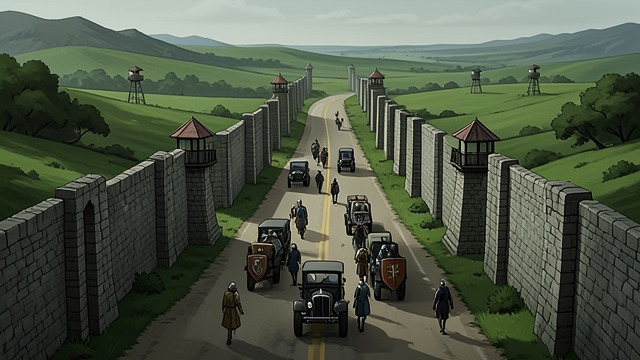
Fortified Roads
Innovation
British engineers connect protected routes and defensive positions.
Mobility
The system allows civilians and military forces to move without abandoning security.
Legacy
A medieval defensive instinct becomes a modern infrastructure network.
Shared Strongholds
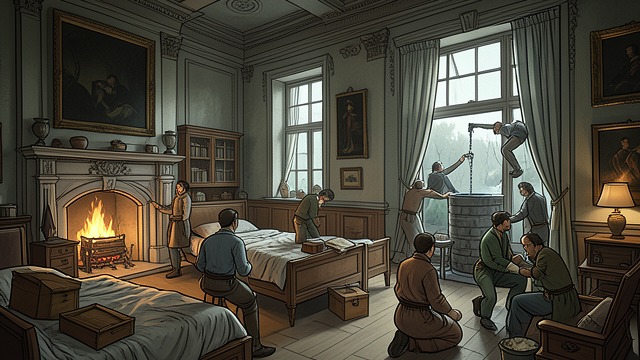
Shared Strongholds
Community
Former museums, castles, and compounds become inhabited settlements.
Cooperation
Residents restore walls, wells, gates, and local production together.
Belonging
A defensive structure becomes home because people maintain it collectively.
Living Symbols
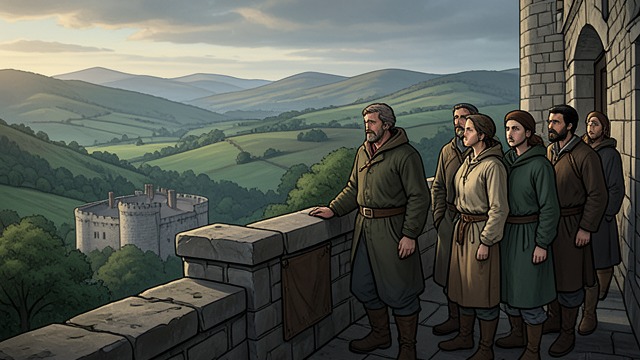
Living Symbols
Reassessment
Old institutions once dismissed as obsolete regain practical meaning.
Duty
Their value lies in service rather than prestige.
Emotional Shelter
The strongest fortifications defend not only territory but shared identity.
during the European collapse
during Britain’s emergency
during Britain’s defensive consolidation
during the postwar reopening
postwar Europe
