Captain Chen
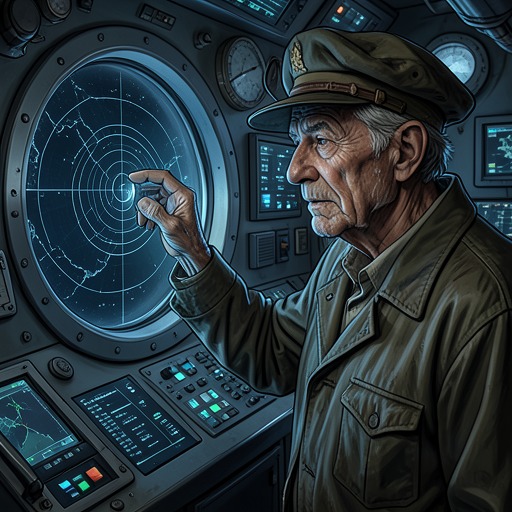
World War ZCaptain Chen is the commander who transforms a doomed military retreat into an act of civilizational preservation. Faced with an army that answers the outbreak with mass conscription and seemingly endless human waves, he concludes that continued war will turn China’s population advantage into a liability and may leave no Chinese people, perhaps no people anywhere. His solution is an impossible one: steal the Admiral Zheng He, carry its crew and their families beyond the collapsing country, and later use its remaining nuclear capability to end the fighting. His arc joins strategic judgment to intimate responsibility, culminating in a death marked by exhaustion, tenderness, and the loss of personal recognition.
Identity and Historical Position
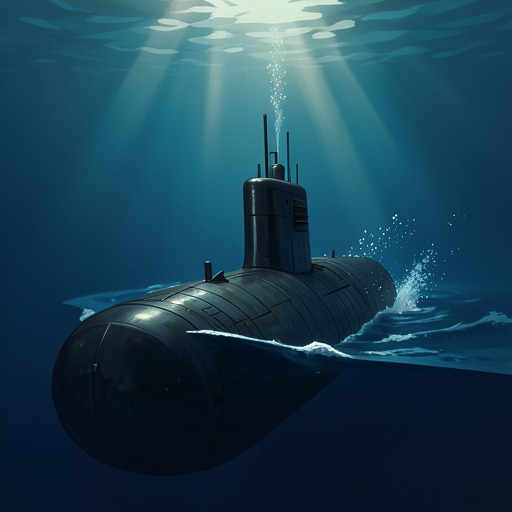
Captain Chen commands the Admiral Zheng He, one of China’s three ballistic-missile submarines and the newest of the Type 94 class. The vessel embodies the accumulated power of the state: Russian assistance, black-market technology, anti-American espionage, and nearly five thousand years of continuous Chinese history have all contributed to its construction. It is described as the nation’s most expensive, advanced, and powerful machine, which makes Chen’s plan more than desertion. To take it is to appropriate a national asset as a lifeboat from a sinking country.
Chen’s decision arises from a direct reading of the war’s demographic and military logic. The army’s faith in conventional armaments and a “bottomless well” of manpower descends from an older belief that China could survive nuclear destruction through sheer numbers. Once experienced professional troops are consumed, however, the strategy produces only more dead soldiers and therefore more living dead. Chen understands that every additional wave sent into battle enlarges the enemy while reducing the human population the army claims to defend. His judgment is consequently both military and historical: the state is defending China in a manner that could erase the Chinese people.
The Submarine Exodus
Chen makes his intentions known to senior officers because he believes the submarine may be the only chance to preserve something of civilization. His subordinate initially regards the proposal as unbelievable and morally indistinguishable from stealing the motherland’s most valuable possession. Chen’s force of personality and what is called his deep, fanatical patriotism overcome that resistance. The apparent contradiction is central to his character: the more completely he loves the country, the more decisively he must disobey the institutions claiming to embody it.
Preparation takes three months under siege conditions at Qingdao. Army units arrive in a continuing succession, each less trained, less equipped, or less suited to maintaining order than the one before it, while the perimeter comes under attack almost every day. Surface-ship captains surrender “expendable” crew members to reinforce defenses. Against this background, Chen and his officers provision the submarine under the cover of a routinely scheduled patrol, smuggling aboard emergency supplies and family members.
The families are not an incidental addition but the cornerstone of Chen’s plan. He knows that the crew will not leave port unless their relatives can accompany them. They are brought aboard at night in uniforms; children and elderly people are carried in supply crates. Strict silence is imposed because discovery by the Ministry of State Security would create a danger beyond the living dead. The secrecy also prevents the submarine from waiting safely for stragglers. Chen desperately wants to delay for family members who may be only hours or days away, yet understands that such a delay could destroy the entire escape. He gives the reluctant order to cast off while trying to conceal his feelings, though the receding fires of Qingdao reveal what the command costs him.
The route initially follows the assigned patrol sector so that the departure will appear normal. Beyond that point, no destination has been decided. Chen therefore leads not a conventional mission with a known objective but a controlled passage into uncertainty, carrying a miniature civilian population inside a weapon designed for national war.
Battle and Command
The submarine’s fragile security collapses near the island where Chen’s crew witnesses the destruction of the Madrid Spirit. A missile streaks into the vessel, producing a fireball that incinerates life on the two nearest motus. As the Admiral Zheng He sounds its foghorn, the crew realizes that the attack came from one of their own submarines. Chen immediately orders the boat to cast off, recognizing that remaining near the island exposes civilians to another strike. Power lines are cut, personnel are counted, hatches are secured, and the submarine dives for open water.
At ninety meters, the crew detects the hull noises of a Type 95 hunter-killer submarine. A warning light then shows that one of the attackers has torn away the guard on the number four seawater intake and lodged itself in the conduit, causing the reactor’s core temperature to rise. Shutting down the reactor would leave the submarine powerless, so Chen orders the vessel to move despite the danger. When the Type 95 begins its attack, he chooses to activate the Admiral Zheng He’s sonar, exposing the submarine’s exact position while obtaining a precise firing solution in return.
Both submarines fire simultaneously, their torpedoes passing one another as each attempts to evade. The Type 95 is faster and more maneuverable, but Chen’s experience allows his vessel to avoid the incoming weapons while its own torpedoes strike home. The enemy submarine collapses compartment by compartment under pressure. The victory is tactically necessary, yet it becomes a psychological defeat for Chen: the sounds of the dying boat extinguish the light in his eyes. Command has preserved the people aboard his submarine, but it has also forced him to destroy fellow Chinese sailors who may have believed they were defending the same homeland.
The Final Nuclear Decision
Chen later becomes the commander capable of ending the internal fighting because the Admiral Zheng He is the last nuclear asset remaining to the rebellion. Land-based silos have been overrun, the air force is grounded, and the other two missile submarines have been captured while still moored, their crews waiting for orders as the dead swarm through their hatches. Commander Chen tells the crew that every moment of delay costs another hundred lives and another hundred bullets that could be used against the undead.
The launch is presented as one final burden rather than a triumph. Chen orders a missile carrying a single massive multimegaton prototype warhead, originally designed to penetrate the hardened surface of the NORAD facility in Cheyenne Mountain, Colorado. The political leadership’s bunker has been modeled on that facility, making the weapon’s intended target a reflection of the same logic of hardened command and survival. Chen’s order thus turns the state’s ultimate instrument against the machinery that has prolonged the war. He accepts responsibility explicitly, insisting that the order and its consequences belong to him.
As the submarine departs beneath the surface, the crew learns that Xilinhot has taken a direct hit and that loyalist forces have surrendered, reunifying with the rebels to fight the real enemy. The timing makes Chen’s decision morally more severe: the nuclear strike is not merely an act against an irredeemable opposing army but part of the desperate effort to stop a fratricidal conflict before it consumes the remaining human forces.
Death and Narrative Significance
Chen survives long enough to hear that the forces have begun their own version of the South African Plan, but the knowledge comes only after the submarine emerges from beneath the ice pack. He is already visibly exhausted, sitting in the attack center with a cup of tea beside him. The tea has gone cold while he silently watches the crew and smiles at them with the quiet paternal affection of someone looking at his children’s happiness.
His final scene reverses the image of the ruthless commander. When his subordinate offers to replace the cold tea, Chen declines. He reaches out, takes the sailor’s hand, and looks directly at him without recognizing his face. He calls him a good boy, using the sailor’s name, Zhi Xiao, before closing his eyes forever. The moment reveals the cost of the decisions that have defined him: the commander who has carried a nation’s survival through calculation and violence is left with a mind worn past recognition, yet still capable of affection.
Chen’s significance lies in the tension between patriotism and obedience. He does not save China by preserving its institutions, its military hierarchy, or its nuclear arsenal intact. He saves what can still be carried out of the catastrophe: people, families, a functioning submarine, and the possibility of organized resistance to the living dead. His actions also expose the limits of heroic command. Every rescue requires concealment, every escape abandons those left behind, every battle kills people who might once have been allies, and the final act of salvation fires on the homeland itself. Captain Chen becomes the human face of a historical reversal in which loyalty to civilization demands betrayal of the state that claims to protect it.