Captain Chen–Commander Chen Zhi Xiao father–son relationship
World War ZThe father–son relationship between Captain Chen and Commander Chen Zhi Xiao is one of the most devastating personal bonds in the book’s account of the Chinese civil war. It joins duty, parenthood, obedience, betrayal, and uncertain responsibility: Captain Chen has spent his life making his son into the ideal officer, yet the collapse of the state forces him to decide whether that son is an enemy, a victim, or the person who can lead him home.
Family and Formation
Captain Chen’s family life was marked by absence and endurance. His wife left him in the early 1980s, an event remembered as a devastating scandal, particularly because of the social expectations of that period. Despite the disgrace, he preserved his career and raised his son alone. The achievement matters because Captain Chen’s relationship with Commander Chen Zhi Xiao was not merely affectionate; it was also an extended act of education, discipline, and national formation.
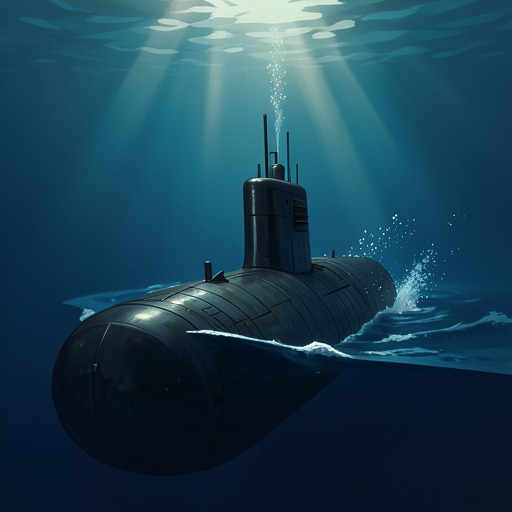
Captain Chen taught his son to be a good sailor, to love and serve the state, never to question orders, and to become the finest officer the Chinese Navy had ever produced. The happiest day of his life came when Commander Chen Zhi Xiao received his first command: a brand-new Type 95 hunter-killer submarine. The vessel represented the completion of a father’s hopes. His son had inherited not only a profession but a moral code in which obedience to the state appeared inseparable from personal virtue.
The family’s fate is set against a broader national contradiction. Captain Chen’s wife and children were already on base when the crisis began, and he had twin daughters as well as his son. Yet the narrative gives particular weight to the son because the father’s professional ideals are tested through him. The daughters establish the larger family endangered by the war; Commander Chen Zhi Xiao embodies the single child into whom Captain Chen has poured his identity as parent and officer.
The Son as Possible Enemy
The relationship becomes tragic when Captain Chen’s submarine encounters the consequences of the Three Gorges Dam collapse. The crew has been trying to determine which submarine attacked them, and the question is not merely tactical. The attacking vessel is a Type 95, the same class commanded by Commander Chen Zhi Xiao. The possibility that the enemy submarine is his son’s transforms military uncertainty into a crisis of conscience.
Captain Chen would do anything to avoid the fleet because he cannot accept the prospect of fighting his own child. At the same time, he has already betrayed his oath and his homeland. The narrator understands the unbearable implication: if Captain Chen’s betrayal helped bring about the attack, he may have contributed to the death of his own son. Knowledge becomes more painful than ignorance, but ignorance is impossible. The father needs to know which submarine attacked them, even if the answer confirms that his political and military choices have become a form of filial violence.
The relationship therefore follows a pattern of divided loyalties rather than a simple conflict between love and duty. Captain Chen’s devotion to his son was expressed through service to the state, and the son’s training was designed to make obedience unquestionable. When the state fractures into loyalist and rebel forces, the very principles that joined father and son place them on opposite sides. The family bond survives, but its language has been contaminated by commands, oaths, and firing solutions.
The Father’s Collapse
After the submarine disaster, Captain Chen’s emotional collapse makes the cost of this conflict visible. The crew hears the hull of the doomed Type 95 screech as compartments implode. The captain watches the light die from his commanding officer’s eyes while the submarine is destroyed, and the account leaves open the exact identity of the vessel that attacked them. That uncertainty is essential: the father is not granted the relief of a cleanly established death, nor the certainty that he himself was innocent of causing it.
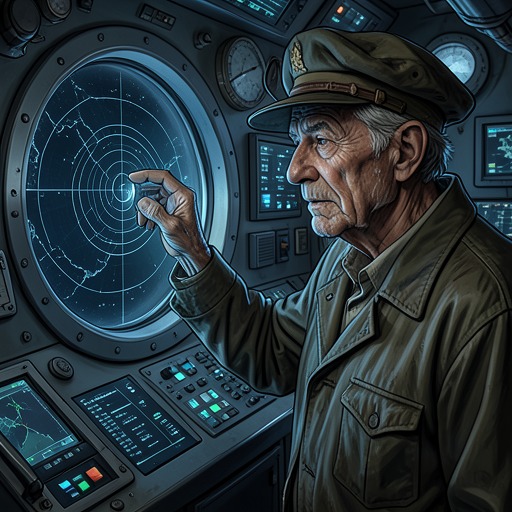
The following morning Captain Chen does not appear for first watch. When the narrator finds him in his cabin, his hair has turned white, his skin is sallow, and his eyes are sunken. He has become an old and broken man almost overnight. The physical change functions as the outward mark of a private knowledge that cannot be shared or repaired. The dead rising from the ground are less frightening than the monsters carried in the human heart, because Captain Chen’s true torment is not the existence of the living dead but the possibility that love, obedience, and betrayal have made him an agent of his son’s destruction.
From that day, the submarine cuts contact with the outside world and travels toward the Arctic ice. The crew attempts to maintain ordinary life by repairing the boat, growing food, educating the children, and comforting one another, but Captain Chen withdraws completely. Only the narrator sees him: meals are delivered, laundry collected, and daily reports on the boat’s condition passed through his cabin. The father’s silence becomes a second kind of isolation, extending the distance between him and the son whose fate has erased his ability to command himself.
Reunion Beneath the Ice
The relationship changes when sonar detects another Type 95 attack submarine. Captain Chen leaves his cabin for the first time since the disaster and returns to the attack center. He orders a firing solution plotted and tubes one and two loaded. Because the approaching submarine does not initially respond in kind, he reads its silence as an advantage and prepares to destroy it before it can fire.
The moment repeats the family crisis in a new form. Captain Chen is once again placed before a Type 95, once again forced to act under military procedure, and once again confronted with the possibility that obedience will require him to kill his son. This time, however, an underwater telephone signal interrupts the launch. Commander Chen Zhi Xiao identifies himself, announces peaceful intentions, and asks the crew to stand down from general quarters.
The son explains that the Three Gorges Dam’s destruction triggered a civil war. The submarine that attacked Captain Chen’s vessel belonged to the loyalist forces, while Commander Chen Zhi Xiao had joined the rebels. His mission is not to destroy his father but to find the submarine and escort it home. The revelation reverses the father’s worst fear. Commander Chen Zhi Xiao is alive, and the vessel responsible for the earlier attack was not his. The son has also broken with the state that shaped him, but he does so in order to recover his father and reunite the scattered remnants of the country.
When the two crews surface through the ice and run toward one another under the Arctic twilight, the reunion appears to restore everything the war has taken. The narrator imagines that they can finally go home, reclaim their country, and drive out the living dead. The scene offers a brief fusion of family reconciliation and national recovery: father and son are no longer separated by a torpedo attack, and the submarine no longer has to choose between survival and fratricide.
Duty After Reconciliation
The reunion does not end the relationship’s ordeal. The return home is immediately qualified by the revelation that one final duty remains. The Politburo is still protected inside its leadership bunker at Xilinhot and continues to control at least half of China’s dwindling ground forces. The old leaders are expected never to surrender, and their refusal threatens to prolong the civil war until nothing remains of the country except the living dead.
Commander Chen Zhi Xiao’s decision to seek out his father is therefore part of a larger rebel mission, not a retreat into private family life. Captain Chen’s restoration to contact with his son leads directly into another political and military obligation. The father–son bond becomes a bridge between personal survival and national responsibility, but it cannot escape the logic of duty that created the original wound. Their reconciliation is real, yet it is immediately recruited into the struggle to end the civil war.
The relationship’s significance lies in this refusal of a simple happy ending. Captain Chen once raised his son to obey the state without question; Commander Chen Zhi Xiao ultimately proves himself by questioning which state deserves loyalty. The son remains a sailor and commander, but his service has moved from automatic obedience to a deliberate choice between loyalists and rebels. The father, meanwhile, survives the fear that he may have killed his own child, only to face a country whose political fathers have endangered an entire generation.
Narrative and Thematic Significance
The father–son relationship concentrates the book’s larger argument that institutions cannot protect people when their inherited doctrines no longer match reality. A military system built around orders, class designations, and state loyalty can identify a Type 95 submarine, calculate a firing solution, and load torpedoes; it cannot tell a father how to recognize his son when civil war turns comrades into enemies. The decisive knowledge arrives not through weapons but through communication on the underwater telephone.
The relationship also parallels the military’s broader movement from rigid preparation toward adaptive survival. Elsewhere, soldiers learn to reject tactics designed for the last war, adopt the resource-to-kill ratio, and use dependable weapons such as the Standard Infantry Rifle and Cherry PIE ammunition. In the submarine story, the crucial adaptation is moral and political: Commander Chen Zhi Xiao refuses to remain inside the old division between unquestioning state service and treason. He finds a way to serve his country by opposing the authorities who have made obedience destructive.
For Captain Chen, fatherhood and command can never again be separated. His son’s first command was the summit of paternal pride; the suspected attack becomes the source of his rapid physical and spiritual aging; the Arctic reunion gives him a reason to emerge from his cabin and resume action. The relationship moves from formation, through presumed loss and guilt, to recognition and renewed duty. Its emotional power comes from the fact that survival does not erase what happened. The father and son can go home together, but they must carry the war’s unanswered moral burden with them.