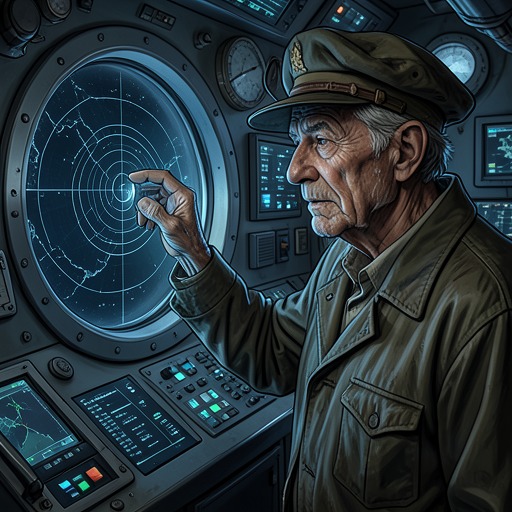
Commander Chen Zhi Xiao
World War ZCommander Chen Zhi Xiao is the son of Captain Chen and the figure whose radio transmission overturns the crew of the Admiral Zheng’s understanding of the war. His significance lies in the collision of family duty, military loyalty, and national survival: trained to embody the Chinese navy’s ideal officer, he ultimately rejects the faction that attacked the submarine and seeks to bring his father’s crew back into a China shattered by the Three Gorges Dam’s destruction.
Identity and Formation
Commander Chen Zhi Xiao was raised by Captain Chen after Captain Chen’s wife left him in the early eighties. The separation was remembered as a devastating scandal, yet Captain Chen salvaged both his career and his role as a single parent. That history gives the commander’s later appearance a personal weight beyond the military crisis: he is not merely an officer encountered across hostile waters, but the son whom Captain Chen raised alone.
Captain Chen taught his son to be a good sailor, to love and serve the state, to obey orders without question, and to become the finest officer the Chinese navy had ever seen. The father’s hopes reached their highest point when Commander Chen Zhi Xiao received his first command, a brand-new Type 95 hunter-killer submarine. The vessel represented both professional achievement and filial fulfillment, making the later civil war an assault on the identity Captain Chen had built for his son.
The Civil War and the Submarine Encounter
The crew of the Admiral Zheng initially understood its battle with another Type 95 as part of the wider struggle surrounding the mysterious disasters reported from China. Captain Chen’s response was shaped by the possibility that the enemy submarine might have been commanded by his son. He had already betrayed his oath and homeland by fleeing with the Admiral Zheng; the suspicion that this act might also have led to his son’s death turned military uncertainty into a crisis of conscience.
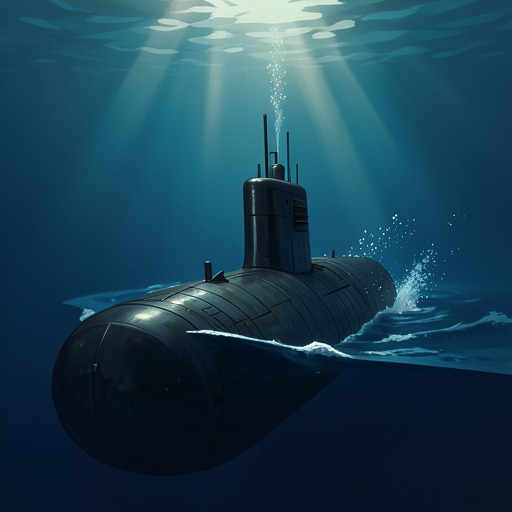
The truth emerged when another Type 95 approached the Admiral Zheng while the submarine was traveling beneath the Arctic ice. Captain Chen, withdrawn and spiritually broken after the earlier destruction of the attacking submarine, left his cabin for the first time in many days when the crew went to battle stations. He ordered a firing solution plotted and tubes one and two loaded. Because the approaching submarine had not answered in kind, he regarded its apparent hesitation as an advantage and prepared to destroy it before it could fire.
Just before the order was given, the approaching submarine contacted the Admiral Zheng through the underwater telephone known as the “gertrude.” Commander Chen Zhi Xiao announced peaceful intentions and asked the crew to stand down from general quarters. His message explained that the Three Gorges Dam had been the source of the natural-disaster rumors circulating in Manihi and that the earlier battle between the two Type 95 submarines had been part of a civil war triggered by the dam’s destruction.
Defection and Rescue Mission
Commander Chen had sided with the rebels, while the submarine that attacked the Admiral Zheng belonged to the loyalist forces. His mission was not to hunt down his father’s crew but to locate them and escort them home. The revelation instantly reverses the emotional direction of the scene: the crew had been seconds away from killing the person Captain Chen feared he might already have murdered, and the commander’s transmission instead offers proof that his son is alive and actively searching for him.
The two crews reunited after breaking through the ice beneath the Arctic twilight. The reunion seemed to promise the end of exile: the sailors believed they could return home, reclaim their country, and drive out the living dead. Commander Chen therefore functions as both rescuer and herald, carrying the first credible explanation of China’s internal catastrophe and opening a route back to the national struggle. Yet the apparent homecoming immediately gives way to another obligation, because the Politburo remained entrenched in its leadership bunker at Xilinhot and still controlled at least half of China’s dwindling ground forces.
Family, Loyalty, and Narrative Role
Commander Chen Zhi Xiao’s role is defined through absence before it is defined through action. Captain Chen’s grief, silence, and physical collapse make the unseen son the emotional center of the submarine’s Arctic isolation. When the commander finally speaks, the voice coming through the underwater telephone does more than identify an ally: it restores the father’s lost connection to his family and supplies the political context that the isolated crew had been denied.
His decision to join the rebels complicates the values Captain Chen once instilled in him. The commander was raised never to question orders and to serve the state, but the civil war divides the state itself into loyalist and rebel forces. By choosing the rebels and undertaking a mission to find the Admiral Zheng, he converts obedience into judgment. The decision does not erase his military identity; it redirects military skill toward reunification and resistance to a leadership that, if left in power, might consume the remnants of China.
The commander’s appearance also turns the family relationship into a miniature version of the national conflict. Father and son have been placed on opposing sides by competing political authorities, while the submarine battle makes their separation potentially fatal. Their reunion offers emotional release, but the continued threat at Xilinhot prevents that release from becoming a final resolution. Commander Chen returns not to a restored homeland but to a country whose civil war must still be ended before the living dead inherit what remains.