Michael Choi
World War ZMaster Chief Petty Officer Michael Choi is the veteran diver and pilot who carries the unfinished underwater front of World War Z into the postwar world. His work aboard Deep Glider 7 makes him both combatant and witness: while most survivors measure victory by reclaimed land, Choi continues to hunt the undead in the ocean, where millions remain hidden, mobile, and capable of threatening shipping, industry, and coastal life.
Identity and Introduction
Michael Choi appears aboard USS Holo Kai, off the coast of the Hawaiian Islands, as the pilot of Deep Glider 7. The craft resembles a twin-fuselage aircraft more than a minisub, placing Choi inside a specialized military environment where aviation, naval diving, and infantry combat overlap. He operates from the port hull while the interviewer lies in the starboard hull, and he handles the descent as the mother ship lowers the vehicle into the Pacific’s rough water.
Choi is described as one of the “old-timers,” possibly the most experienced diver in the United States Navy’s Deep Submergence Combat Corps. His gray temples and weathered crow’s-feet contrast with an almost adolescent enthusiasm, while traces of a surfer-dude manner remain audible beneath his otherwise neutral accent. The contrast establishes his characteristic presence: hardened by years of dangerous service, yet animated by genuine pleasure in the machinery, the sea, and the work itself.
The War Beneath the Water
For Choi, the war never ended; it is still escalating. He reports that operations and both material and human resources expand every month because an estimated twenty to thirty million undead remain active in the oceans. They wash up on beaches, become caught in fishermen’s nets, and appear around offshore oil rigs and transatlantic cables. His current mission is therefore not a ceremonial mopping-up operation but a continuing intelligence campaign: finding the undead, tracking them, and predicting their movements to provide advance warning.
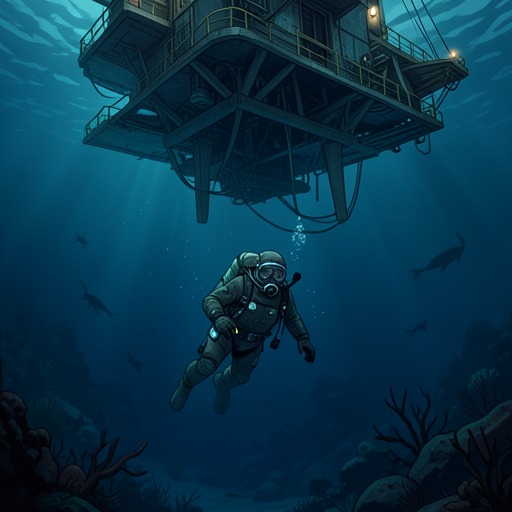
Choi sharply distinguishes his own combat from civilian diving methods and from the equipment used in shallow, muddy-water operations. He says that the military employed mesh suits, scuba gear, spear guns, and similar weapons mainly during brown-water operations, largely by army personnel. His own combat was conducted strictly in an Atmospheric Diving Suit, or ADS. He explains that an ADS combines the qualities of a spacesuit and armor, allowing a diver to withstand extreme pressure without the prolonged decompression risks associated with scuba or mixed-gas rigs.
His technical account places the suit within a long history of deep-diving technology. Early devices included crude barrel-like diving equipment with a faceplate and arm holes, followed by systems such as the Tritonia and the Neufeldt-Kuhnke. Such technology declined after the invention of scuba, then returned when divers had to work at the extreme depths demanded by offshore oil rigs. Choi emphasizes the practical danger of deep pressure: scuba divers may spend days or weeks in decompression chambers, while a rapid ascent can cause gas bubbles in the blood and brain, along with long-term injuries such as bone necrosis.
Equipment and Combat Method
Choi identifies three basic United States Navy ADS models: the Hardsuit 1200, the Hardsuit 2000, and the Mark 1 Exosuit. The Exosuit is his preferred system and the one he calls his own. Unlike the bulkier hardsuits, it is slim and light enough for a diver to swim in, even without a power sled or thruster packs. That mobility gives the operator the ability to maneuver above an enemy rather than merely being carried through the water by machinery.
The hardsuits compensate for their size by allowing the diver to draw the arms into a central cavity and operate secondary equipment such as lights, video systems, and side-scanning sonar. Choi presents the Exosuit as the opposite design philosophy: a stripped-down, “bargain basement” platform with fewer readouts and less machinery. Its simplicity reduces multitasking and distraction, concentrating the diver’s attention on the weapon and the field directly ahead.
That advantage comes with a serious vulnerability. An ADS produces complete tactile blackout. Because the suit is rigid, the diver cannot feel the outside world; an undead creature can place its hands on the suit without being detected unless it actively tugs or flips the diver. At Troll, the helmet lights worsened the danger by producing glare in the suspended water. Choi recalls the sudden appearance of a decaying face against his face bowl as the only time he was truly spooked, carefully distinguishing that reaction from fear. The distinction is part of his professional self-presentation: danger may surprise him, but he refuses to let surprise become an admission of helplessness.
Formation and Major Operations
The Deep Submergence Combat Corps came into existence because civilian oil workers refused to return to their jobs until their escorts were better armed. Divers had been ambushed in darkness while working in dry suits, suffering from cold, heat, numbness, impaired vision, and the sudden attack of hands or teeth. Choi describes the terror as an assault that could end with a diver being dragged upward, leaving behind only body parts or a severed lifeline. The DSCC’s first mission was to protect rig divers and keep oil production operating; its responsibilities later expanded to beachhead sanitation and harbor clearing.
Beachhead sanitation meant helping Marine forces come ashore. During Bermuda, the first amphibious landing, the beachhead was repeatedly attacked by undead walking out of the surf. The DSCC responded by establishing a deep semicircular perimeter around the proposed landing area. The defensive net had to be deep enough for ships to pass over while remaining high enough to keep the undead out. Commanders judged the danger an acceptable risk, apparently because no better option existed, and selected ADS divers because the mission was too hazardous for mesh divers.
The operation was less catastrophic than expected. Once the undead massed beneath the ship that emitted the tracking signal and then went silent, the divers became the brightest targets in the water, yet the attack rate was unusually low and the nets achieved an almost perfect success rate. A small force could maintain constant watch and shoot the occasional undead creature attempting to climb the barrier. After the first three landings, the military returned to mesh divers for comparable missions, reducing the DSCC’s role in that particular task.
Harbor clearing was different in scale and horror. In the final stages of the war, the objective was not simply to secure a beachhead but to reopen harbors for deepwater shipping. The work required mesh divers, ADS units, and civilian volunteers armed with little more than scuba equipment and spear guns. Choi participated in clearing Charleston, Norfolk, Boston, and the Hero City, the last of which he presents as the ultimate underwater nightmare.
The harbors were cities beneath the surface, packed with sunken ships, cars, aircraft, and the cargo discarded by container ships during evacuation efforts. Couches, toaster ovens, clothing, and crushed plasma televisions created a landscape of broken objects whose resemblance to bone continually tested the divers’ nerves. Choi imagined the undead behind washers, dryers, and piles of air-conditioner fragments; sometimes that terror was only imagination, but sometimes it was not.
The most dangerous work involved sunken ships inside harbor boundaries. The Frank Cable, a large submarine tender converted into a refugee ship, sank at the mouth of a harbor and had to be searched compartment by compartment before it could be raised. In its narrow passages, the Exosuit felt bulky and unwieldy despite its usual mobility. Debris blocked many hatches, forcing the divers to cut through doors, decks, and bulkheads. When Choi cut through a bulkhead above the ship’s engine room, structural damage or corrosion caused the deck to collapse beneath him, dropping him into a compartment filled with hundreds of undead bodies.
Choi describes being engulfed by legs, arms, and pieces of meat before he could swim or even think. He immediately denies having recurring nightmares, but the scene returns in the form of a hypothetical nightmare in which the same event is replayed with him naked and defenseless. The denial does not erase the memory; it gives the memory a shape. His joking, abrasive delivery functions as a layer of armor over an image of total bodily vulnerability.
Postwar Conflict and Narrative Role
Choi remains in service because the ocean still contains an enormous undead population and because human judgment remains indispensable. Political arguments favor replacing ADS divers with remotely operated vehicles, claiming that robots would be more efficient and would limit human casualties. Choi rejects that reasoning, insisting that the DSCC lost no one in combat. The much-cited diver Chernov was killed after the war on land, when he became intoxicated and passed out on a tram line, not during an underwater operation.
He concedes that remotely operated vehicles might be more cost-effective, but denies that they are better. For him, effective combat depends not only on artificial intelligence or mechanical efficiency but also on heart, instinct, initiative, and the human capacity to respond to conditions that cannot be fully programmed. Choi and most other wartime veterans remain involved because the machines have not yet replaced them. He imagines that, once technology does replace human divers, he will leave the Navy rather than continue looking at an Exosuit as a relic of a war that others believe is over.
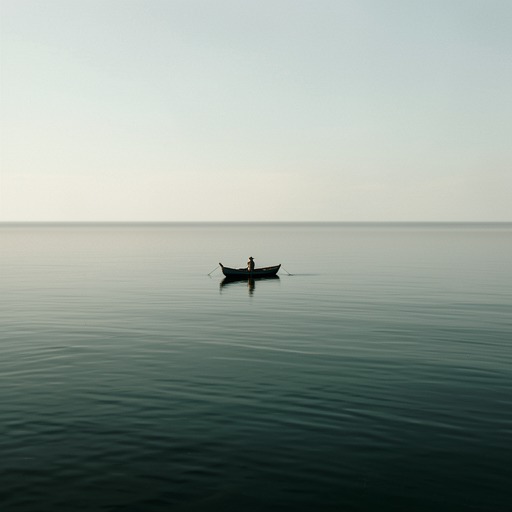
The later image of Choi aboard USS Tracy Bowden extends his role beyond military testimony into ecological witness. Leaning against the fantail railing and staring at the horizon, he identifies whales as the great losers of World War Z. Several million hungry refugees and navies converted into fishing fleets have devastated marine life, while factory ships exploit the stunned animals. Choi explains that a helicopter-dropped torpedo need not strike a whale directly; a near explosion can deafen and daze it long enough for the factory ships to arrive. The sound of detonations and the animals’ cries travel for miles through water.
Michael Choi therefore embodies a victory that remains morally and materially incomplete. He is a technically precise diver, a veteran who masks trauma with profanity and humor, and a representative of the human skills that postwar automation threatens to discard. His continuing patrols show that the undead are not confined to battlefields, while his account of the whales reveals that humanity’s survival has created a second, quieter catastrophe beneath the same sea.