Olkhon Island
World War ZOlkhon Island, identified through Khuzhir on Lake Baikal, is the stark setting for the interview with Maria Zhuganova. Far from functioning as a scenic refuge, it is presented as a controlled and watchful place where isolation, military secrecy, and the recovery of suppressed memory meet. The island gives physical form to the book’s larger concern with preserving human testimony against official accounts that reduce catastrophe to facts and figures.
Setting and Isolation
Khuzhir is reached in the aftermath of a world still marked by the Zombie War, within the Holy Russian Empire. The interview takes place in a bare room containing only a table, two chairs, and a large wall mirror that is almost certainly one-way glass. The apparent simplicity of the room is therefore deceptive: although the interviewer and Maria Zhuganova are technically alone, the sense of unseen observers makes the space feel supervised rather than private.
The room also embodies the isolation that shaped Maria Zhuganova’s experience before the wider crisis became known. Her military camp in North Ossetia, Alania, had been placed under an indefinite communications blackout about a month before the Great Panic began, around the time an American newswoman exposed the outbreak. Televisions were removed from the barracks, as were personal radios and cell phones. Maria Zhuganova possessed only a cheap disposable phone with five prepaid minutes, intended for a birthday call to her parents, and even that limited connection represented a fragile link to a world from which the soldiers had been deliberately cut off.
The Interview Space
The island’s principal narrative function is as a site of testimony. Maria Zhuganova appears physically worn: her face is tired, her hair graying, and her body strains the seams of the fraying uniform she insists on wearing. The interviewer writes on a supplied pad because the usual voice-activated transcription device has been forbidden for security reasons. This practical restriction reinforces the atmosphere of concealment surrounding the meeting and contrasts with the interviewer’s earlier access to translators, security clearance, travel support, and transcription technology while working for the United Nations Postwar Commission.
That contrast matters because the book was created after almost half of the interviewer’s personal, intimate material was removed from the official Commission report. The chairperson regarded opinions and feelings as distractions from clear facts and figures, whereas the book preserves survivors’ voices precisely because the human factor gives historical catastrophe its meaning. On Olkhon Island, the physical conditions of recording make that argument concrete: a handwritten account, produced under observation and without the normal recording equipment, becomes an act of preservation against institutional silence.
Military Secrecy and Violence
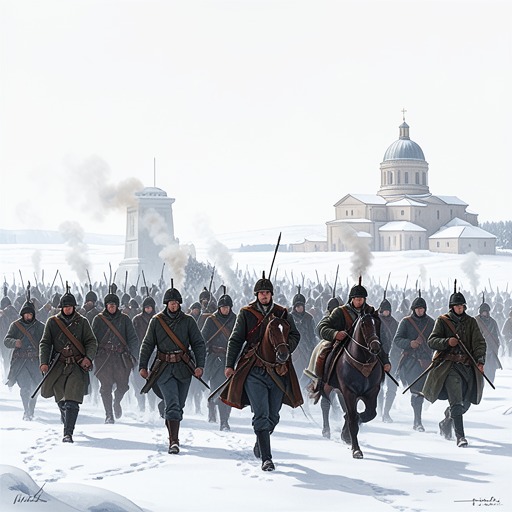
Although the interview occurs on Olkhon Island, Maria Zhuganova’s recollection carries the reader back to the military environment that produced her testimony. Her unit had been stationed in North Ossetia, Alania, officially to keep peace between Ossetian and Ingush minorities. Their rotation was due to end at approximately the same time that communications were cut, with the suspension justified as a matter of state security. The soldiers did not understand why they had been isolated, and confusion gradually hardened into anger, suspicion, and declining morale.
The remembered violence centers on a rural sweep conducted by the unit. A terrified little girl ran down the only road, pointing toward another child who was staggering across a muddy field. Lieutenant Tikhonov ordered the platoon sharpshooter Petrenko to aim at the approaching girl and shoot. Petrenko initially complied but then lowered his weapon and refused. The refusal transformed the scene from routine obedience into open moral resistance.
The unit’s political enforcer, Rat Face, crossed the field and killed the girl himself with a pistol shot between the eyes. He then returned casually to the unit, while the girl’s probable mother collapsed in grief and cursed the soldiers. The scene explains why the island interview is more than a record of military deployment: it is a place where testimony gives shape to acts that official language would otherwise conceal beneath terms such as peacekeeping, security, duty, and order.
Suppression and Survival
The testimony also recalls the Russian government’s response to rebellion within the armed forces. Maria Zhuganova explains that she once misunderstood the word “decimate,” believing it meant total destruction, until learning its older, literal sense: killing one person in every ten. That punishment was imposed on the soldiers. The Spetznaz assembled them on the parade ground in full dress uniform, and a new commanding officer denounced their conduct as betrayal, selfish treachery, and individual cowardice while invoking duty to the motherland.
For Maria Zhuganova, this rhetoric was grotesquely estranged from the political reality she knew. The army had not seemed like a patriotic institution but a place to learn a trade, obtain food and lodging, and perhaps send money home when soldiers were paid. The language of sacred national duty belonged, in her view, to an older generation of Great Patriotic War veterans, not to her own. Yet the executions were real, and the armed men surrounding the assembled soldiers, together with guards in the towers, made the threat immediate. Olkhon Island consequently becomes the endpoint of a suppressed military history: a remote place where the survivor can finally describe how state authority answered fear and dissent with ritualized punishment.
Narrative Significance
Olkhon Island creates a powerful contrast between geographical remoteness and historical centrality. The island is removed from the communications networks that might have revealed the Great Panic, yet its interview room becomes one of the locations from which the wider catastrophe can be understood. Its silence is not empty; it contains the delayed return of events that were hidden by censorship, isolation, and official euphemism.
The setting also reflects the book’s polyphonic method. The interviewer tries to remain invisible, allowing Maria Zhuganova’s account to stand beside other testimonies rather than subordinating it to a single authoritative explanation. Elsewhere, the book distinguishes between wartime and postwar versions of The Hero City, showing how cultural memory can turn violence into a usable image of hope. Olkhon Island performs a related corrective function in spatial form: behind the controlled room, the aging uniform, and the one-way mirror lies a history that cannot be reduced to a triumphant public monument.
As a result, Olkhon Island is both a location and a narrative threshold. It separates the visible postwar order from the buried experiences that made survival possible, and it turns isolation into an opportunity for witnessing. The island’s decisive significance lies in this reversal: a place designed by circumstance and authority to remain cut off from the world becomes a point from which the world’s hidden violence is brought back into historical memory.