Radio Ubunye
World War ZRadio Ubunye is South Africa’s multilingual emergency broadcast service during the Zombie War, created for citizens cut off from direct government assistance. Its decisive contribution was to treat reliable information as a form of survival infrastructure: it taught practical skills, confronted circulating falsehoods, and supplied a model later expanded into an international communications network.
Origins and Purpose
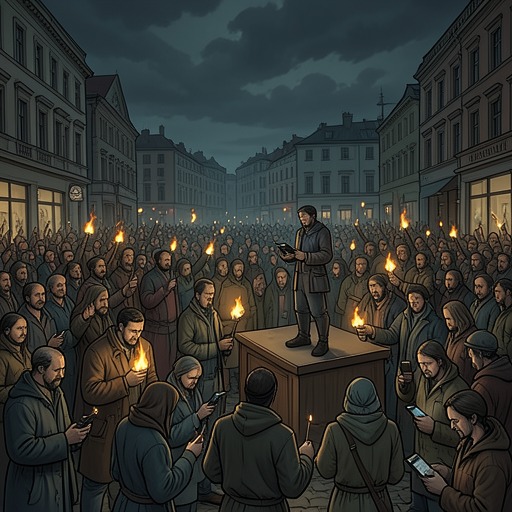
Radio Ubunye emerged from the South African government’s recognition that many isolated citizens could not be reached with food, equipment, or other material aid. Broadcasting was the assistance the state could still provide. The service therefore addressed separated communities through regular multilingual transmissions, making information available across linguistic and geographic barriers.
Its mission extended beyond simple instruction. Radio Ubunye collected and answered the rumors spreading among the population, treating misinformation, superstition, and silence as direct threats to survival. In a catastrophe defined by uncertainty about the undead plague, the broadcasts attempted to replace fear-driven interpretation with actionable knowledge.
Information as Survival
The service’s practical orientation distinguished it from propaganda that merely reassured listeners. Its broadcasts offered survival skills while also addressing specific falsehoods circulating among citizens. That combination made Radio Ubunye both an instructional channel and a public corrective: it sought to teach people what to do and to prevent dangerous beliefs from shaping their decisions.
The need for such a system arose partly from the wider information failure surrounding the outbreak. One early warning came through badly decoded messages from Chinese sources; the technical problem initially appeared to be faulty decryption, but the underlying texts described a viral outbreak that killed victims and reanimated their corpses into homicidal attackers. The warning was dismissed as coded military information, and communications about rampaging corpses stopped when the Taiwan Strait crisis began. Against this background, Radio Ubunye represents the opposite of withheld, mistranslated, or self-censored knowledge.
Model for Radio Free Earth
Radio Ubunye became the institutional ancestor of Radio Free Earth, initially known as the International Program for Health and Safety Information. The international venture began only a few months after the South African Plan and years before the Honolulu Conference. Its organizers explicitly adapted Radio Ubunye’s template for a global audience, carrying the South African practice of regular multilingual broadcasts and systematic rumor correction into an international wartime operation.
Radio Free Earth operated from the UNS Ural, a former Soviet and Russian Federal Navy vessel whose past roles had included command and control, missile tracking, and electronic surveillance. The ship’s communications systems were restored and connected to the global satellite network, while information arrived through an Information Reception department from experts and think tanks in government safe zones around the world. Radio Ubunye’s local model thus became part of a larger chain in which knowledge was gathered elsewhere, transmitted through damaged communications infrastructure, and translated into guidance for populations under siege.
Limits and Human Cost of Wartime Communication
The larger broadcasting system also exposed the emotional cost of receiving information without being able to answer the people who sent it. Open civilian bands carried millions of pleas from starving families, burning fortresses, and communities overrun by the living dead, while operators were forbidden to respond because the channels had to remain dedicated to official business. The voices could be understood as suffering even when their languages were not.
That burden proved fatal for the Information Reception operators. After the last broadcast from Buenos Aires, an eighteen-year-old Russian sailor killed himself over his instruments. He was the first of the operators to do so; by the postwar period, none remained alive, including the last operator, a Belgian friend who described the cries as voices that would never fade. Radio Ubunye’s legacy therefore carries a stark paradox: information could save societies, but the machinery required to collect and transmit it could also expose its workers to suffering they had no power to relieve.
Historical Significance
Radio Ubunye embodies the shift from information as a supplement to relief into information as a primary survival resource. Its influence reaches from isolated South African citizens to the global broadcasts of Radio Free Earth, linking local language access, practical instruction, rumor management, and international coordination. In the wider reconstruction effort, other institutions likewise converted displaced populations into useful participants through retraining and community self-sufficiency, while refugee societies such as the Pacific Continent used trade and shared infrastructure to rebuild collective life. Radio Ubunye belongs to that same pattern of adaptation: it preserved social cooperation not by restoring the old world immediately, but by transmitting the knowledge needed to function within a transformed one.
Its importance is also measured by contrast. Corporate media allowed the first wave of public alarm to become old news after Phalanx reduced reported cases, and alternative outlets warning that the dead were walking were dismissed by much of the mainstream audience. Radio Ubunye’s method rejected both commercial freshness and comforting denial. It made factual clarity, linguistic reach, and the active correction of lies central duties, establishing the communicative foundation from which a worldwide information service could be built.