Rebels
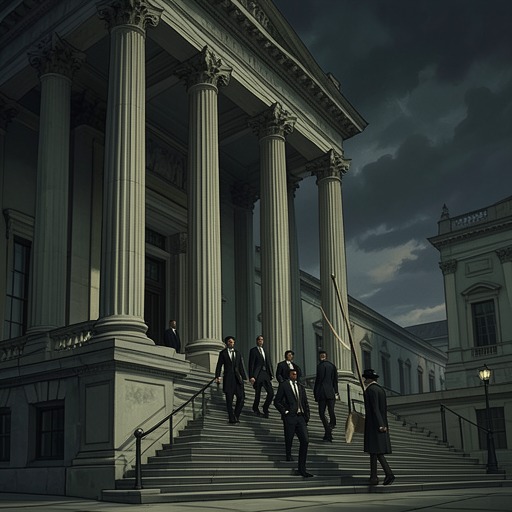
World War ZRebels are the organized American secessionists who challenge the postwar government’s authority during the Zombie War. Unlike apocalyptic religious groups or ecoterrorists, they possess weapons, political organization, and territorial ambitions, making them the clearest domestic threat to the western safe zone. Their existence also forces the government to confront the consequences of its own retreat: many eastern communities were not merely rebellious by choice, but had been abandoned when the national military withdrew.
Identity and Political Position
Rebels are described as armed political secessionists rather than as a vague mass of criminals or extremists. Some oppose wartime government policy; others had contemplated secession before the outbreak and use the collapse as an opportunity to pursue it. Their defining claim is territorial and political independence, placing them in direct opposition to the national government’s effort to restore a unified United States.
The government distinguishes Rebels from other controversial movements. Fundamentalist groups attract publicity through attempted political violence, mass suicides, and mercy killings of children, while the so-called Greenies commit acts of ecoterrorism such as contaminating water supplies with herbicide and sabotaging trees intended for war production. Those groups create disorder, but the Rebels are armed, organized, and capable of holding territory. For that reason, they are judged the country’s most tangible internal danger.
Conflict with the Government
The president treats the Rebel threat publicly as one more wartime policy issue, alongside food rationing and road repair, but privately demands that insurgents within the western safe zone be eliminated swiftly and decisively. The distinction between public restraint and private severity shows how the emergency state converts political opposition into a security problem. Once Rebels are categorized as enemies of the country, the government can place them outside the ordinary language of disagreement and address them through military force.
That policy is less morally straightforward east of the Rockies. The western government had deserted many isolated populations, leaving only some Special Forces volunteers and limited sea or air resupply efforts behind. The slogan that “We didn’t leave America. America left us.” therefore carries a concrete political meaning: communities left without national protection could reasonably regard the government as having already broken the relationship that bound them to the nation. Their separatism is presented not only as treason, but also as a response to abandonment.
Military Encounters and Suppression
During the campaign to reclaim lost territory, the government allows each secessionist enclave an opportunity for peaceful reintegration. The offer acknowledges that not every separatist community entered the conflict under identical circumstances. Nevertheless, the policy remains backed by force, and peaceful reintegration is not guaranteed to succeed.
The narrator recalls places such as Bolivar and the Black Hills with recurring nightmares. The violence itself is not what returns in his dreams; instead, he sees his powerful superior growing progressively weaker under the burden of national leadership. This displaced image connects the suppression of the Rebels to the physical and moral exhaustion of the government that ordered it. The conflict damages not only insurgent communities but also the officials and soldiers who carry out the project of reunification.
The Black Hills are also associated with specialized military units assigned to deal with Rebels. A witness traveling on the road sees those units moving toward the region, accompanied by the first tanks he has encountered since crossing the Rockies. The sight immediately signals that the confrontation will not be a negotiation between equal political communities but a heavily armed operation whose outcome is expected to be violent.
Wartime Authority and Obedience
The Rebels belong to a broader political environment in which governments demand obedience by invoking national survival. Elsewhere in the war, soldiers are forced to vote on which comrades will be executed and then kill those comrades themselves, binding the group through fear and shared guilt. In another military command, an officer refuses an order to abandon civilians because conscience is his first sworn duty, even after being threatened with treason charges and prosecution. These episodes illuminate the institutional world in which the anti-Rebel campaign occurs: emergency authority repeatedly asks individuals to exchange moral judgment for collective security.
The same logic appears in the Redeker Plan, which designates selected civilian populations as human bait so that the retreating army can survive. In the religious response later called Final Purification, killing infected soldiers is recast as a sacred duty rather than a personal act of violence. Together, these examples show how the war normalizes extreme measures through official language—duty, protection, purification, and national preservation. The Rebels are therefore not simply an external enemy of the restored state; they are also a test of whether the state’s methods of survival have erased the moral distinctions it claims to defend.
Narrative and Historical Significance
The Rebels give the postwar narrative an internal frontier. Even after the living dead have transformed military strategy, civilian movement, and national geography, the old political problem of secession returns in a harsher form. The United States must fight to reclaim territory while admitting that its own retreat helped produce the conditions for resistance.
Their role also complicates the language of patriotism. A government may define itself through national unity, while abandoned citizens define loyalty through the protection they actually received. The Rebels expose the gap between a nation as an ideal and a nation as an institution capable of leaving people behind. Their defeat or reintegration cannot erase that history; it merely restores the map while preserving the question of who first broke the national bond.