Reclaiming our future
World War Z“Reclaiming our future” names the decisive moral and strategic turn in the war against the living dead: humanity must do more than remain alive behind its defenses. It must recover the planet, its confidence, and the will to shape what comes next. The phrase links a presidential appeal at an exhausted international conference with the renewed energy of soldiers who realize that their campaign across America is only beginning.
From Survival to Purpose
The expression emerges after humanity has endured losses extending beyond territory and loved ones. The living dead have also stripped the surviving species of its confidence as the planet’s dominant life-form, leaving people shaken, broken, and grateful for any tomorrow that might contain slightly less suffering than today. The question is therefore not merely whether future generations can live without immediate physical danger. It is whether they will believe themselves capable of rebuilding, progressing, and resisting if the living dead rise again.
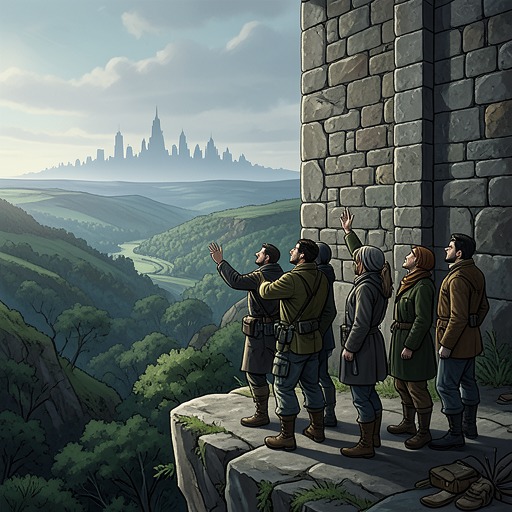
The presidential argument places that psychological inheritance beside the military situation. Defensive strategies have saved the human race, and the enemy has been fought to a stalemate; from a strictly military perspective, continuing the offensive might appear an unnecessary risk. Yet a future organized around anxiety, self-doubt, and resignation would amount to another kind of defeat. “Reclaiming our future” thus means reclaiming the capacity to imagine a future as something humans can actively make rather than passively receive.
The Presidential Appeal
At the conference, the American president does not shout or attempt to force order. He thanks his fellow delegates for their valued opinions and concedes that there is no purely military reason to push their luck. That measured concession gives the phrase its force: the proposal is not presented as ignorance of danger, but as a decision to weigh psychological and historical consequences alongside battlefield calculations.
His speech is structured around a series of escalating questions about the world children will inherit. Will humanity rebuild at all after having been powerless to reclaim its future? If the living dead return, will descendants meet them in battle or meekly accept extinction as inevitable? The questions convert a strategic debate into a test of collective self-conception. The phrase is therefore both declaration and challenge: humanity must prove, to itself and to those who come after it, that survival has not erased the ability to act.
A Divided International Moment
The expression also stands against the conference’s unresolved political anger. One delegate argues in terms of geography and justice, pointing to countries and populations in places such as the Himalayas and the Andes that do not fit a simple northern-versus-southern division. The response condemns the position as revenge for the past rather than justice for the future. After everything the survivors have suffered, they remain unable to stop turning their hands against one another.
This conflict makes the phrase larger than an American slogan. Its object is not only a national territory or a military victory. It is a future shared by societies whose wartime economies, climates, losses, and political memories differ sharply. The conference reveals how difficult that shared future will be: humanity has escaped extinction without escaping the resentments that helped shape the old world.
The Phrase Becomes Action
The delegates do not respond with theatrical applause. The president announces an afternoon recess so they can consider the proposal before reconvening at dusk for a general vote. The pause preserves the expression’s seriousness. “Reclaiming our future” is not an emotional climax that settles the matter by itself; it is a proposition requiring collective decision.
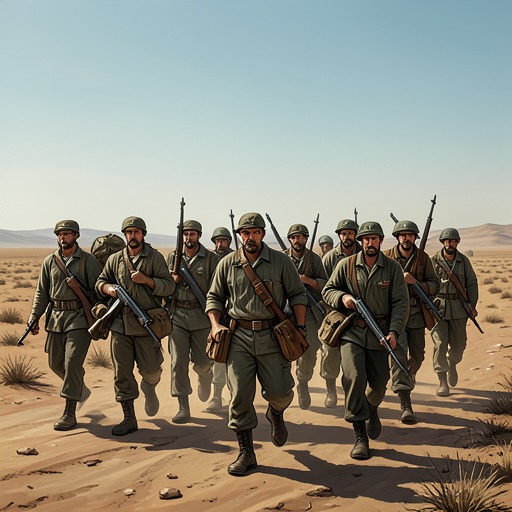
Its practical meaning becomes visible in the soldiers’ experience soon afterward. During a clearance operation, dozer-blade Humvees force a path through a ring of corpses so the unit can leave, while living Gs that had been trapped among the dead emerge when the bodies are buried. Afterward, the exhausted soldiers march ten miles east, establish a bivouac with watchtowers and concertainer walls, undergo decontamination and weapons inspection, and finally sleep. The labor is grim, physical, and methodical, but it is precisely this work that turns reclamation from rhetoric into an attainable process.
Psychological Aftermath and Narrative Significance
When the soldiers wake the following day, they hear their comrades talking, laughing, and telling stories. The atmosphere is completely different from two days earlier. One soldier cannot fully name the feeling, but connects it to what the president said about “reclaiming our future”: despite knowing that the campaign across America will be long and difficult, the soldier feels better than at any other point in the war.
The expression consequently marks the beginning of the end rather than the end itself. It does not promise an easy restoration, and it does not erase the dead, the danger, or the political divisions exposed at the conference. Its significance lies in changing the direction of collective feeling. A people that had been defending itself against extinction begins to understand its continued struggle as a campaign to recover agency. The future is no longer merely the interval humanity hopes to survive; it becomes the territory humanity must deliberately take back.